
Reviewed · NORWAY
Dagali: Extreme Canyoning Experience
The best part of Dagali’s Full On Canyoning is the mix of serious waterfall rappelling and playful water action. You move through a 1,500-meter canyon, descend 180 meters, squeeze through four-meter-deep Giant’s kettles, and use smooth rock slides shaped by the river.
I like the small group, limited to 10 people, and the clear attention to safety. I also like that the trip reaches quiet natural areas rather than stopping at one easy viewpoint. The catch is simple: this is a demanding outing, and one Norwegian participant felt there was more forest walking than river time.
- A 180-meter descent gives the route real scale, with waterfall rappelling as the main challenge.
- Four-meter-deep Giant’s kettles add unusual rock formations and water sections beyond the standard canyon walk.
- Natural slides and safe jumps keep the trip playful after the more serious rappel.
- A 25-minute shuttle each way handles the transfer from Dagali Fjellpark to the canyon.
- English-speaking guides and a 10-person limit make the safety instruction and encouragement more personal.
- Cold-water preparation matters: bring swimwear, a large towel, and consider wool or thermal layers.
What the five-hour Dagali canyoning trip is really like
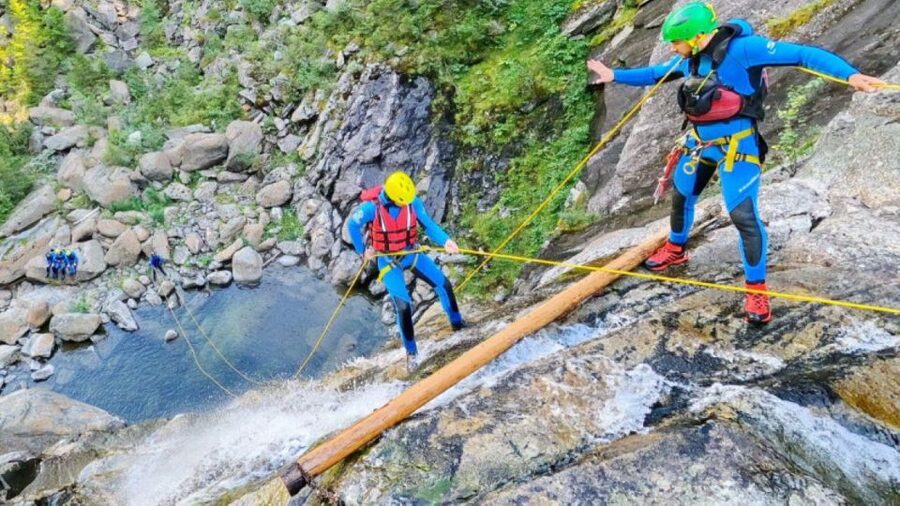
This is not a gentle sightseeing walk beside a stream. It is a full-body outdoor activity for swimmers, water lovers, and recreational athletes who want to move through a canyon by rope, rock, water, and short jumps.
The advertised trip lasts about five hours, including the two shuttle rides, safety talks, and roughly three hours in the canyon. The active section can run from three to six hours depending on the day and the group, so I would keep the rest of your schedule light.
You do not need to be an expert canyoner. You do need to be comfortable in water and ready for a physically demanding outing. The route includes walking, climbing around rock, swimming through pools, sliding, jumping, and rappelling. If you prefer a dry trail with occasional scenery stops, this is the wrong choice.
Starting at Dagali Fjellpark
The meeting point is Dagali Fjellpark, at Persstulvegen 100. This gives you a clear base for the day and avoids the confusion of trying to find a remote canyon entrance on your own.
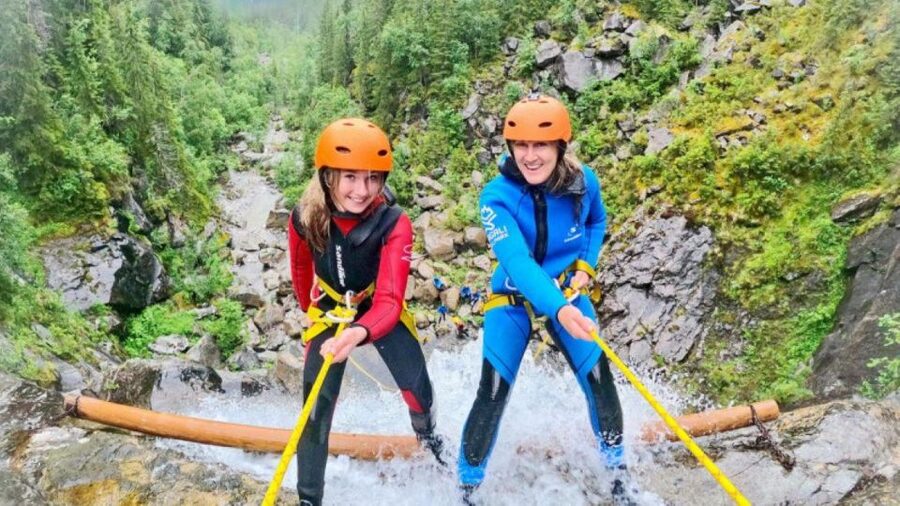
The first safety talk lasts about 15 minutes. Treat this as part of the activity, not as paperwork to rush through. You will receive the main instructions before leaving and get fitted with a helmet, wetsuit, neoprene shoes, and harness.
The equipment is important because the canyon water can be cold, and the rocks are wet. The neoprene shoes should help with grip and warmth, while the helmet and harness are essential for the rope sections. You wear your own swimwear under the wetsuit.
A small group of no more than 10 people is a useful limit here. Canyoning becomes less enjoyable when you spend long periods waiting for a rope section or trying to hear instructions over a busy group. With fewer people, the guides can keep an eye on nervous participants and help each person approach the obstacles at a sensible pace.
Other Norway trips people book alongside this one:
- From Bergen: The Original Fjord Cruise to Mostraumen
★ 4.7 · 8,440 reviews - Tromsø: Reindeer Sledding & Feeding with a Sami Guide
★ 4.8 · 6,417 reviews - Stavanger: Scenic Fjord Cruise to Lysefjord and Preikestolen
★ 4.6 · 5,791 reviews
The 25-minute ride to the canyon
The transfer from Dagali Fjellpark takes about 25 minutes by bus or coach. That ride is practical rather than scenic entertainment, but it matters because the canyon is away from the main base.
At the canyon, you receive another safety talk lasting about 15 minutes. This second briefing gives the group a chance to understand the actual conditions ahead and to ask questions before entering the water and rock sections.
I like the two-stage briefing. The first talk covers general preparation and equipment, while the second comes closer to the route itself. For an activity that combines rope work and moving water, repeating the key points is sensible.
This is also the point to tell the guide if you feel unsure about a jump, slide, or rappel. The Swedish participant’s description of guides encouraging people who felt nervous is useful here. The guides are not simply leading from the front. They are expected to help you manage the harder moments without turning the activity into a test of bravado.
Three hours through a 1,500-meter canyon
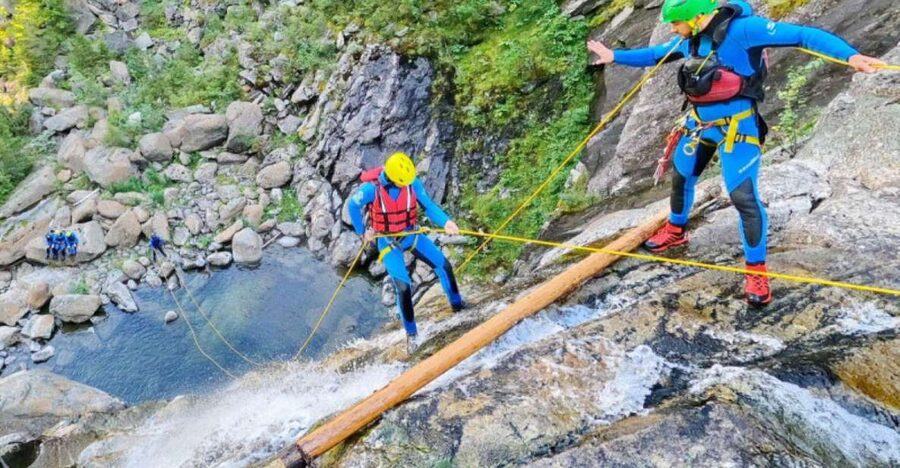
The main guided section covers about 1,500 meters and includes a 180-meter descent. Those numbers tell you more than a simple label such as adventure tour. You will be moving through a long stretch of changing terrain, not repeating one short obstacle beside the road.
The route combines several types of canyoning. You may walk through sections of forest and rock, enter pools, move along the watercourse, and use the canyon’s natural forms as part of the route. One practical warning is worth taking seriously: the day may include more walking through the woods than you expect.
That point matters if you picture yourself spending nearly all three hours in the river. The activity includes water, but it is not necessarily constant swimming and sliding. The forest approaches and walking sections help connect the different water obstacles, though they may feel like filler if your main goal is nonstop river action.
The reward is variety. You get quiet surroundings, changing rock shapes, and the feeling of reaching places that are not set up like a public swimming attraction. The route is active, but it also gives you a close look at how water has cut through the rock.
Rappelling down a high waterfall
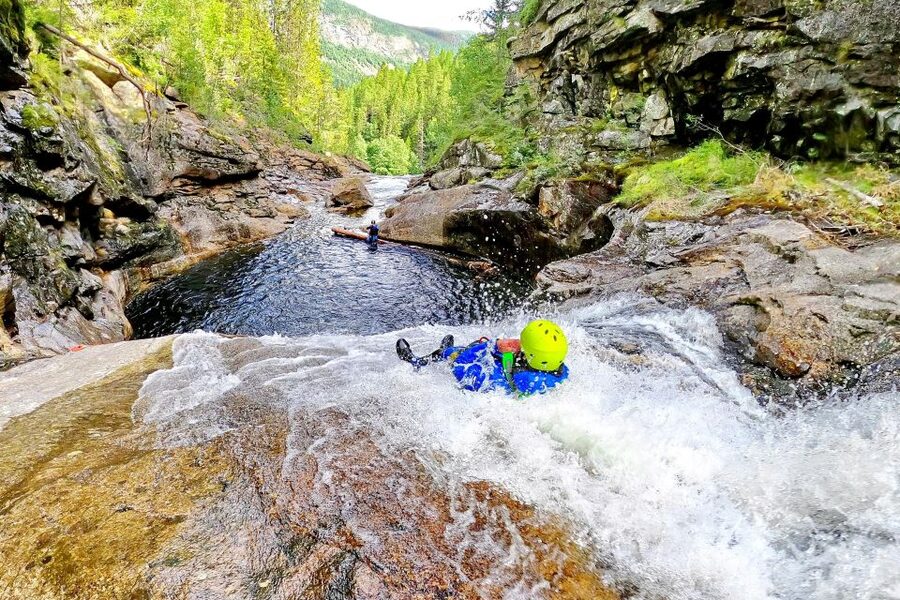
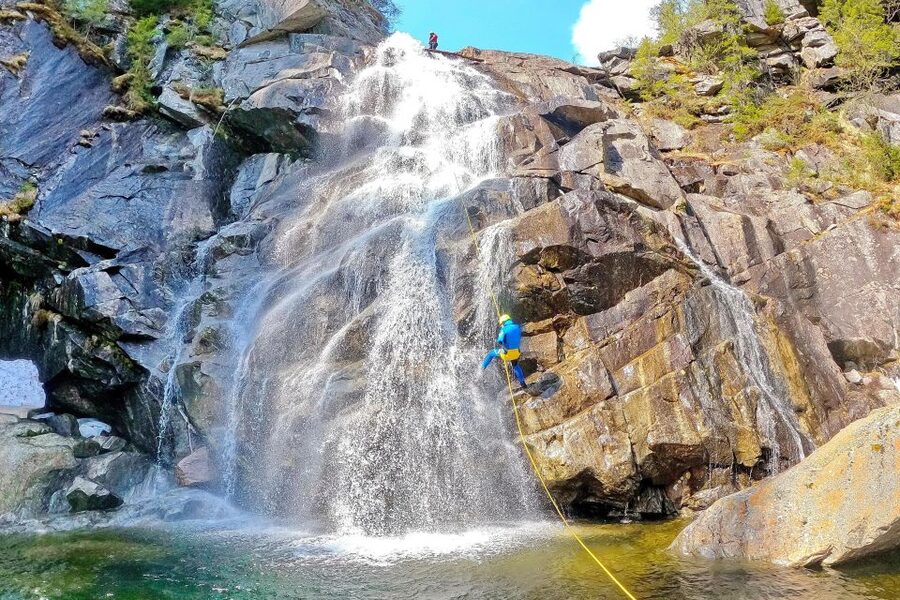
The main headline feature is rappelling down a high waterfall. You use the harness and rope under the guide’s direction, moving down wet rock with water running beside or over you.
For many people, this is the point where the trip shifts from a strenuous walk to a real adventure. The height gives the rappel its sense of scale, while the waterfall adds noise, spray, and a constantly wet surface. You will need to follow instructions carefully and keep your movements controlled.
The activity is designed to be safe with trained guidance, but safe does not mean effortless. You must be willing to trust the equipment, manage your footing, and continue when the rock and water make the descent feel unfamiliar.
If you are nervous, tell the guide early. The trip is intended for first-timers as well as people with canyoning experience, and the small group allows more room for individual support. You do not gain anything by hiding discomfort until you are on the rope.
Same stretch of coast, a completely different day out:
- Oslo: Scenic Fjord Cruise with Audio Guide Commentary
★ 4.5 · 5,375 reviews - Tromsø: Whale Watching Tour by Hybrid-Electric Boat
★ 4.5 · 4,217 reviews - From Tromsø: Aurora Borealis Tour
★ 4.8 · 4,206 reviews - Tromsø’s Top-Rated Fjord & Fishing Cruise – All-Inclusive
★ 4.7 · 4,017 reviews
Giant’s kettles and deep pools
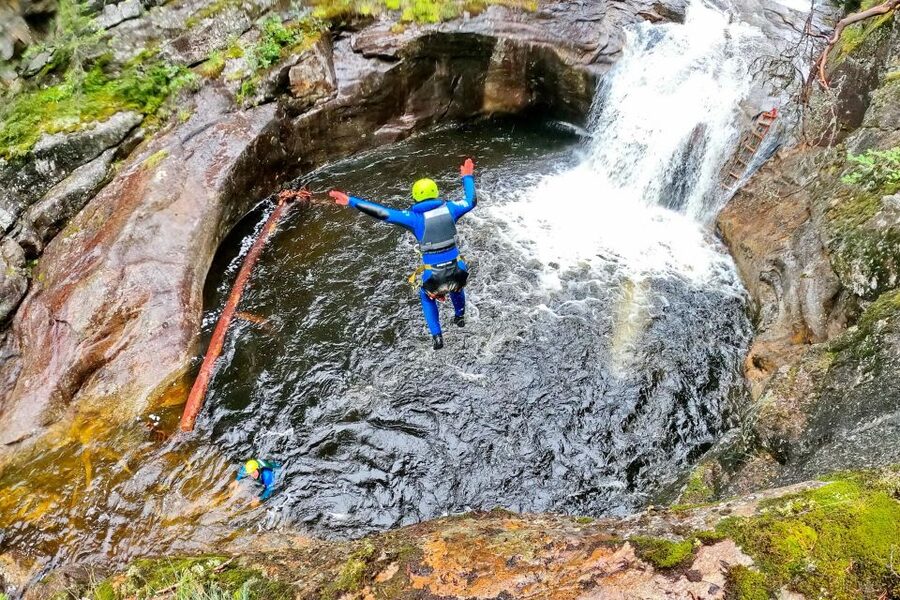
The Giant’s kettles are one of the most distinctive parts of the route. These are rounded rock hollows formed by moving water, and the largest mentioned here reaches four meters in depth.
They give the canyon a sense of age and force. Instead of viewing the river from a bridge, you see the spaces it has shaped from inside the route. You may encounter them as pools to navigate, swim through, or pass around, depending on the conditions and the guide’s instructions.
The four-meter depth also explains why swimming ability matters. This is not an outing for someone who is merely comfortable standing in shallow water. You should be able to handle pools and moving water with confidence.
The water element is central, but it is not the only point. The rock formations make the route interesting even during walking sections, and the kettles give you a memorable feature to look for beyond the standard waterfall rappel.
Smooth slides and safe jumps
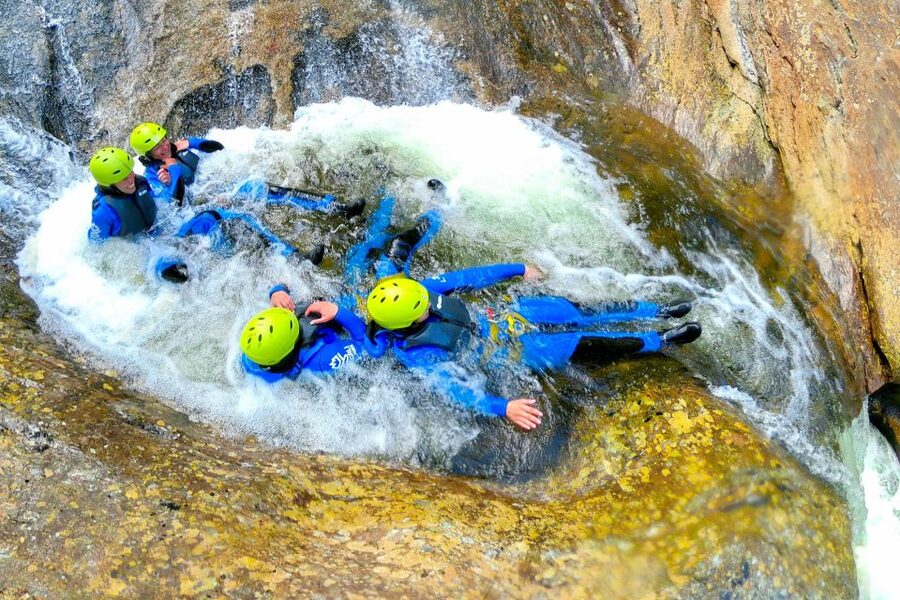
The natural slides are the fun side of the day. Water has polished parts of the rock into smooth chutes, letting you move through the canyon in a way no ordinary trail can match.
The slides are natural, so they are not manufactured theme-park rides with identical surfaces. The guide controls how and when you use them. That distinction matters because water level, rock conditions, and your position in the group can affect the experience.
Safe jumps add another burst of energy. The wording safe jumps should not be read as jump wherever you like. You follow the guide’s instructions and use only the points approved for the group. If you would rather not jump, ask what alternatives are available before reaching the spot.
Together, the slides and jumps stop the trip from becoming only a rope exercise. You alternate between concentration, effort, and brief moments of pure fun. That rhythm suits active people who want more than a single dramatic waterfall.
The walking sections and the pace of the day
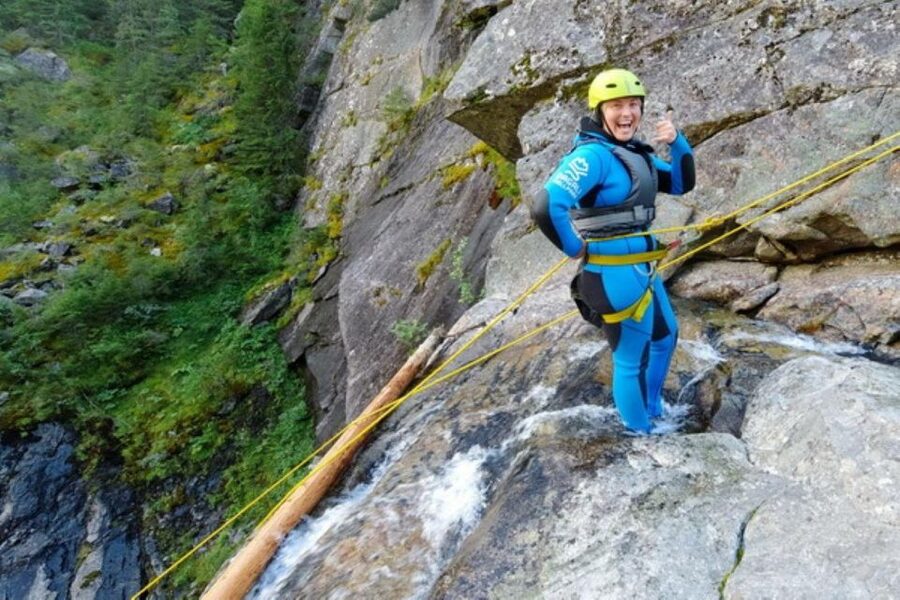
The main criticism I would keep in mind is the amount of walking in the forest. A Norwegian participant expected to spend more time in the river and found the walking slightly heavy for a family outing with older children.
That does not make the route poor. It simply helps you choose it for the right reasons. You are booking a canyon journey with water features, not a three-hour water park session.
Walking also affects how tiring the day feels. The total effort comes from the whole route: carrying yourself over uneven ground, dealing with cold water, climbing and sliding, then handling rope work when your muscles are already working. Wear the provided equipment as instructed and pace yourself.
The guides can help the group keep moving and can encourage anyone who becomes hesitant. Still, you should arrive ready for exertion rather than expecting the equipment to do the work for you.
Guides, safety, and the small-group advantage
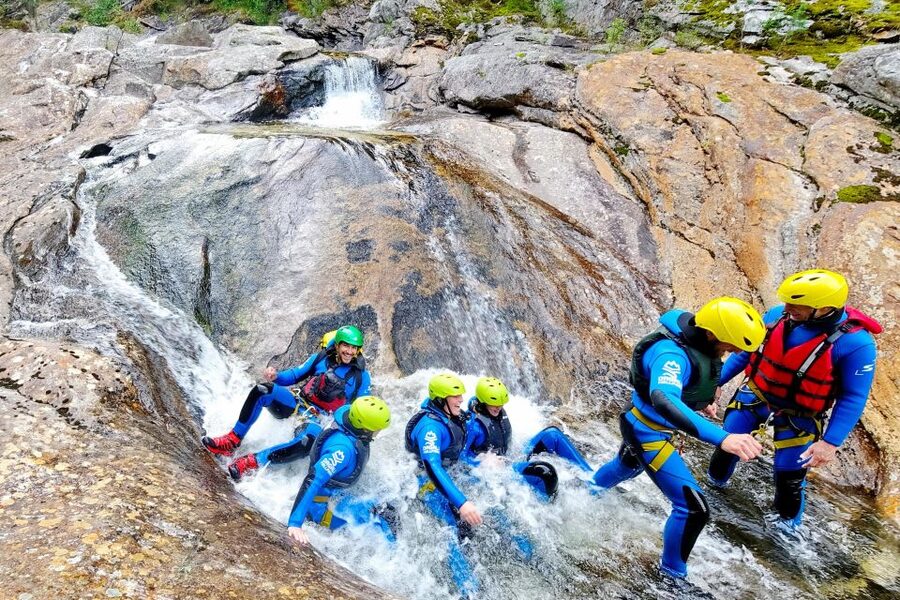
The guides speak English and lead the safety instruction, transport, and canyon route. The most consistent positive detail in the feedback is their manner: friendly, funny, careful about safety, and good at encouraging nervous participants.
That combination is valuable. A guide who only focuses on speed can make a first canyoning trip stressful. A guide who only jokes can make the safety side feel thin. Here, the practical information points to a balance of support and caution.
The group limit of 10 makes a difference at the waterfall and jump sections. Each person needs time to understand what to do, and nervous participants may need a little extra encouragement. A smaller group also makes it easier to stay together in a narrow canyon.
The rating is 4.9 from seven reviews, with particularly strong praise for organization, friendliness, safety, and the setting. That is a small sample, so I would not treat it as a guarantee. It does, however, match the structure of the activity and the specific comments about the guides.
What to wear and pack
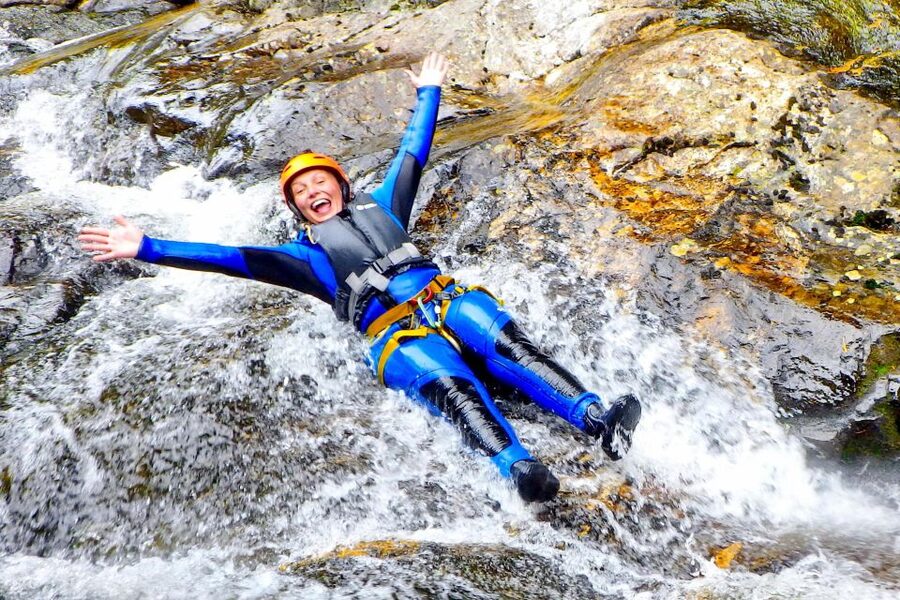
Wear a swimming suit under the wetsuit. Bring a large towel for the end, and pack shower gel if you want to clean up afterward.
For extra warmth, thermal or wool underwear and socks are suggested. That is practical advice for a cold-water activity, especially if you tend to feel chilled after swimming. The provided neoprene shoes and wetsuit handle the basic water protection, but personal layers can make the day more comfortable.
Your essential packing list is short:
- Swimwear
- Large towel
- Shower gel
- Thermal or wool underwear and socks if you need extra warmth
Do not bring alcohol or drugs. The activity involves water, heights, ropes, and physical coordination, so arriving clear-headed is a basic safety requirement.
Is $150 a fair price?
At $150 per person, the price is not low, but it covers more than a simple guided walk. You get the equipment, two-way shuttle, English-speaking guides, safety instruction, a roughly three-hour guided canyon section, and a snack afterward.
The value is strongest if you would otherwise need to rent canyoning gear and arrange transport to a remote starting point. The helmet, wetsuit, neoprene shoes, and harness are all necessary pieces, and the shuttle removes a practical headache.
The price is harder to justify if you mainly want a short swim or a single waterfall photograph. The day is built around physical participation, and the 25-minute transfers plus walking sections take time. You are paying for a complete guided outing, not just access to the water.
A snack after the activity is a small but welcome touch. After several hours of cold water and exertion, you will likely appreciate food more than you expected.
Who should book this activity?
I would choose this for a fit adult or older teenager who swims confidently, enjoys active outdoor sports, and wants a close encounter with Norway’s rougher natural places.
It can suit a first-time canyoner because the guides provide equipment, safety talks, and direct help. You still need the right attitude: listen, move carefully, and accept that the route may feel tough.
It is not suitable for children under 16, pregnant women, people with mobility impairments, people with heart problems, or anyone over 275 pounds, or 125 kilograms. Those limits are important because the route uses water, uneven ground, harnesses, and rope work.
A family with older children may enjoy the trip, but do not assume that family-friendly means easy. The forest walking and cold water can make the day more demanding than the slides and jumps first suggest.
Final call: book it if you want a real canyon day
Book Dagali Full On Canyoning if you want waterfall rappelling, deep rock pools, natural slides, and a proper physical challenge in a small group. The friendly guides, careful safety approach, and varied route make it a strong choice for a first serious canyoning outing.
Skip it if you want mostly river time, a relaxed nature walk, or an activity with little climbing and walking. Before booking, ask yourself one useful question: am I excited by three hours of changing physical obstacles, or do I only want the waterfall?
If the first answer is yes, the $150 fee buys a well-organized half-day with equipment, transport, instruction, and a memorable route. Keep the afternoon open, pack warmly, and expect to work for the fun.
FAQ
Where does the canyoning trip start?
The activity starts at Dagali Fjellpark, at Persstulvegen 100 in Norway.
How long does the activity last?
The scheduled duration is five hours. The guided canyon section lasts about three hours, and the full canyoning portion may run from three to six hours depending on the trip.
How long is the shuttle ride?
The bus or coach ride takes about 25 minutes each way between Dagali Fjellpark and the canyon.
How many people can join the group?
The group is limited to 10 participants.
What language do the guides speak?
The instructors and guides speak English.
What equipment is provided?
You receive a helmet, wetsuit, neoprene shoes, and harness.
What should I bring?
Bring swimwear and a towel. Thermal or wool underwear and socks may provide extra warmth.
Do I need to know how to canyon?
No specific canyoning experience is stated as a requirement. The activity is suitable for first-timers as well as canyoning enthusiasts, but you should be a confident swimmer and ready for demanding physical activity.
Who cannot take part?
The activity is not suitable for children under 16, pregnant women, people with mobility impairments, people with heart problems, or people over 275 pounds, or 125 kilograms.
What happens if I need to cancel?
You can cancel up to 24 hours before the activity for a full refund. You can also reserve now and pay later.
Just added around Norway
- Vossevangen: Nærøyfjord Full-Day Guided Kayaking Trip★ 4.8 · 4 reviews
- Ulvik adventure: Exploring Hardangerfjord’s Osafjord by RIB★ 4.8 · 5 reviews
- From Honningsvåg: VIP North Cape and Kingcrab Tour★ 4.4 · 93 reviews
- From Svolvær: Whale Watching Day Trip to Andenes★ 3.8 · 27 reviews
- Vik i Sogn: Authentic Farm Visit★ 5.0 · 3 reviews
- Ulvik: Hardangerfjord Ultimate RIB Tour★ 4.7 · 39 reviews
- Trondheim Like a Local: Customized Private Tour★ 4.7 · 92 reviews
- Trondheim: City Bus Tour★ 4.1 · 31 reviews