
Reviewed · STAVANGER TOURS
Stavanger: Prison Island Adventure Game
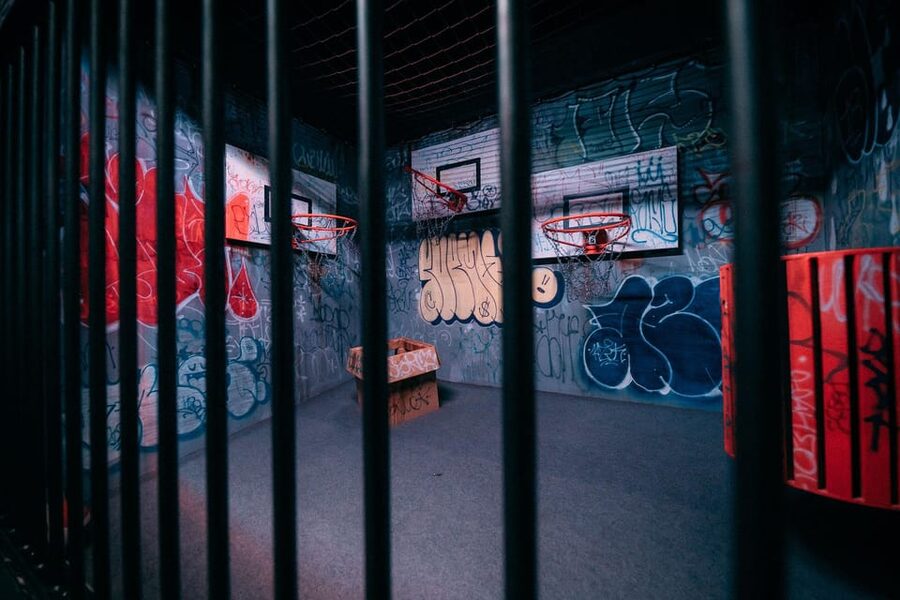
Stavanger’s Prison Island turns a former prison idea into a lively team contest, with 46 challenge rooms packed with puzzles, physical tasks, and quick decisions. You move from room to room, trying to earn as many points as possible before time runs out.
I like the freedom to choose your own pace, and I like that you can try rooms again to improve your score. The biggest consideration is that some tasks may not be immediately clear, and the game can feel less satisfying if your group prefers a guided activity with every rule explained.
Key things to know
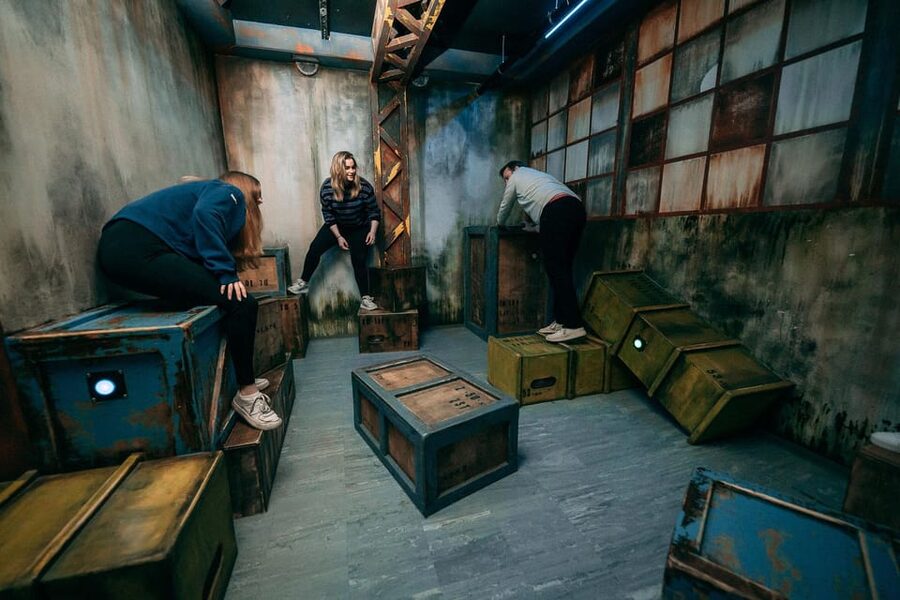
- Forty-six rooms offer plenty of choice: You can sample many different challenges instead of spending the whole booking on one puzzle.
- Teams contain 2 to 5 people: Small groups must communicate well, especially when a task needs several people working at once.
- Repeat attempts are part of the fun: You can return to a room and try to beat your earlier result.
- The game lasts from 1 to 2.5 hours: A one-hour booking can turn into a longer visit if availability allows.
- English is used during the game: The host or greeter can speak English or Norwegian, but the challenges themselves are played in English.
- Active clothing matters: Wear comfortable clothes and shoes suitable for physical activity.
Inside Fangene på Fortet Stavanger
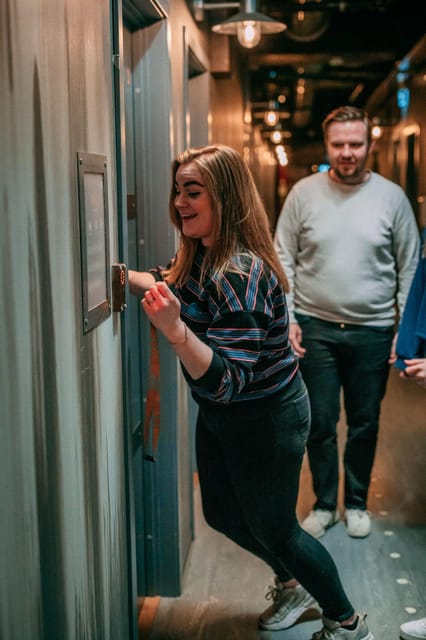
At the reception of Fangene på Fortet, you check in and receive the basic briefing before entering the challenge area. Plan to arrive 15 minutes early. That small buffer gives you time to gather your group, hear the instructions, and understand how the scorecard works.
The format borrows ideas from escape rooms and television challenge shows, but it is not one long escape room with a single storyline. Instead, you visit separate rooms, each with its own task. One room may focus on solving a puzzle, another on coordination, and another on completing a physical challenge within a time limit.
That variety is the main reason this activity works well for mixed groups. You do not need to be the person who spots every clue. Someone else may be quick with numbers, steady under pressure, or good at organizing the team. Since each room asks for something different, people with different strengths get a chance to contribute.
You are not given a personal guide to lead your team from room to room. That gives you more independence, but it also means you must listen closely to the instructions and work out the method yourselves. If you enjoy finding your own way through a problem, this is a plus. If you want constant help, it may take patience.
A few more Stavanger half-days to weigh up
- Stavanger: Scenic Fjord Cruise to Lysefjord and Preikestolen
★ 4.6 · 5,791 reviews - Stavanger: Fjord Cruise to Lysefjord and Pulpit Rock
★ 4.8 · 1,357 reviews - From Stavanger: RIB Tour to Lysefjord
★ 4.9 · 1,288 reviews
How the challenge rooms work
The goal is simple: complete tasks and collect points. The scorecard gives the visit a competitive edge, but you do not have to treat it like a serious contest. A family can focus on laughing and trying new rooms, while a corporate group can compare scores and use the activity to sharpen communication.
A team of two can take part, though some rooms may feel easier with three, four, or five people. With a full team, you have more hands and more ideas, but you also need to avoid talking over one another. The best approach is to assign quick roles: one person reads the instructions, another looks for patterns, and others test possible solutions.
The time limit changes the mood. You cannot spend forever on one puzzle, so you need to decide when to persist and when to move on. That makes the activity more energetic than a quiet puzzle room. It also means a difficult task can be frustrating if your team cannot see what it is asking you to do.
The rooms have different levels of difficulty, and no two visits need to follow the same pattern. You can choose challenges that match your group’s confidence, then return to tougher rooms later. The chance to try again is especially useful because a failed attempt does not feel like a dead end.
One practical point: the game is played in English. The host or greeter speaks English and Norwegian, but your team should be comfortable reading or understanding English instructions while working under time pressure.
Why the repeat attempts matter
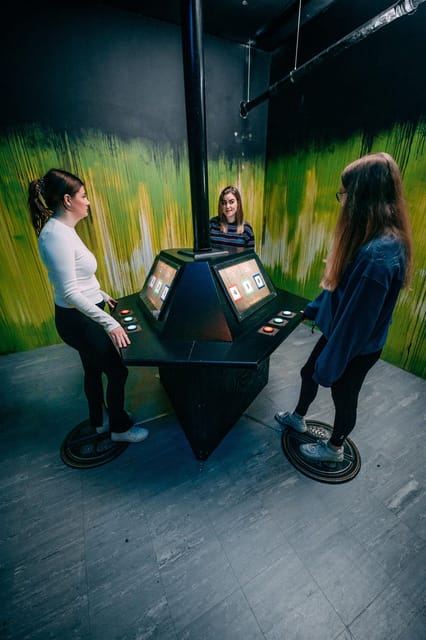
Many activity venues give you one chance at a challenge and then send you on your way. Here, you can return to rooms and try to improve your score. That changes the experience from a one-time test into something you can refine.
I like this for families with teenagers. A first attempt may be messy, with everyone shouting ideas and missing the key detail. On the second try, the group knows the basic structure and can focus on speed or accuracy. The repeat option also gives competitive friends a reason to keep going after they have sampled the easier rooms.
One family group with two 15-year-olds described it as the best part of their holiday, and that makes sense. Teenagers often want an activity that feels active and social without being treated like a children’s attraction. The room format gives them room to take charge, while adults can join without needing specialist skills.
The same feature helps corporate groups. You can return to a task after discussing what went wrong, then see if better communication changes the result. It is not a formal leadership course, and there is no personal guide analyzing your teamwork. Still, the score system naturally reveals whether your group listens, shares jobs, and changes strategy.
A realistic visit length
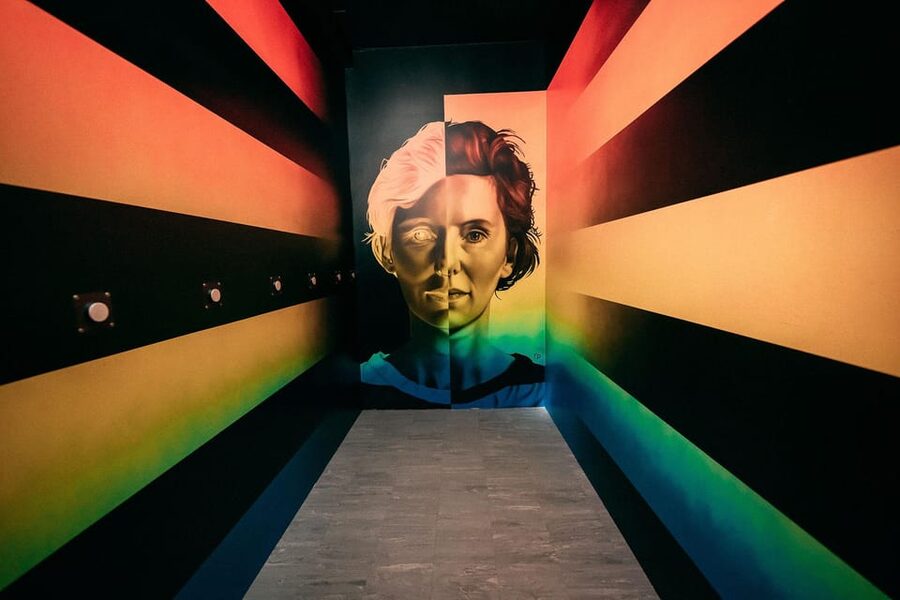
The stated duration is 1 to 2.5 hours. Your exact visit depends on the booking and how long you keep playing. One-hour bookings are possible, but the format can make that feel short once your team has learned how the rooms work.
A 90-minute session gives you more breathing room. You can try a good number of rooms, return to a favorite, and avoid rushing from one task to the next. Several people have found that time passes quickly here, which is useful to know when planning the rest of your day.
A 2.5-hour visit suits groups that want a fuller contest. You have time to sample more room types and make repeat attempts. It may be more than younger children want, however, especially if they find one task difficult or tiring.
I would choose the longer option for a corporate outing or a group of friends who enjoy competition. For a family adding this between other Stavanger plans, one to 1.5 hours may be enough. Check the available starting times before booking, since the length and schedule can affect the rest of your day.
Same stretch of coast, a completely different day out:
- From Stavanger: Lysefjord Sightseeing RIB Boat Tour
★ 4.9 · 821 reviews - Lysefjord RIB Safari from Stavanger
★ 5.0 · 665 reviews - Haugesund Shore Excursion: Åkrafjorden & Langfoss waterfall
★ 4.5 · 554 reviews - Guided hike to Pulpit Rock Preikestolen
★ 5.0 · 390 reviews
Is $30 a fair price?
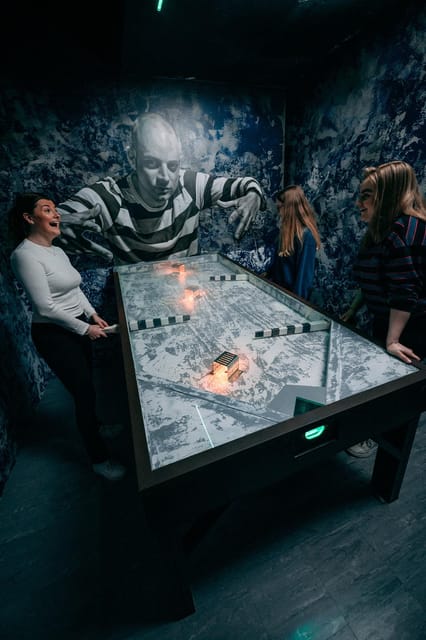
At about $30 per person, the value depends on how long your group plays. The admission includes entry to multiple challenge rooms and a team scorecard, but not transportation or a personal guide.
For a one-hour visit, the price is reasonable if your group uses the time well and enjoys active puzzle games. For a 90-minute or longer session, the value improves because you are paying for access to a large selection of rooms rather than a single attraction. A four-person group has enough people to share tasks without making the team unwieldy.
The German family booking worked out to about 103 euros for four people for 1.5 hours, which they considered fair. Prices can vary by booking conditions, so check the current rate for your date. The key question is not just the admission cost. Ask whether your group will make use of the repeat attempts and the many available rooms.
There is no guide fee to add, but you also do not get a guide who explains each challenge. That keeps the format flexible and helps hold down the cost, though beginners may need a few minutes to understand how to play.
What to wear and how much effort to expect
Wear comfortable clothing and shoes suitable for physical activity. The experience is not described as a full workout, but it includes obstacles and tasks that require movement, coordination, or quick reactions.
You should not arrive dressed for a formal dinner. Choose clothes that let you move freely, particularly if your group plans to use the full 1.5 to 2.5 hours. Good shoes matter more than stylish ones when you are moving between challenge rooms.
The range of tasks means the physical demand can vary. Some rooms may test your reasoning or communication, while others may ask you to overcome an obstacle. That balance makes the activity workable for people with different energy levels, but you should still be ready to move.
The venue is listed as wheelchair accessible. Accessibility can depend on the particular room and task, so if your group has specific needs, confirm the details with the venue before booking. The important point is that the site provides an accessible setting, while the challenges themselves may differ in physical demands.
Best groups for Prison Island
This is a strong choice for friends who like friendly competition. You can split into teams, compare scores, and return to the rooms where another group performed better. The format gives you something to talk about between challenges, rather than leaving you with one fixed activity.
Families can also make good use of it, especially when older children or teenagers are involved. The tasks suit different skill levels, and the room-by-room format lets you keep moving if one puzzle is not a match for your group. Younger children may need adults to help interpret instructions and decide how to approach a task.
Corporate teams get a clear reason to communicate. A good score requires more than one clever person. Your group must share information, listen, and act quickly. Still, keep expectations sensible: this is an adventure game, not a guided team-building workshop with a professional facilitator.
School groups may appreciate the mix of problem solving and cooperation. The 2 to 5 person team size means a larger class would need to be organized into several small groups. The supplied information does not specify supervision arrangements, so schools should confirm those details directly.
Solo visitors and couples are less well suited. Teams of two are allowed, but the experience is built around group cooperation. If you enjoy solving challenges with only one other person, it can work. If you want a social activity with a larger group, arrange your team before you arrive.
Where this fits in a Stavanger day
The meeting point is the Fangene på Fortet welcome reception in Rogaland. Transportation to and from the venue is not included, so you need to arrange your own way there and back.
Because the activity can last anywhere from one to 2.5 hours, leave extra space around the booking. Arriving 15 minutes early is required for the briefing, and a longer session can run well beyond the time you first expect. Do not place a tight reservation immediately afterward.
This is a useful rainy-day option or a break from sightseeing when your group needs something active. It gives you a shared goal and a change of pace from simply looking at attractions. The indoor challenge-room format also makes it less dependent on outdoor conditions, though the supplied details do not promise any particular weather setup.
The main drawback: some tasks need patience
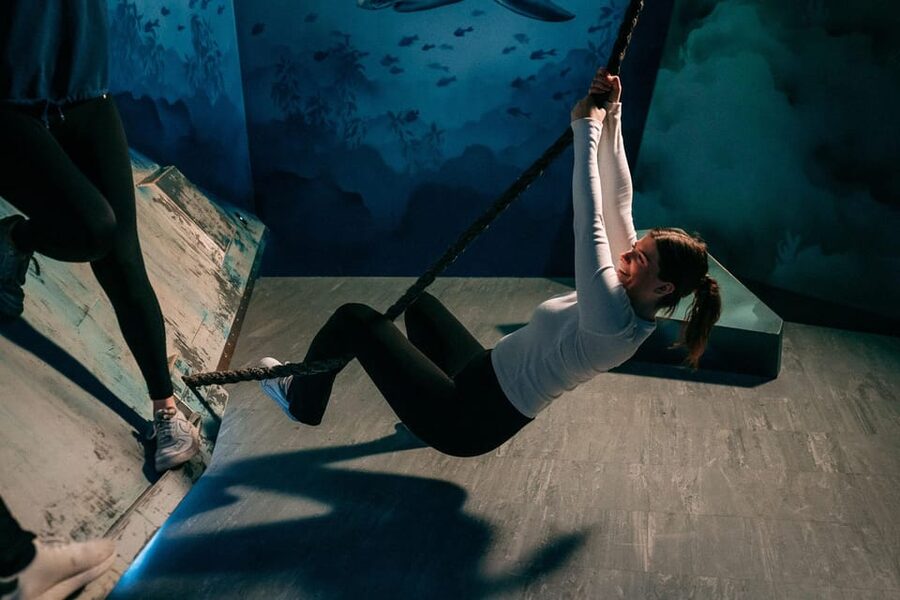
The biggest weakness is clarity. One participant found many tasks hard to understand and felt that some might not have been working properly. That does not mean every room will be confusing, but it is a fair warning about the format.
When a challenge uses unfamiliar instructions, a time limit can make the problem feel harder than it really is. Your group may spend too long guessing what the task wants instead of solving it. If that happens, ask the host or greeter for help rather than letting one room sour the whole visit.
The lack of a personal guide is part of the trade-off. You get freedom, but you also have to manage your own progress. I would tell your group in advance that not every room needs to be conquered. Move on, enjoy the variety, and return later if time permits.
The positive side is that repeat attempts reduce the sting of a poor first try. A room that seems unclear at first may make more sense after you have watched how the scoring works and learned to read the instructions carefully.
Booking, cancellation, and practical details
The activity offers free cancellation up to 24 hours before the booking time for a full refund. You can also reserve now and pay later, which helps if your Stavanger schedule is still changing.
Your team must contain 2 to 5 people. The activity is offered in English, with English and Norwegian available from the host or greeter. Entry to multiple rooms and the team scorecard are included, while personal guiding and transportation are not.
Check starting times before choosing your date. Bring comfortable clothes and shoes, arrive 15 minutes early, and allow enough time for a possible longer session. Those simple steps will help you get more from the admission price.
Should you book it?
Book Fangene på Fortet if your group likes puzzles, friendly competition, and active tasks. It is especially good for families with teenagers, groups of friends, corporate teams, and school groups that want to work together without committing to a single escape-room storyline.
I would book at least 90 minutes if the schedule allows. That gives you time to understand the format, try a useful range of rooms, and make repeat attempts. Choose one hour if you are fitting it into a busy day and mainly want a sample.
Skip it if your group dislikes time limits, physical activity, or figuring out instructions without much guidance. For everyone else, the mix of 46 rooms, changing difficulty, and repeat attempts gives you a solid chance of finding challenges that suit your team. At around $30 per person, it is a sensible pick when you want a social Stavanger activity with enough variety to keep the whole group involved.
FAQ
Where does the Prison Island Adventure Game take place?
The meeting point is the Fangene på Fortet welcome reception in Rogaland, Norway.
How long does the activity last?
The activity lasts from 1 to 2.5 hours. Check the available starting times and duration when you book.
How many people can be on one team?
Teams can contain 2 to 5 people.
Is the game played in English?
Yes. The game is played in English. The host or greeter can speak English or Norwegian.
What should I wear?
Wear comfortable clothing and shoes suitable for physical activity.
Is transportation included?
No. Transportation to and from Fangene på Fortet is not included.
Can I cancel the booking for a refund?
Yes. You can cancel up to 24 hours in advance for a full refund. Reserve now and pay later is also available.
Just added around Stavanger
- Discover Sensational Stavanger: Self-Guided Audio Tour★ 3.5 · 7 reviews
- The Pulpit Rock Air★ 4.5 · 8 reviews
- Preikestolen | Pulpit Rock – Hike with a local guide★ 5.0 · 84 reviews
- Stavanger Kjerag Hike with Guide and Transportation★ 5.0 · 9 reviews
- Stavanger Private Walking Tour with a Local★ 4.5 · 20 reviews
- Guided sunrise hike to Pulpit Rock Preikestolen★ 5.0 · 20 reviews
- Kjerag Low-Season Hike + Packed Lunch★ 5.0 · 3 reviews
- Scenic tour to Steinsfjellet, locals at Kringsjå & Rising Tide★ 5.0 · 48 reviews
Stavanger Tours, compared.

Scenic Fjord Cruise to Lysefjord and Preikestolen
Read our review →
Haugesund Shore Excursion: Åkrafjorden & Langfoss waterfall
Read our review →
Lysefjorden & Pulpit Rock RIB-Safari from Stavanger
Read our review →Browse the lists this tour appears in