
Reviewed · GEIRANGERFJORD TOURS
Geiranger: Rappelling tour with epic view
Geiranger is famous for fjord cruises and postcard viewpoints, but this tour gives you a much more active way to see it. You climb by rope through the forest to Flydalsjuvet, then rappel down the cliff with Geiranger spread out below you.
I like the small private groups, limited to six people, and the care built into the route. You get a proper equipment briefing, a practice rappel, and help from the guide throughout the climb. I also like the quiet viewpoint experience. While many people reach Flydalsjuvet by road, this route takes you up a steep, less-used path.
The catch is simple: this is not a gentle sightseeing walk. Arm strength, sturdy footwear, and a head for heights matter. The climb can be hard, and the rappel is exposed. A recent outing took about three and a half to four hours, even though the stated duration is three, so leave plenty of room in your schedule.
Key points to know before booking
- Rope-assisted climb: Use clamps and a jumar to help you move up steep sections through the forest.
- Private groups of six: You receive close guidance rather than being lost in a large crowd.
- Flydalsjuvet without the usual road crowd: Reach a quieter photo location near one of Norway’s best-known viewpoints.
- Practice before the big drop: The introduction wall lets you learn the rappel system before the main descent.
- Two major rappels: The route description lists two 50-meter rappels, while one recent outing included three cliffs, with the tallest about 60 meters.
- Bring the right gear: Sturdy hiking boots, gloves, water, and enough time are important.
Starting beside the Dynamite Waterfall
Your outing begins at the Explore Geiranger guide office at Geirangervegen 139, next to the Dynamite Waterfall. From the harbor, allow about 15 minutes on foot. The operator does not provide a ride from the harbor, so build that walk into your plans, especially if you are arriving from a cruise ship.
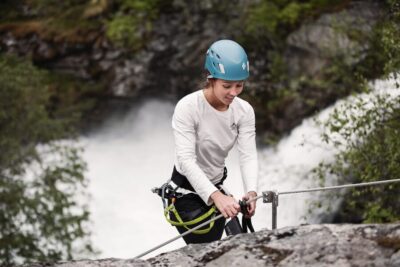
At the office, everyone takes part in a safety briefing. You receive the climbing and rappel equipment there, and the guide explains how the ropes, clamps, and other gear work. This is the point to ask questions and say clearly if you are nervous about heights or unsure about your physical readiness.
The group size matters here. With a maximum of six people and one guide, the instruction can stay personal. Phillip and Simona are among the guides who have led this experience, and the format allows the guide to remain close when someone needs help with foot placement or rope technique.
Wear clothes that let you move freely. Gloves are required, and a recent participant bought a pair for about $5. You may also be able to get them locally, but it is smarter to arrive prepared rather than rely on finding the right pair at the last minute.
A few more Geirangerfjord half-days to weigh up
- Geiranger: Dalsnibba, Flydalsjuvet, Eagle Bend & Fjords Tour
★ 4.6 · 2,329 reviews - RIB Geiranger – Fjordsafari
★ 4.8 · 807 reviews - Geiranger: Guided Geirangerfjord Boat Tour
★ 4.7 · 728 reviews
Climbing through the forest with a jumar
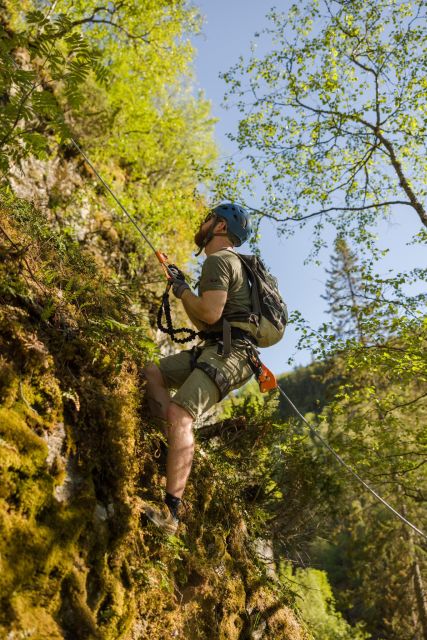
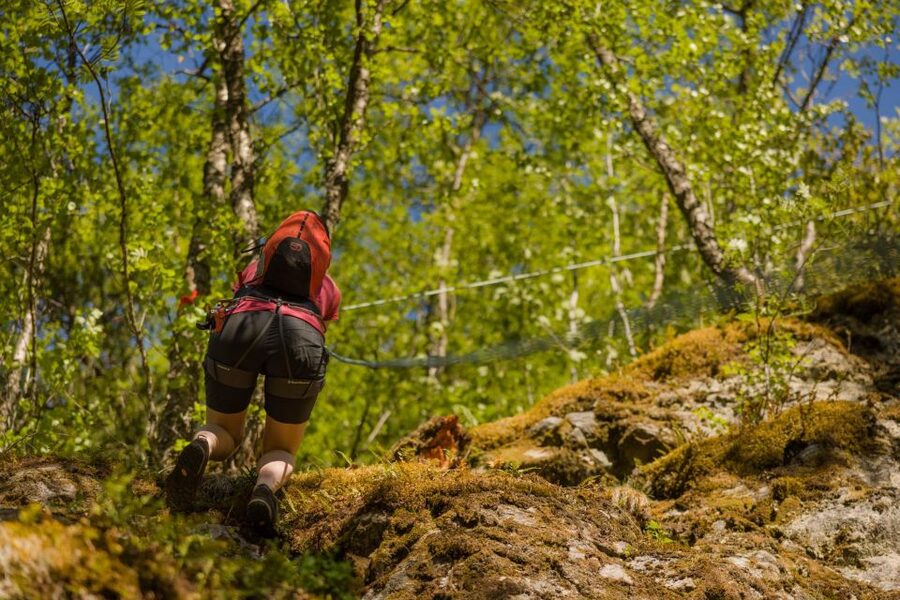
The uphill portion is the real test. You move through deciduous forest on a steep route, with ropes installed along much of the climb. Rope clamps help you move upward and provide security, while a jumar, a mechanical rope clamp used in aid climbing, helps you gain height on the steeper sections.
Do not read rope secured as effort free. You still need to pull, push, balance, and place your feet carefully. The route calls for some upper-body strength, particularly in sections where you depend on the clamps to move along the ropes.
The best advice is to keep a steady pace. Use your legs as much as possible instead of hauling yourself upward with your arms alone. Listen closely to the guide’s instructions about where to put your feet. One 65-year-old participant found the climb beyond her expected ability at first, but finished with steady help from the guide, who stayed beside her and showed her how to move.
That detail tells you something useful about the tour. The guide can provide patient support, but you still need to take part physically. This is not an activity where the guide can simply pull you up the route.
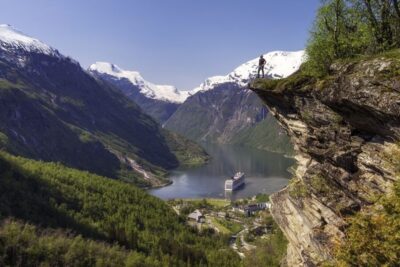
As you gain height, the view opens through the trees. Geiranger’s harbor, rooftops, water, and surrounding mountains begin to arrange themselves below you. The climb becomes more rewarding as the view improves, but the scenery also makes the exposure more obvious. If steep drops unsettle you, this is the moment to decide if the experience feels exciting or simply uncomfortable.
Reaching Flydalsjuvet away from the road crowd
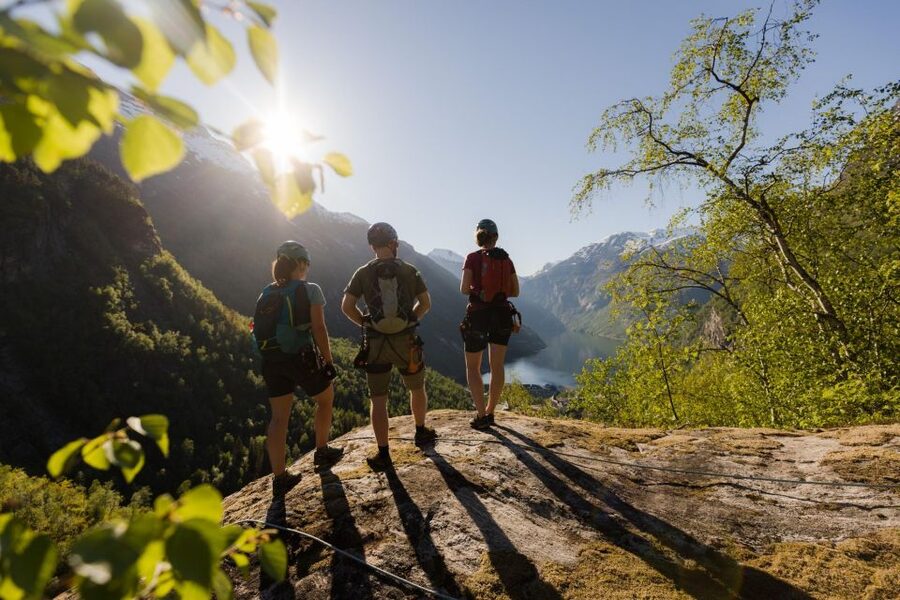
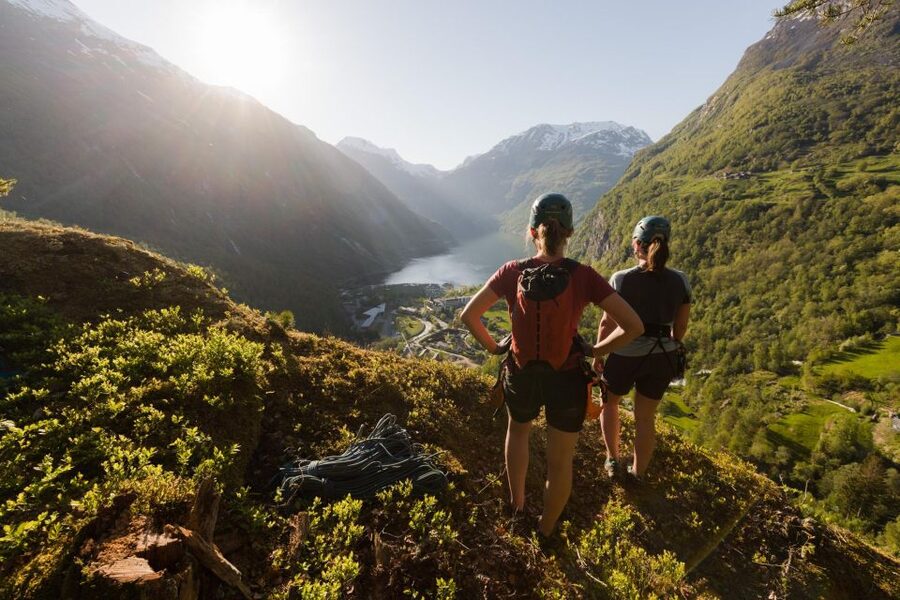
Flydalsjuvet is one of the most recognizable viewpoints above Geiranger. During summer, thousands of people drive there for the famous view and photographs. This tour approaches it by foot and takes you to a quieter photo location along a less-used route.
Once you reach the viewpoint area, the guide leads you along a secret path to a photo spot near the cliff edge. The point is not just to look at the fjord. It is to create a dramatic image of you standing at the edge with the open view behind you.
Use good judgment here. The photo position is exposed, and the guide controls how the group approaches it. Follow instructions carefully and do not treat the picture as a chance to take unnecessary risks. You can get a powerful photograph without stepping beyond the safe position the guide indicates.
This stop also gives you a proper rest after the climb. Take time to drink water, catch your breath, and enjoy the view before descending. The tour includes no food or water at the start, but you can refill bottles midway. Bring enough water for the first part of the route.
The solitude is one of the strongest reasons to choose this experience instead of simply driving to Flydalsjuvet. You trade an easy ride for a strenuous climb, but you gain a much more active arrival and the chance to enjoy the viewpoint without the usual roadside crowd around you.
Passing the Queen’s Chair to the practice wall
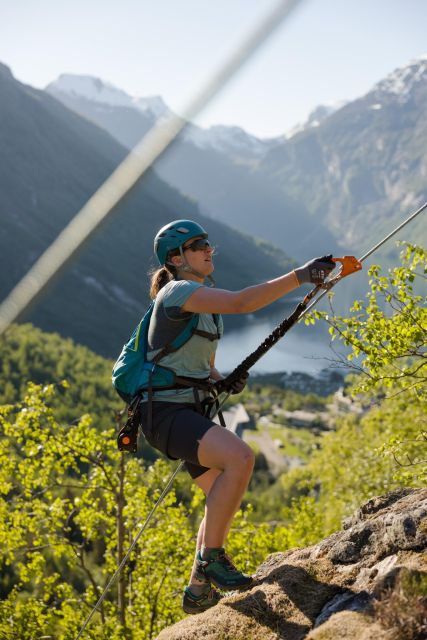
After the viewpoint and photo stop, you head back down past the Queen’s Chair. The route then reaches the introduction wall, where the guide teaches you how to rappel.
This short wall is important. You do not begin with the biggest drop. Instead, you get a chance to handle the equipment, understand how your brake hand controls the descent, and learn how to position your body. The guide checks that everyone can manage the system before the group continues.
That staged approach makes the experience more approachable for first-time rappellers. You still need to pay attention and follow instructions, but you are not expected to learn on the largest vertical section.
The practice wall also gives you a useful reality check. Rappelling is safe when the equipment and rope systems are used correctly, but the sensation of leaning back over a drop can surprise you. If the introduction wall already feels too intense, you should tell the guide before moving on.
Same stretch of coast, a completely different day out:
- Geiranger: City Sightseeing Hop-On Hop-Off Bus Tour
★ 3.7 · 546 reviews - Geiranger: Zipline Park Experience
★ 4.7 · 328 reviews - Geiranger: Bus Tour with Multilingual Audio Guide
★ 4.0 · 317 reviews - Hellesylt: Guided Geirangerfjord Boat Tour
★ 4.8 · 211 reviews
Two big rappels above Geiranger
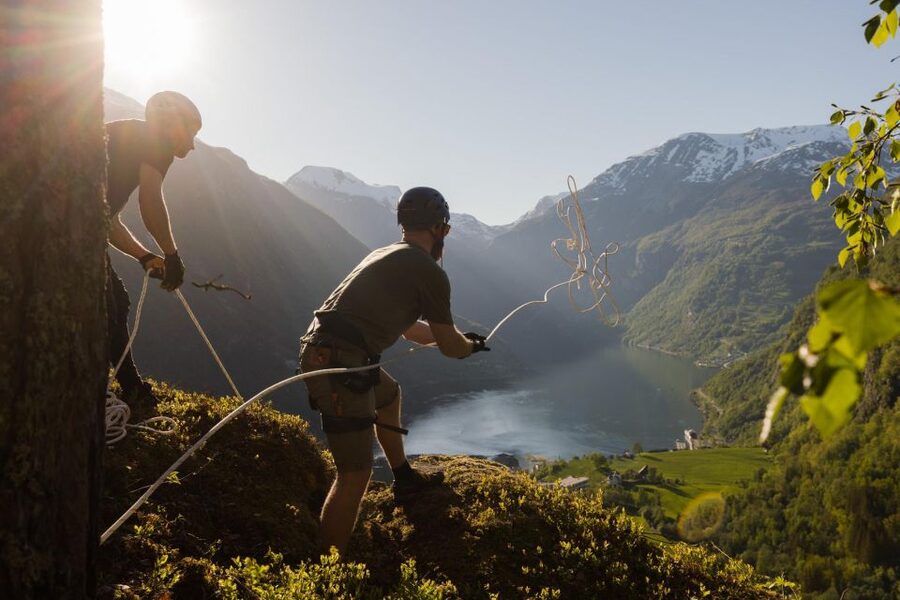
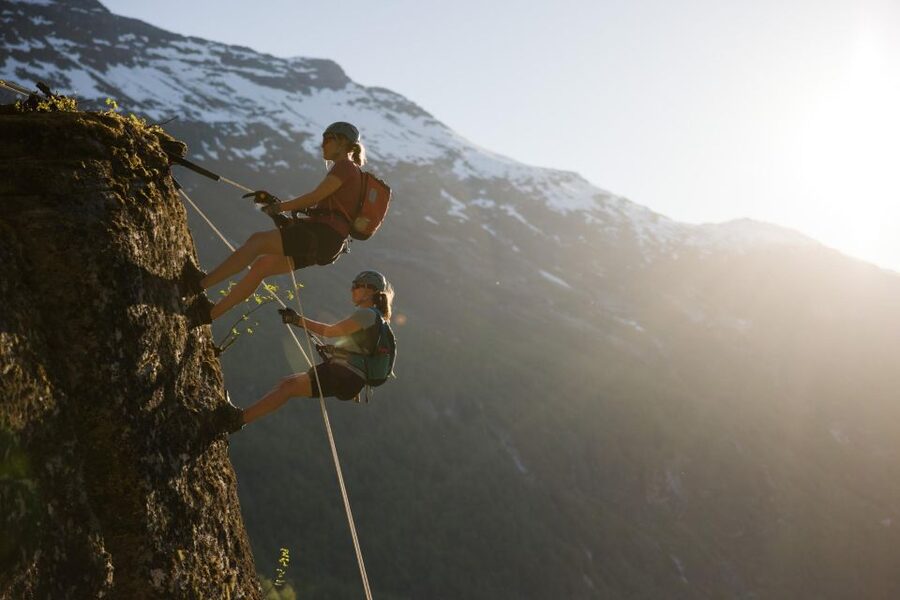
The main descent is the tour’s headline moment. The route description includes two 50-meter rappels, taking you down a large vertical wall toward the forest, roughly 100 meters lower in total. One recent outing described three rappelling cliffs, with the tallest reaching about 60 meters, so the exact sequence may vary with the route or conditions.
The height is only part of the experience. The exposure is what makes it memorable. You look out across the fjord and mountains while lowering yourself down the rock. The view is not something you see from behind a railing. You are suspended against the cliff, with the scenery opening around you.
Your guide manages the ropes and gives clear instructions, but you control your movement on the wall. Keep your body position as taught, use the equipment properly, and stay focused instead of looking down for the entire descent. You can enjoy the view in stages.
The word safe here means the tour uses rope systems, instruction, and protective equipment. It does not mean the rappel feels tame. You will be high off the ground, and the drop is fully visible. That combination suits people who want a serious thrill, not those seeking a mild scenic outing.
The descent also changes the rhythm of the trip. The uphill hike asks for physical effort and concentration. The rappel asks for trust in your equipment, calm movement, and a willingness to step over the edge. Completing both parts gives the day a clear sense of achievement.
Walking back through the forest and along the road
After the final rappel, the route continues through the forest before joining a road back to the guide office. One recent group returned to town by beautiful stairs along the waterfall, while the stated route describes the final section as a road walk.
The road section is less dramatic than the climb and rappel, but it is useful to know about. It is part of the return rather than a final attraction, and the route may take longer than the headline three hours if the group needs extra instruction, photographs, or breaks.
For planning, I would avoid booking a tight transfer immediately afterward. The tour is advertised at three hours, but a family group completed it in about three and a half hours, and another group took approximately four. Pace, group ability, route details, and time spent at the viewpoint can all affect the finish time.
What the $146 price includes
At $146 per person, this is not a cheap way to reach a viewpoint. It is a guided technical activity that includes the equipment, instruction, and a private group of no more than six people.
The value depends on what you want from Geiranger. If your goal is simply to see Flydalsjuvet, driving or taking another sightseeing option will require less effort and likely cost less. If you want a physical challenge, close guide support, and a way to combine climbing, a quiet viewpoint, and rappelling in one outing, the price is easier to justify.
The small group improves the value. One guide for six people means more direct help than you would get in a large commercial group. That matters on the steep climb, during the practice rappel, and when someone needs extra time to manage a section.
Equipment is included, but gloves are not clearly included. Plan on buying or bringing them, with a recent cost of about $5. Sturdy hiking boots are essential, not optional. You should also bring water, since there is no food or water provided at the start.
Who will enjoy this route most
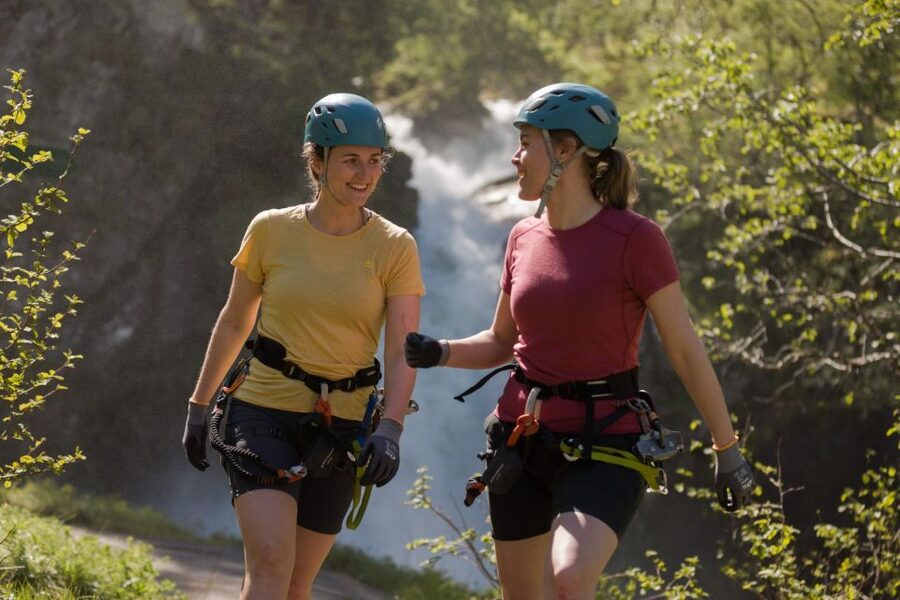
This tour fits active people aged 12 and older who want a demanding outdoor experience. It can work for families with older children and teenagers, provided everyone is comfortable with steep hiking and exposed rappelling.
The experience also suits first-time rappellers who want careful instruction. The practice wall gives you a chance to learn before the main descent, and guides such as Phillip and Simona have shown patience with people who need more coaching.
You should have enough strength to pull and stabilize yourself with the rope clamps. The route is not suitable for children under 12, people with heart problems, or anyone weighing more than 243 pounds, or 110 kilograms.
I would not choose it if you want a relaxed morning, dislike heights, or have limited time before a ship departure. Even fit people may find the climb strenuous, and the full outing can run longer than the advertised three hours.
Planning the meeting point and timing
The guide office is about a 15-minute walk from the harbor. There is no transport from the harbor, so check your arrival and departure times before booking.
If you are visiting from a cruise ship, allow extra time for the walk to the office and for the return. Do not assume the tour will finish exactly at the three-hour mark. A private group may move efficiently, but a participant who needs more instruction or rest should not be rushed.
The same starting area is also used for via ferrata and zipline activities. That makes it possible to plan another adventure nearby, but I would be cautious about stacking activities too tightly. This climbing and rappelling route already asks a lot from your arms and legs.
You can cancel up to 24 hours in advance for a full refund, and you can reserve now while paying later. Those terms help if your Geiranger plans depend on weather, ship timing, or a changing schedule.
Should you book the Geiranger rappelling tour?
Book it if you want Geiranger from an unusual angle and are ready to work for the view. The quiet approach to Flydalsjuvet, the rope-assisted climb, and the large rappels create a much more active day than a standard viewpoint stop.
I especially recommend it for people who want close instruction in a small group. The guides can help you with technique and confidence, but you must bring the physical strength and willingness to handle exposure.
Skip it if you want an easy scenic walk, have heart problems, weigh more than 110 kilograms, or need to return to the harbor on a strict schedule. For everyone else, bring gloves, boots, water, and patience. The reward is not only the photograph at Flydalsjuvet, but the satisfaction of reaching it by rope and returning by the cliff.
FAQ
Where does the rappelling tour begin?
It begins at the Explore Geiranger guide office at Geirangervegen 139, next to the Dynamite Waterfall.
How far is the meeting point from Geiranger harbor?
The guide office is about a 15-minute walk from the harbor.
Is transport provided from the harbor?
No. You need to walk from the harbor to the guide office.
How long does the activity last?
The stated duration is three hours. You should allow extra time, since recent outings have taken approximately three and a half to four hours.
How many people can join one group?
The tour is a private group with a maximum of six people and one guide.
What language does the guide speak?
The instruction is provided in English.
Is all climbing and rappelling equipment included?
Yes. The tour includes the equipment needed for the activity. Gloves are required and may cost about $5 if you need to buy them.
How many rappels are included?
The route description lists two 50-meter rappels. One recent outing included three cliffs, with the tallest about 60 meters, so the exact route may vary.
Is the tour suitable for children?
Children under 12 cannot join. Older children may take part if they meet the physical demands and are comfortable with the steep climb and exposed rappelling.
Who should not take this tour?
It is not suitable for people with heart problems or anyone weighing more than 243 pounds, or 110 kilograms.
Just added around Geirangerfjord
- From Hellesylt: The Best of Geiranger Shore Excursion★ 4.2 · 66 reviews
- Ljøen, Hellesylt: Ljøen Farm Tour★ 4.6 · 24 reviews
- Hellesylt-Geiranger Sightseeing (one way ticket)★ 4.0 · 7 reviews
- Hellesylt: Beginner-Friendly Fjord Kayaking Experience★ 4.9 · 63 reviews
- From Geiranger: Dalsnibba & Eagle Road Private Tour & Picnic★ 5.0 · 4 reviews
- Geiranger Fjord Tour from Hellesylt (2 hours in Geiranger)★ 4.3 · 14 reviews
- Geiranger to Ålesund Bus Tour (one way)★ 4.3 · 4 reviews
- Geiranger Dalsnibba: mini bus tour★ 4.3 · 83 reviews
Geirangerfjord Tours, compared.
Dalsnibba, Flydalsjuvet, Eagle Bend & Fjords Tour
Read our review →
Browse the lists this tour appears in