
Reviewed · WHALE WATCHING
Skjervøy: Whale Watching with RIB Boat and Local Guide
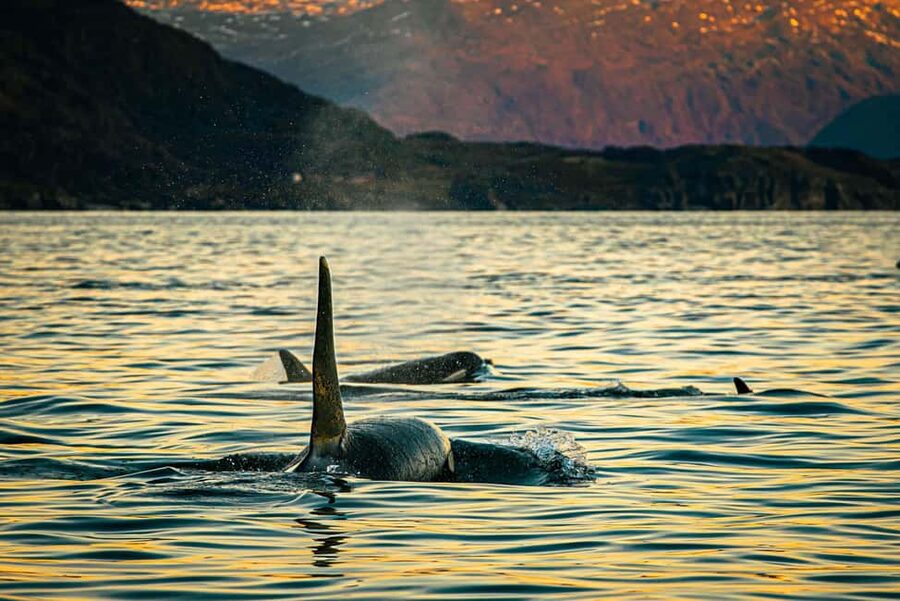
Orcas feeding together in the cold waters outside Skjervøy are the main event here. You may watch black-and-white killer whales work as a group around herring, then spot humpbacks surfacing nearby. The fast RIB adds real excitement, especially when the water is choppy and spray comes over the bow.
I like the small-boat setting, which puts you close to the sea and gives the trip a lively, open-air feel. I also like the practical care from local guide Viktor, who helps with the gear, shares whale information, and has sometimes extended the outing when the whales were putting on a show.
The catch is simple: this is a cold, exposed ride, not a cozy cruise. Even with the supplied suit, boots, hat, and goggles, you should bring warm gloves and something to cover your neck. The RIB can also bounce hard in rough water.
Key points to know before you go
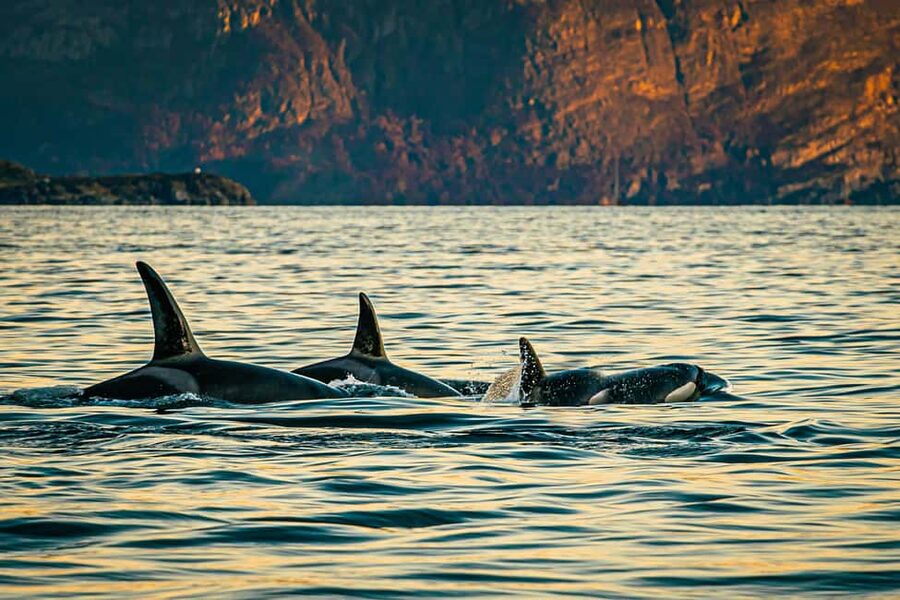
- Orcas and humpbacks are the stars: You may also see fin whales, with several species sometimes appearing on the same outing.
- Viktor gets strong praise: He is noted for finding whales, explaining their behavior, and keeping a respectful distance.
- The RIB ride is part of the adventure: Expect speed, spray, open water, and possible rolling in the waves.
- Warm gear is supplied: You receive an outer suit, life jacket, hat, thermal shoes, and goggles.
- The season runs from mid-October to February: Whale activity follows the herring, so sightings are never guaranteed.
- You can reach Skjervøy from Tromsø: Arctic Route runs daily bus service between the two towns, but allow plenty of time around your three-hour boat trip.
Why Skjervøy is now the whale-watching base
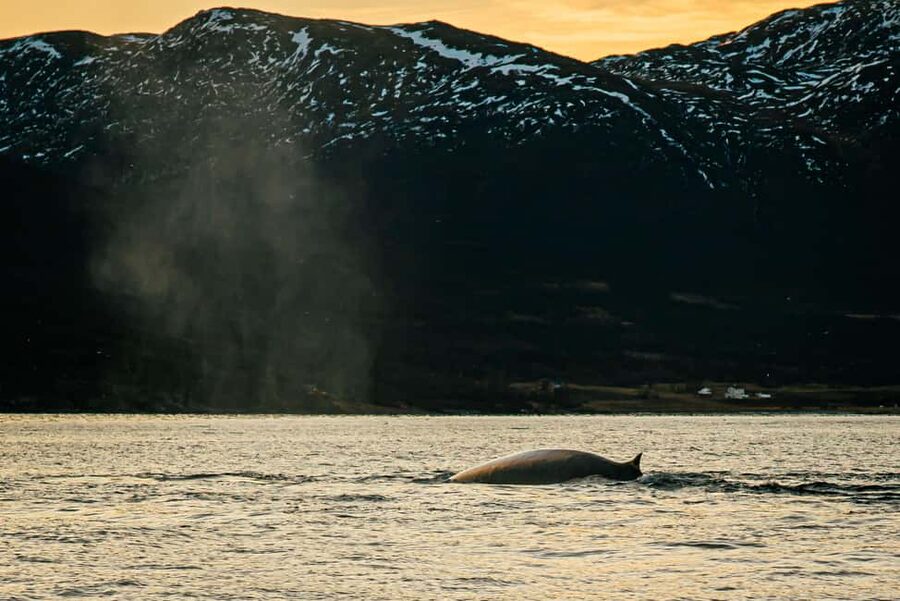
Skjervøy sits in northern Norway, far beyond Tromsø, where winter herring draws large numbers of whales. That seasonal movement is the reason this outing runs from roughly the middle of October through February.
The setting is a big part of the experience. From the harbor, you head out toward cold Arctic water with snowy mountains around you. The scenery can be spectacular in clear weather, but conditions change quickly. You could have sunlight, snow-covered peaks, wind, and spray all in the same three hours.
The move from Tromsø to Skjervøy also matters. This is not a quick city excursion with a short transfer to the water. If you are staying in Tromsø, you need to arrange the journey north yourself. Arctic Route offers daily bus trips between Tromsø and Skjervøy, making the tour possible as a full-day outing, but you should check the bus schedule carefully before booking.
If you are already staying in Skjervøy, the timing is much easier. You simply walk to the harbor meeting point and focus on the boat trip itself.
More Boat Trips in Tromsø
- Tromsø: Whale Watching Tour by Hybrid-Electric Boat
★ 4.5 · 4,217 reviews - Tromsø’s Top-Rated Fjord & Fishing Cruise – All-Inclusive
★ 4.7 · 4,017 reviews - Tromsø: Arctic Fjord Cruise With Stop On Land At Fish Racks
★ 4.5 · 2,268 reviews
Finding Strandveien 96 in Skjervøy harbor
The meeting point is at Strandveien 96, on the backside of the old white building in the harbor, downhill from the Extra grocery store. The listed coordinates are 70.02948760986328, 20.968090057373047.
That description is useful because a harbor can have several boats, operators, and changing areas close together. One practical account describes a busy meeting area where multiple companies gather, but also says the staff quickly directed the group to the correct changing room.
Give yourself enough time to locate the building and get dressed. You do not want to arrive at the last second and rush into heavy outdoor gear. The activity returns to the same place after the whale search.
Getting dressed for three hours on Arctic water
Reisafjord Xperience AS supplies warm outerwear, a life jacket, hat, thermal shoes, and goggles. That is a real benefit. Buying or packing a full set of winter sailing gear for one excursion would be a nuisance, and the goggles are especially useful when the boat is moving into spray.
Still, treat the supplied equipment as a strong outer layer, not a complete answer to the cold. Bring your own warm gloves. A neck covering is also important, since the gap around your face and collar can become uncomfortable when the RIB is underway.
A practical clothing plan is:
- Warm base layers
- A fleece or wool middle layer
- Thin socks inside the supplied boots
- Your own insulated gloves
- A scarf, neck warmer, or similar cover
- A waterproof bag or plastic protection for your camera
One person specifically found that inadequate gloves and no neck cover reduced the comfort of the final part of the trip. That is easy to avoid. You will enjoy watching the whales much more if your hands and neck are warm.
The three-hour RIB ride
Once the group is dressed, you board the RIB and leave the harbor. The boat used for this experience carries up to 12 passengers plus the guide, based on the reported full-group setup. That is small enough to feel more personal than a large cabin cruiser, but not so small that you are alone with the guide.
The RIB is powerful and quick. You get a close feel for the sea, along with the movement that comes with an open boat. On calm water, that makes the trip thrilling. In rougher conditions, the ride can become a serious part of the outing, with rolling, bouncing, and heavy spray.
The boat ride is not the best choice if you want a quiet, warm seat and constant commentary. One useful criticism is that the RIB layout makes it harder for the guide to speak to everyone while the boat is moving. You should think of the guide’s information as something shared during pauses and wildlife watching, rather than a continuous lecture.
The upside is flexibility. The guide can search across the whale area and respond to what is happening on the water. When whales are feeding, the crew may spend longer watching them instead of treating the three-hour limit as a strict stopwatch. Several outings ran a little longer when the animals were especially active.
More Whale Watching Tours in Tromsø
- Tromsø Whale Safari with MS Gabriele
★ 4.3 · 1,937 reviews - From Tromsø: All-Inclusive Whale & Orca Safari
★ 4.5 · 1,221 reviews - Silent Whale Watching by Hybrid-Electric Boat from Tromsø
★ 4.5 · 1,017 reviews - Tromsø Whale Safari with MS Keiser Wilhelm
★ 4.3 · 161 reviews
Watching orcas work as a team
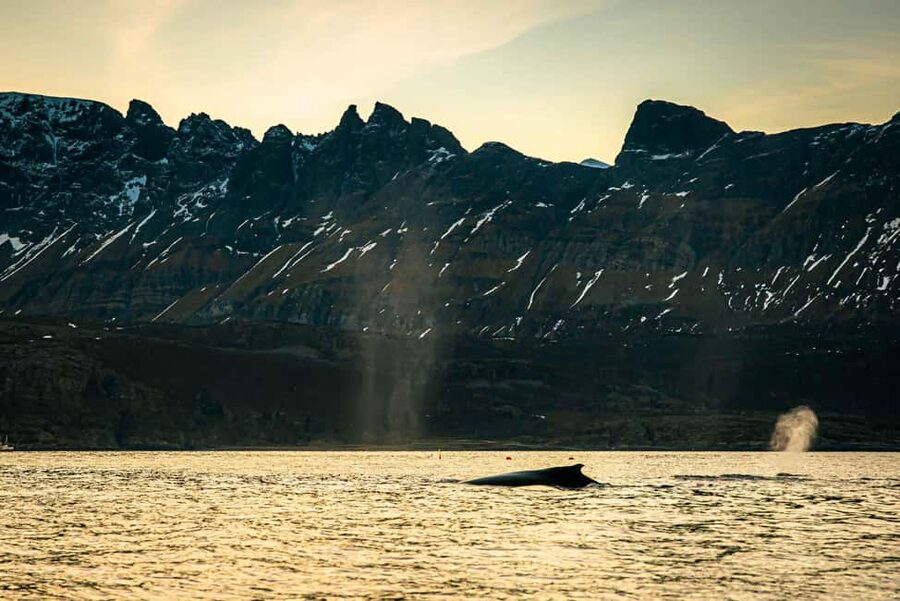
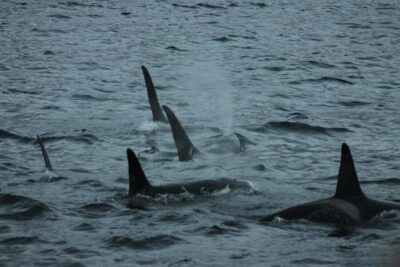
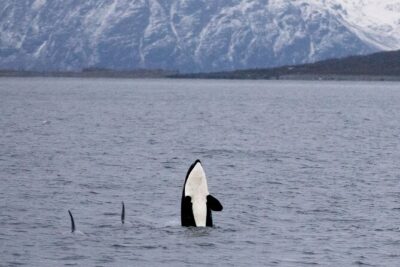
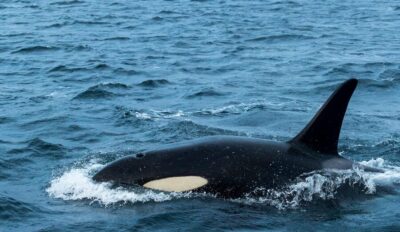
Orcas are usually the main reason people book this trip. Their black bodies, white patches, and tall dorsal fins make them easy to recognize, but their behavior is what makes the sighting memorable.
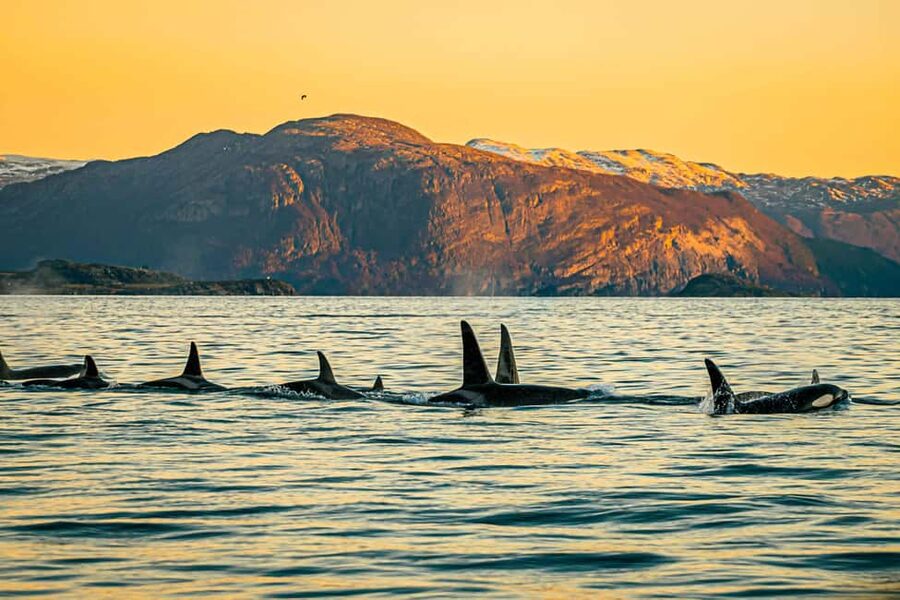
The guides explain how orcas communicate through whistles and pulsed sounds. You can hear some of these sounds yourself, which adds another layer to the viewing. The most exciting scenes come when the pod is feeding. Orcas may work together to gather fish, coordinate their movements, and move through the water as a family group.
Some outings have seen around 50 orcas, while others have found smaller family groups. One particularly special encounter involved a family approaching the boat out of curiosity after the guide stopped at a respectful distance. That is a good sign of the right viewing style: the boat does not need to chase the animals to create a strong encounter.
Sightings are never guaranteed, and the guide may need to search. Early-season conditions can mean more time driving back and forth before finding the animals. One October trip included that extra searching, followed by a large group of orcas once the boat reached the feeding area.
Humpbacks, fin whales, and the wider show
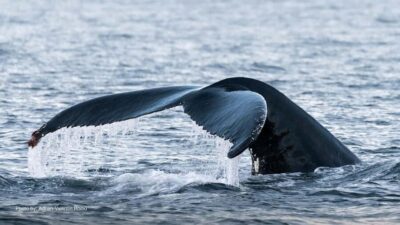
Humpback whales bring a different kind of drama. They are often alone or found in small groups, and their long pectoral fins and patterned tail flukes make them easy to distinguish. Each humpback has a unique tail pattern, almost like an identification mark.
You might see a humpback breach, though there is no promise that one will perform on cue. You may also hear about their songs, which are among the most distinctive sounds associated with whale watching.
Fin whales have appeared on some outings as well. Seeing fin whales, humpbacks, and orcas on the same day is possible, though it should be treated as a lucky combination rather than a normal expectation.
The best part of this variety is that the trip does not depend on one single type of sighting. Even if the orcas are distant, a humpback surfacing or a fin whale moving through the water can change the mood of the whole boat.
A guide who watches the animals, not just the clock
Viktor is the guide name most closely associated with this experience. He handles the welcome, helps people into their suits, and explains what you are seeing. His skill at locating whales is repeatedly singled out, including on a day with poor weather when he found both orcas and humpbacks.
He also appears to adjust the outing to the group. One account describes him asking what else the group hoped to see and making a real effort to search for it. Another notes that he recognized some orcas by name, suggesting close familiarity with the animals in this area.
The most important point is his approach to distance. The guide has been praised for stopping at a considerate distance and letting the whales decide how close to come. That is better for the animals and often better for you, since a calm boat can lead to more natural behavior.
The available tour languages are English and Norwegian. The guide’s explanations are most useful while the boat is stopped or watching whales, when everyone can turn toward him and listen.
The return to shore and the small comforts
After the whale search, the RIB returns to Strandveien 96. The trip is physically active, so the return is a welcome chance to warm up and remove the outer gear.
Hot chocolate and cookies have been provided after some outings. It is a small touch, but it makes sense in this setting. After three hours on the Arctic sea, a warm drink is not decoration. It is part of the comfort of the experience.
The same detail also reflects the overall style of the outing: practical equipment, a local guide, and attention to how people feel at the end. Just do not mistake hot chocolate for a substitute for proper clothing.
Value, timing, and who should book
No tour price is provided here, so I cannot judge the exact cost. I would assess the value by looking at what is included and what you would need to arrange separately.
The boat trip lasts three hours and includes the guide, safety equipment, warm outer clothing, boots, hat, and goggles. That makes the price easier to justify than a bare boat ride. You are also paying for the guide’s ability to find wildlife, read the conditions, and choose a respectful viewing position.
The main extra cost is getting to Skjervøy if you are based in Tromsø. The Arctic Route bus can help, but your full day will include the transfer as well as the three-hour activity. If the boat trip is your only reason to visit Skjervøy, compare the total transport cost and time, not just the advertised activity price.
I would recommend this RIB most strongly for:
- You who want the excitement of an open, fast boat
- Families with older children who can handle cold and movement
- People who care more about close nature viewing than onboard comfort
- Visitors already staying in Skjervøy
- Anyone hoping to see orcas feeding in their natural setting
I would think twice if you want a heated cabin, easy photography from a stable platform, or a smooth ride. A heated cabin cruiser may suit you better, particularly if you are sensitive to cold or motion.
The activity has a 4.9 rating from 109 reviews, with especially strong praise for the guide, organization, whale sightings, and supplied gear. The small number of lower scores focuses on cold and the limits of commentary on a full RIB, rather than on poor organization.
You can cancel without charge up to 24 hours before departure, and the reserve-now, pay-later option keeps your plans flexible. Starting times vary, so check availability before arranging a Tromsø bus connection.
Should you book the Skjervøy RIB safari?
Yes, if you want a close, energetic whale-watching outing and you are prepared for Arctic weather. The combination of orcas, humpbacks, possible fin whales, snowy mountains, and a local guide who knows the area gives this trip real substance.
Book it with realistic expectations. You may need to search before finding whales. The sea can be rough. The guide cannot control the animals or weather, and a full RIB offers less room for a long talk than a cabin boat.
My practical advice is to choose this tour for the wildlife and open-water thrill, bring better gloves and neck protection than you think you need, and plan the Tromsø to Skjervøy connection carefully. If those points suit you, this is a strong choice for seeing northern Norway from the water.
FAQ
Where does the whale-watching tour start?
It starts at Strandveien 96 in Skjervøy harbor, on the backside of the old white building downhill from the Extra grocery store.
What are the meeting-point coordinates?
The coordinates are 70.02948760986328, 20.968090057373047.
How long is the boat trip?
The whale-watching activity lasts three hours and returns to Strandveien 96.
Which whales can I see?
The main target species are killer whales, also called orcas, and humpback whales. Fin whales have also been seen on some outings.
When does the whale-watching season run?
The seasonal experience operates from the middle of October through February.
Is transport from Tromsø included?
Transport from Tromsø is not included in the boat activity information. Arctic Route runs daily bus trips between Tromsø and Skjervøy, and you can book a separate bus ticket.
What clothing and equipment are supplied?
The company provides warm outerwear, life jackets, hats, thermal shoes, and goggles.
Should I bring extra clothing?
Yes. Warm gloves and neck protection are especially useful, since the RIB is exposed to cold air and spray.
What languages does the guide speak?
The live guide service is available in English and Norwegian.
Can I cancel the booking?
You can cancel up to 24 hours in advance for a full refund. Reserve-now, pay-later booking is also available.
More Whale Watching in Tromsø
- 24hr Northern Lights & Whale Watching Cruise
★ 5.0 · 114 reviews - Tromsø: Orca and Whale Watching comfort heated boat Trip
★ 4.8 · 107 reviews - Whale Safari in Tromso
★ 4.5 · 63 reviews - Skjervøy: Orca and Whale-Watching comfort heated Boat Trip
★ 4.9 · 27 reviews
More RIB Boat Safaris from Tromsø
- Whale Watching RIB Safari at Skjervøy
★ 4.8 · 136 reviews - Skjervøy: Whale and Orca Watching Tour by RIB Boat
★ 4.1 · 87 reviews - From Stavanger: RIB Tour to Lysefjord
★ 4.9 · 1,288 reviews - From Stavanger: Lysefjord Sightseeing RIB Boat Tour
★ 4.9 · 821 reviews
Just added around Tromsø
- Tromsø:Northern light tour with mini bus i Tromsø★ 4.9 · 8 reviews
- Tromsø: Horseback Riding Tour★ 4.8 · 23 reviews
- Tromsø: City Walk & Polar Museum (Private or Shared)★ 3.7 · 3 reviews
- Tromsø Sweet Temptations tour: afternoon tea & chocolates★ 4.8 · 5 reviews
- Tromsø: Tasty King Crab Adventure★ 4.5 · 49 reviews
- Tromsø: Snowshoeing in a small group with free photos★ 4.3 · 4 reviews
- Tromsø: Sommarøy Islands Midnight Sun Tour★ 5.0 · 9 reviews
- Tromsø: Snow Sledding, Mini Skiing, Lasso and Reindeer Hides★ 4.6 · 60 reviews
Whale Watching, compared.

Silent Whale Watching by Hybrid-Electric Boat from Tromsø
Read our review →
Bleik: Whale Watching by Speedboat with Puffins and Muffins
Read our review →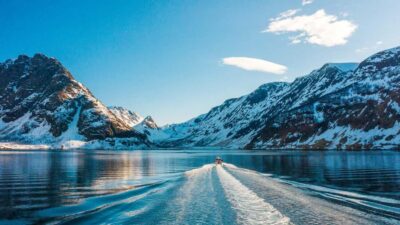

Browse the lists this tour appears in