
Reviewed · SELF-GUIDED TOURS IN OSLO
Akerselva River Meander: A Self-Guided Audio Tour
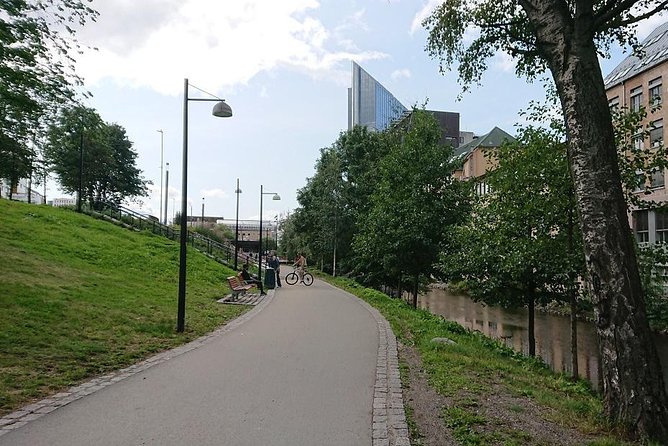
Oslo’s Akerselva River is a good reminder that a city can change without erasing its past. This self-guided walk follows an old industrial corridor from Vaterland Bridge toward Grünerløkka, where factories once crowded the water and today you find trees, footpaths, street art, bridges, and waterfalls. The offline audio tour puts the story in your pocket while you walk at your own speed.
I like two things right away: you can pause the narration whenever a view or cafe catches your eye, and the route gives you a greener side of central Oslo without joining a group. The 1.8-mile path also passes near Mathallen Oslo, Oslo Spektrum, and the Oslo Visitor Centre, making it easy to fit into a day of sightseeing.
The catch is simple but important: you must use the VoiceMap app and reach the correct starting point. Two people had trouble finding the path or starting the audio, so download everything before you go and use the app’s directions. A little preparation matters here.
Key points along Oslo’s river route
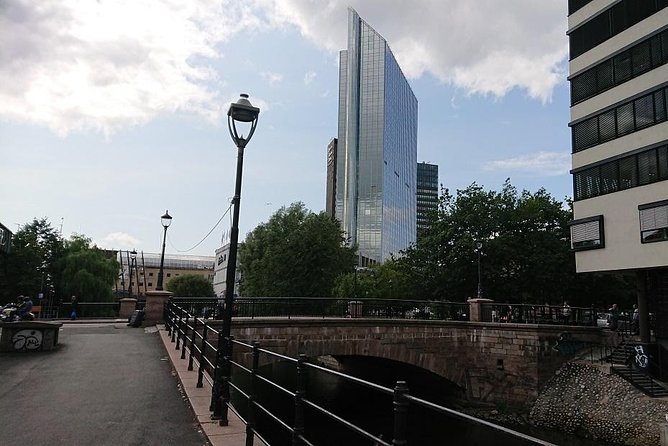
- The walk begins near Vaterland Bridge and Ankerbrua, then follows the Akerselva upstream.
- The audio runs for about 45 minutes, but the full outing can take up to 2 hours and 15 minutes with pauses, photos, and cafe time.
- Street art appears along the river, including work associated with Jussi TwoSeven, Julien de Casablanca, and Anna Woods.
- The route ends at Hønse-Lovisa’s House, an art gallery and cafe beside the river, with waterfall views nearby.
- You can use the tour offline, including its audio, map, and location data.
- The route is wheelchair-friendly in general, though some parts are steep.
Why the Akerselva tells Oslo’s story
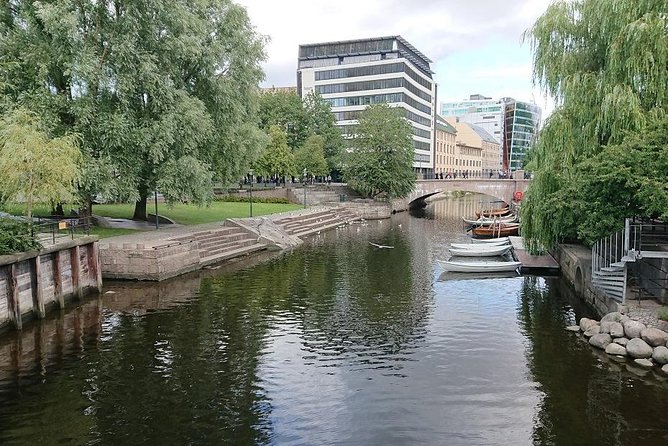
The Akerselva is more than a pleasant stream through town. It once powered industry and helped shape Oslo’s working identity. Today, the river corridor feels far calmer, with water, trees, footbridges, public art, and walking paths replacing much of the old industrial pressure.
That change is the main point of the tour. You are not simply walking beside water and listening to background facts. You are watching Oslo shift from industrial center to modern capital one riverside block at a time.
The route moves upstream, starting in the more urban area south of Grünerløkka and finishing farther north at Hønse-Lovisa’s House. This gives the walk a natural rhythm. The city feels present at the start, while the river becomes the main character as you continue.
I especially like this format for visitors who want context without giving up control of their time. You can stop the recording to take photographs, read a sign, grab a snack, or simply listen to the water. A traditional group tour keeps moving. This one waits for you.
More Self-Guided Tours in Oslo
- Oslo: Scenic Fjord Cruise with Audio Guide Commentary
★ 4.5 · 5,375 reviews - Oslo To Bergen Self-Guided Full Day Trip with Flåm Railway And Fjord Cruise
★ 4.0 · 69 reviews - Self-Guided 22-Hour Round Trip From Oslo To Sognefjord With Flåm Railway
★ 4.5 · 54 reviews
Starting at Vaterland Bridge and Ankerbrua
The stated meeting point is Vaterland Bridge in the Grünerløkka area, near Oslo Plaza. The first stop is listed as Ankerbrua, where the tour begins on the bridge. Since these names can be confusing when you are standing in a city you do not know, use the VoiceMap map and navigation buttons rather than relying on a casual glance at Google Maps.
This is the most important practical point of the whole experience. The route itself is easy to follow once you are on it, but reaching the exact start can take some care. The app provides directions from common map services, and support is available by email or telephone if you run into trouble.
Before leaving your hotel, redeem the audio tour code, download the VoiceMap app for Android or iOS, and save the tour for offline use. The tour includes the audio, map, and geodata offline, which is useful if your phone connection is weak or you want to avoid using mobile data.
At the bridge, give yourself a few minutes to get oriented. You want the audio to begin at the proper point, not halfway through the opening story. Headphones are not supplied, so bring your own. A smartphone is also required.
Following the river through changing neighborhoods
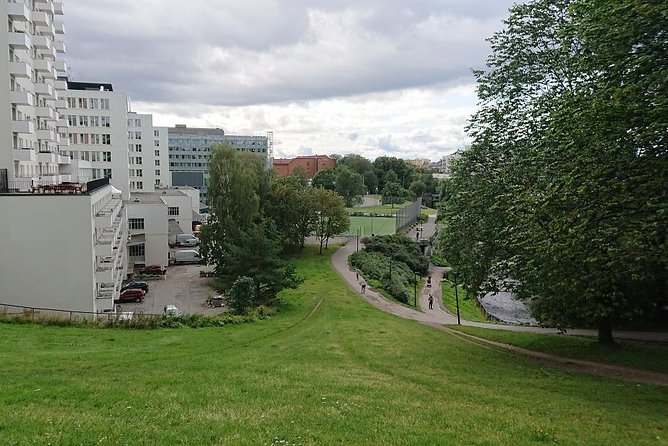
After the opening bridge, the path briefly passes through the surrounding neighborhood before returning to the river. This is useful because the story is not separated from daily Oslo life. You see how the river fits into streets, housing, bridges, and public spaces rather than existing as an isolated park.
The route is about 1.8 miles, or roughly 2.9 kilometers. The audio itself takes about 45 minutes, but the advertised duration stretches from 45 minutes to 2 hours and 15 minutes because you control the pace. If you walk steadily, you may finish near the shorter end. If you stop for photographs, food, street art, or a drink at the end, plan on much longer.
That flexibility is a real advantage for families and independent sightseers. You can split the route into a leisurely morning or afternoon without worrying about holding up a guide. It also suits people who prefer to pause the commentary while crossing a street or finding a better view.
The tradeoff is that a self-guided tour gives you no person beside you to point out a missed turn. Keep the map open and pay attention to the audio prompts. If you walk past a location, the experience may not automatically feel as clear as it would with a live guide.
Bridges, water, and the industrial past
Bridges are a recurring part of the walk. You begin on one, cross another along the route, and continue beside water that once had practical work to do. Each crossing changes your view of the river and lets you look back at the path you have followed.
The waterfall is one of the route’s most appealing natural features. You pass by it while the audio explains how the river corridor developed. Waterfalls here are not just pretty scenery. They help explain why industry gathered along the river in the first place, since moving water could provide power.
You should expect the walk to alternate between calm river views and more built-up sections. That contrast is exactly what gives the route its character. It does not pretend Oslo’s past was purely picturesque. Instead, you get a sense of how a working river became a public greenway.
The route is described as wheelchair-friendly, but it is not perfectly flat. Some parts are steep, so anyone using a wheelchair or managing limited mobility should plan for those sections. The available information does not identify every slope or surface, so check the conditions in the app and allow extra time.
A few more Oslo half-days to weigh up
- Oslo Nature Walks: Island Hopping Tour
★ 4.8 · 2,713 reviews - Oslo: 100% Electric Oslofjord Sightseeing Cruise
★ 4.4 · 2,041 reviews - Oslo: Fjord Evening Cruise with Shrimp Buffet
★ 4.5 · 1,956 reviews - Oslo: 3-Hour Highlights Bike Tour
★ 4.8 · 1,609 reviews
Street art beside the Akerselva
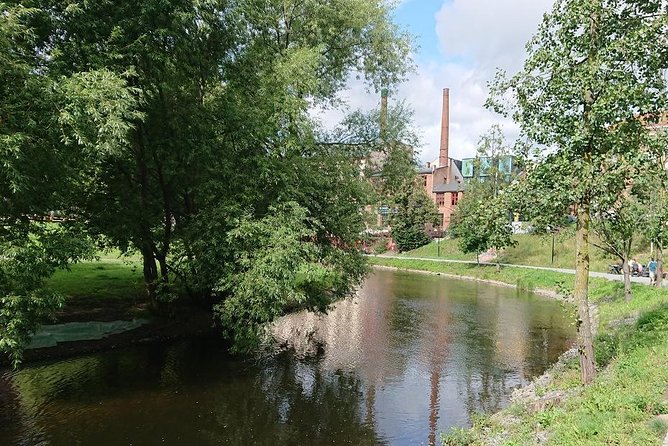
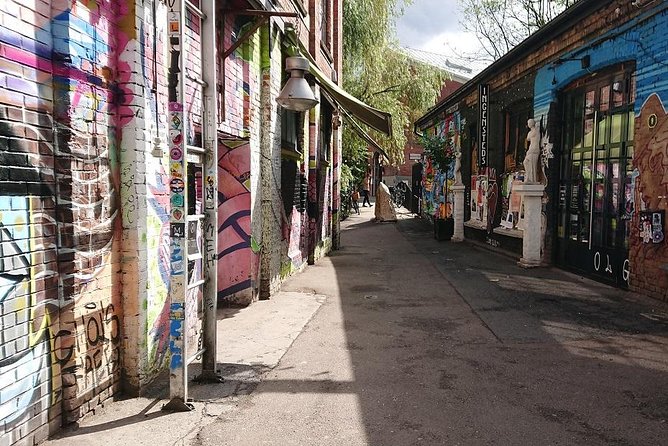
One of the more surprising features is the collection of street art along the river. You may see work connected with internationally known artists such as Jussi TwoSeven, Julien de Casablanca, and Anna Woods.
This adds a modern layer to the historical story. The Akerselva is not presented as an old industrial relic preserved under glass. It remains part of Oslo’s current creative life, with large-scale art appearing beside paths and older structures.
Because this is a self-guided walk, stop the audio when you want to study a piece. The exact amount of art you notice may depend on your pace and attention, so do not treat the route like a quick checklist. Look across the river, around walls, and along the path as you go.
The street art also makes the walk a good choice for people who might not want a conventional museum visit. You still get a cultural experience, but it happens outdoors and alongside the river.
Passing Oslo Spektrum, the Visitor Centre, and Mathallen
The route passes close to Oslo Spektrum, so you are never far from one of the city’s major event venues. It also comes near the Oslo Visitor Centre, which can be useful if you want to combine the river walk with practical sightseeing information.
Mathallen Oslo is another useful landmark near the route. This food hall gives you an option for a meal or snack before or after the walk, though food and drink are not included in the tour price. If you plan to eat there, check its opening hours separately rather than assuming they match the audio tour.
These nearby landmarks make the walk easy to combine with other plans. You could begin after collecting information at the Visitor Centre, stop at Mathallen, or use the route as a transition between central Oslo and Grünerløkka.
Still, remember that the tour does not include admission to museums or other attractions. It is a walking and audio experience, not a bundled sightseeing pass. You pay for the narration and route guidance, then handle any meals, transportation, or entrance tickets yourself.
Ending at Hønse-Lovisa’s House
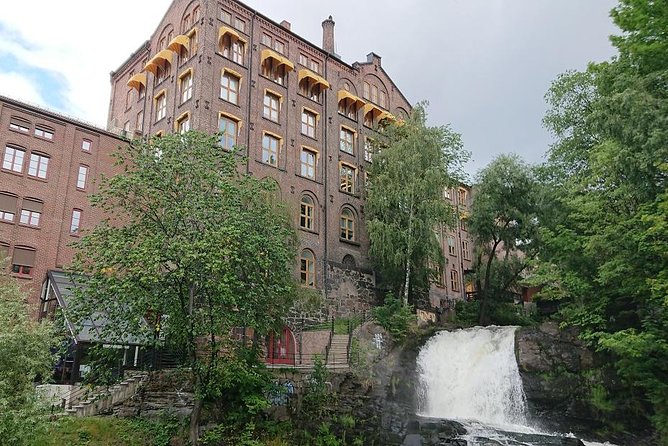
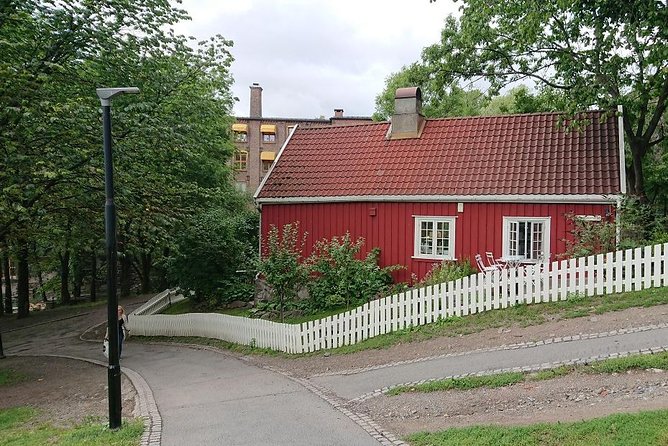
The tour ends outside Hønse-Lovisa’s House at Sandakerveien 2. This is an art gallery and cafe space beside the river, and it gives the walk a pleasant finish rather than dropping you at an ordinary street corner.
The cafe is especially appealing because of its position near the water and waterfall views. You can finish the final audio segment, pause for a drink or something to eat, and let the river walk end at its own pace.
Opening information supplied for the venue lists it as open Monday through Sunday around the clock, but cafe service can vary. Treat the hours as a general guide and check locally if the cafe is an essential part of your plan.
The end point also gives you a clear reason to walk the full route. You are not retracing your steps or ending wherever the audio happens to stop. The walk has a destination with art, food, and scenery.
What $7.99 buys you
At $7.99 per person, this is a low-cost way to add structure and history to a walk you could technically take for free. The river path, bridges, street art, and waterfall do not require an entrance ticket. The fee pays for the English narration, map, and location-based guidance.
That is good value if you enjoy independent sightseeing and already have a smartphone and headphones. A couple can explore for less than the price of many guided city activities, and you keep lifetime access to the tour after booking.
The value is weaker if you dislike phone-based tours or expect a live guide to answer questions. The audio cannot adapt to your interests, and there is no guide to solve every navigation problem in person.
You also need to factor in extras. Transportation, food, drinks, and any attraction tickets are separate. Still, because the main route is free and the audio fee is modest, the tour works well as an affordable add-on to a day in Oslo.
Timing, group size, and practical comfort
The booking page says the experience is often reserved 14 days ahead, but the tour is private and self-guided, so only your own group participates. You are not joining strangers, waiting for a tour leader, or trying to hear a guide over a large crowd.
The duration is flexible. Allow at least 45 minutes for the audio, then add time for the path, photographs, street art, waterfall, and a stop at Hønse-Lovisa’s House. Two hours or more is sensible if you want the walk to feel relaxed.
Public transportation is nearby, which makes both the start and finish practical. The supplied information does not specify a particular bus, tram, or station, so use the VoiceMap map or a local transport app for the exact connection on your chosen day.
Wear comfortable walking shoes. The distance is moderate, but steep sections mean you will want steady footing. Bring a charged phone, headphones, and enough battery for audio and navigation.
The tour is in English and includes lifetime access. Most people can participate, but the route’s slopes are worth considering if you have mobility limits.
Fixing the one major weakness before you go
The biggest risk is not the river walk. It is starting the technology successfully.
Two people had trouble finding the starting point or activating the audio. That problem is avoidable in most cases. Download the app before you reach the bridge, redeem the code, download the tour content, and test the first audio segment while you still have a reliable connection.
Use the app’s directions to reach the start rather than wandering along the river and hoping you have found the correct path. If the starting point still causes trouble, contact VoiceMap support by email or telephone. The tour provider says it can help with navigation and activation.
Also, do not assume that downloading audio recordings alone means the tour is ready. You need the VoiceMap app and its map data. The experience depends on location-based audio, so the app must know where you are.
This preparation takes only a few minutes, but it can make the difference between a smooth independent walk and a silent stroll beside the river.
Who should choose this Akerselva walk?
I would choose this tour if you want a gentle introduction to Oslo’s industrial past, public art, and river paths without committing to a fixed group schedule. It is also a smart choice if you like stopping often and making your own route decisions.
It suits:
- Independent visitors who prefer audio to a live guide
- Couples, families, and small private groups
- People interested in urban change and street art
- Visitors who want a green walk close to central Oslo
- Budget-conscious sightseers with their own phone and headphones
- Anyone who likes ending a walk at a cafe
I would think twice if you need a completely flat route, dislike smartphone navigation, or want detailed personal answers from a guide. The self-guided format is the whole point, but it also means you handle directions, technical setup, and timing yourself.
Should you book it?
Book it if $7.99 feels like a fair price for adding historical narration to a free riverside walk. The best parts are the freedom to pause, the contrast between Oslo’s industrial past and its present-day greenway, the street art, and the finish at Hønse-Lovisa’s House.
Skip it if you want a live guide or if steep sections would make the 1.8-mile route uncomfortable. For everyone else, prepare the app before arrival, bring headphones, and use the map carefully at Vaterland Bridge. Do that, and this becomes a practical, inexpensive way to see a less polished but more revealing side of Oslo.
FAQ
Where does the Akerselva audio tour start?
It starts at Vaterland Bridge in the Grünerløkka area of Oslo, near Oslo Plaza. The opening stop is listed as Ankerbrua, so use the VoiceMap app to confirm the exact starting position.
Where does the tour end?
The route ends outside Hønse-Lovisa’s House at Sandakerveien 2, Oslo. The site includes an art gallery and cafe space near the river.
How long does the tour take?
The audio portion takes about 45 minutes. The full experience can take from 45 minutes to 2 hours and 15 minutes, depending on your walking speed and how often you stop.
How far do you walk?
The route is about 1.8 miles and follows the Akerselva upstream.
Is the route wheelchair-friendly?
The walk is described as wheelchair-friendly, but some parts are steep. The available information does not give details about every slope or surface, so allow extra time and check the route before starting.
Is this a guided group tour?
No. It is a private, self-guided activity, so only your group participates. The narration plays through the VoiceMap app on your smartphone.
What app do I need?
You need the VoiceMap app for Android or iOS. The tour includes offline access to the audio, maps, and geodata.
Do I need an internet connection during the walk?
The tour provides offline access to the audio, maps, and geodata. Download the content before starting so you are ready to walk without depending on a live connection.
Are headphones and a smartphone included?
No. You must provide your own smartphone and headphones.
Are food, transportation, and attraction tickets included?
No. Food and drink, transportation, and admission to museums or other attractions are not included.
More Audio Tours in Oslo
- Downtown Oslo: Self-Guided Highlights and History Audio Tour
★ 4.0 · 10 reviews - Oslo Scavenger Hunt and Highlights Self Guided Audio Tour
★ 4.5 · 6 reviews - Discover Oslo: Self Guided Audio Tour
★ 3.5 · 5 reviews - Molde: Atlantic Ocean Road & Varden Audio Guide Bus Tour
★ 4.1 · 473 reviews
Just added around Oslo
- The Viking Planet Museum – Mini Group (4 adults)★ 4.0 · 16 reviews
- Oslo Winter Highlights Bike Tour★ 5.0 · 36 reviews
- 4 hours Best View of the Oslofjord Winter Edition★ 4.0 · 15 reviews
- Unknown war. Oslo and Norway during 1940-45★ 5.0 · 74 reviews
- The Scenic Roadtrip, Oslo to Bergen via Flam & the Fjords★ 5.0 · 25 reviews
- Fjord Houseboat Cruise in Oslo. 100 % electric. BYO★ 5.0 · 3 reviews
- The Ultimate Norwegian Skiing Experience★ 5.0 · 16 reviews
- Visit the Instaworthy Spots of Oslo’s Vigeland Park with a Local★ 5.0 · 4 reviews
Self-Guided Tours in Oslo, compared.
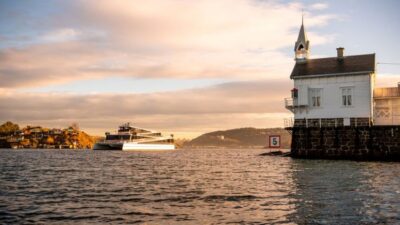
Scenic Fjord Cruise with Audio Guide Commentary
Read our review →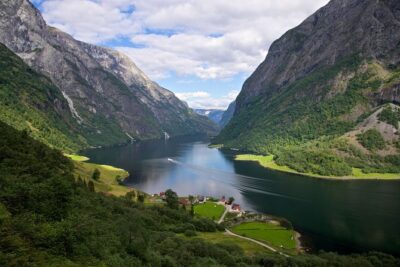
Oslo To Bergen Self-Guided Full Day Trip with Flåm Railway And Fjord Cruise
Read our review →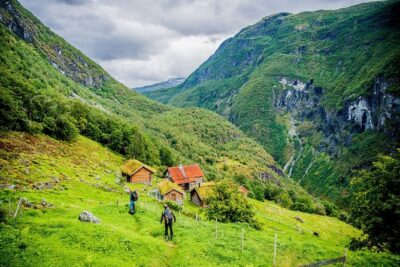
Self-Guided 22-Hour Round Trip From Oslo To Sognefjord With Flåm Railway
Read our review →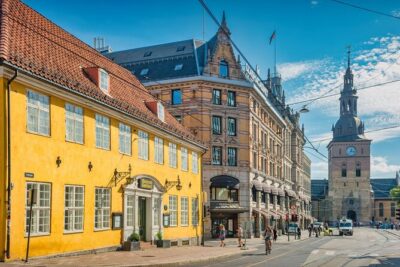


Downtown Oslo: Self-Guided Highlights and History Audio Tour
Read our review →
Vigeland Alien Threat in Oslo Exploration Game and Tour
Read our review →
Oslo Scavenger Hunt and Highlights Self Guided Audio Tour
Read our review →Browse the lists this tour appears in