
Reviewed · CITY TOURS
Oslo City Walks – The City of Contrasts
Oslo’s story is easiest to grasp on foot, where an old town, a former port, and bold new buildings meet within a few blocks. This City of Contrasts walk links the Opera House, Bjørvika, and older Kvadraturen in about two hours, giving you a useful first look at how Norway’s capital is changing.
I like the route’s mix of modern design and old Oslo, and I like that the guide explains the city rather than simply pointing at buildings. The 5 pm start also works well if you want an afternoon activity before dinner. The main drawback is that two hours goes quickly, and the Munch Museum admission is not included.
Key points to know before you book
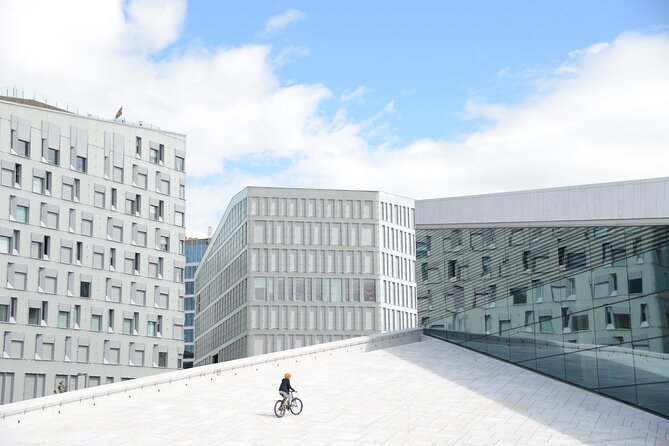
- The Opera House roof is the opening highlight: If time allows, you can walk on its sloping roof for a striking view over the harbor.
- Bjørvika shows Oslo in transition: The route explains how a former container-port district is becoming a cultural center.
- The Munch stop is brief: You spend about 20 minutes at the museum area, but entry costs extra.
- The group stays manageable: No more than 20 people join the walk, which makes questions easier than on a large coach tour.
- The route connects old and new districts: You see Kvadraturen’s historic core as well as the newer waterfront buildings.
- The guide makes the difference: The experience is built around a local English-speaking guide, with the tour rated 4.9 out of 5 and recommended by 98 percent of customers.
Why this short Oslo walk works
This is a city orientation walk, not a museum tour or a full historical survey. You spend your time outside, moving between key areas while the guide explains how Oslo has grown from an older town into one of Europe’s fastest-growing capitals.
That focus gives the experience a clear purpose. You see major sights, but you also learn why they are where they are. Bjørvika is not presented as a collection of sleek buildings. It is shown as part of a major change in Oslo’s waterfront, where former industrial land is being used for culture, libraries, museums, and public spaces.
The tour starts at the Oslo Visitor Center by Jernbanetorget at 5 pm. That meeting point is central and close to public transportation, so it is practical if you have arrived by train or are staying near the city center.
You finish at Deichman Bjørvika, Oslo’s main public library, on Anne-Cath. Vestlys plass. The start and end points are different, but both are in central areas. Hotel pickup and drop-off are not included, so you should plan to reach the first meeting point on your own.
More City Tours in Oslo
- Oslo: City Sightseeing Hop-On Hop-Off Bus Tour
★ 3.6 · 724 reviews - Oslo: Grand City Sightseeing Tour by Bus with Fjord Cruise
★ 4.6 · 647 reviews - Oslo Combo Tour: Grand City Tour and Oslo Fjord Cruise
★ 4.5 · 555 reviews
The Opera House roof and Oslo’s new waterfront
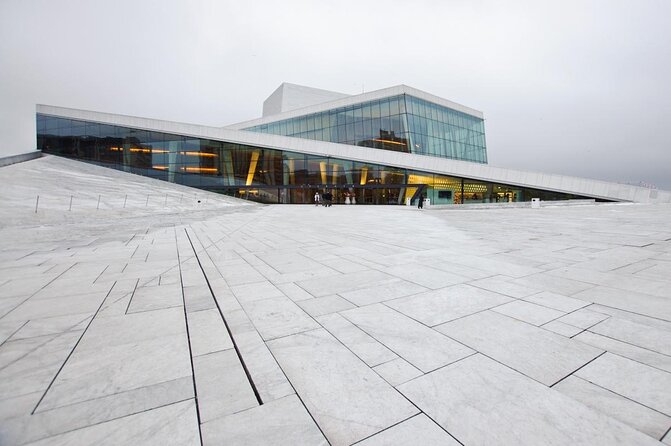
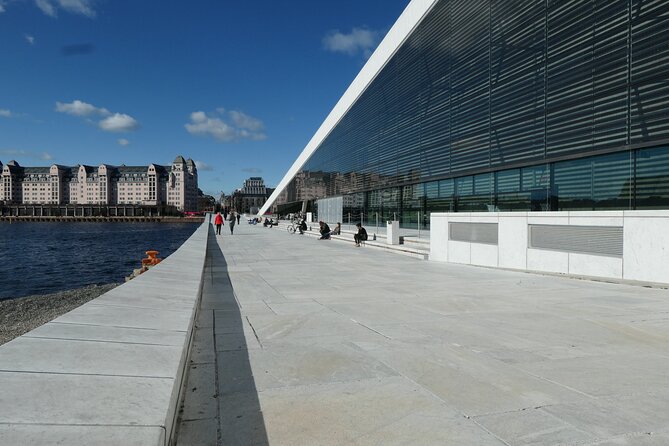
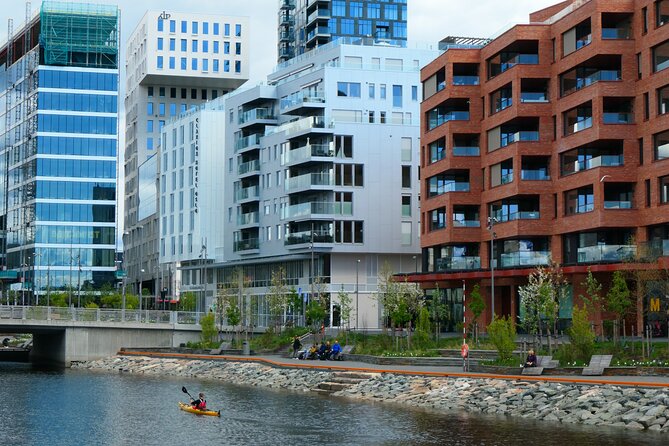
The Norwegian National Opera & Ballet is one of the walk’s best visual stops. Its pale, angular design rises gradually from the waterfront, allowing people to walk up onto the roof rather than viewing the building from a single fixed angle.
If the schedule allows, you take a short stroll on the roof. That detail matters because the Opera House is designed as public space as much as a performance venue. From above, you can look across the harbor and see how much of Oslo’s new development is concentrated around Bjørvika.
You get about 15 minutes here, with no admission fee listed for the stop. That usually means you are seeing the public exterior and roof area, not attending a performance or taking a formal interior visit.
The time limit is worth noting. Fifteen minutes is enough to appreciate the shape of the building and take in the roof, but it is not enough for a slow architectural study. If the group arrives late or the pace changes, the roof walk may be shortened because it is listed as dependent on available time.
Still, this is a strong start. The Opera House gives you an immediate sense of Oslo’s modern identity, and the guide can place it within the larger redevelopment of the waterfront.
Munch Museum and the Bjørvika transformation
The next featured stop is Munch, the museum that opened in October 2021. Its presence helped make Bjørvika one of Oslo’s most changing areas, and the tour uses the museum to explain the district’s shift from port facilities toward arts and culture.
You spend around 20 minutes here. The supplied details do not promise a full museum visit, and admission is not included, so treat this as a short stop connected to the district’s development rather than a substitute for a museum ticket.
That distinction is important if you want to see Edvard Munch’s work. You may need to return separately and pay for entry. This walk gives you context and a look at the museum area, while a separate visit would allow the time needed for the galleries.
I like this part of the route because it adds a useful question: what happens when a working port becomes a cultural district? You can see how Oslo is using major public buildings to reshape its relationship with the water. The guide connects the museum with the wider changes around Bjørvika, rather than treating it as an isolated attraction.
The timing also suits a first-day visit. You get an introduction to one of Oslo’s newest cultural areas, then can decide later if you want to return for a longer museum visit.
Crossing the Akrobaten Pedestrian Bridge
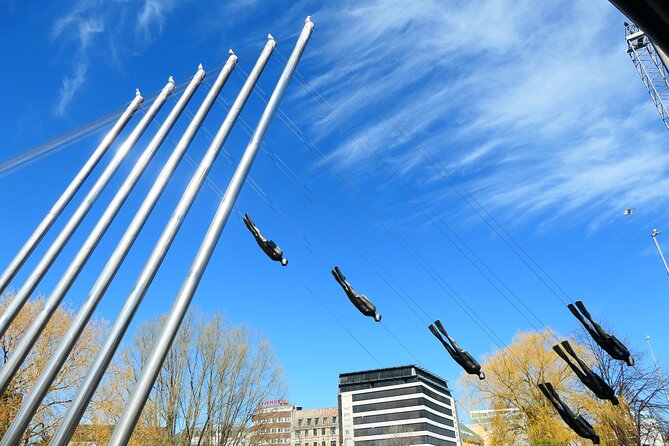
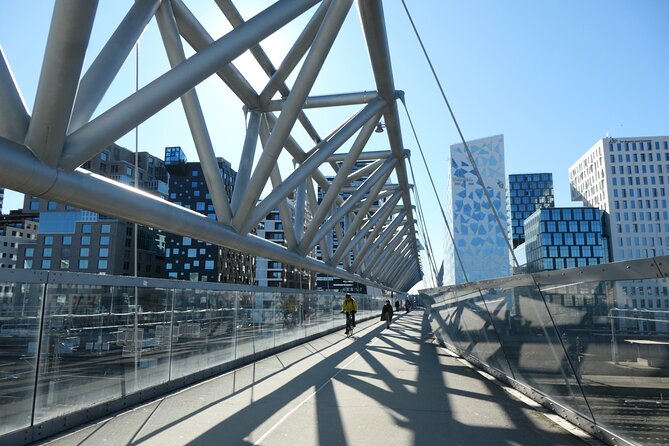
The Akrobaten Pedestrian Bridge takes about 10 minutes and links Grønland with Bjørvika. Its practical role is simple, but it also has become a recognizable part of Oslo’s newer city fabric.
This stop helps you understand the city beyond individual landmarks. Instead of looking only at grand buildings, you see how paths and bridges connect districts that once felt separate. The bridge ties the older Grønland area to the redeveloped waterfront, making it a good example of the walk’s central theme.
The stop is free and outdoors. You should expect a brief crossing and explanation, not a long architectural visit. In poor weather, the bridge may feel exposed, which is one reason the operator advises dressing appropriately.
The bridge also provides a change of pace after the museum area. You are no longer simply looking at a building. You are moving through the city and seeing how new routes support Oslo’s growth.
A few more Oslo half-days to weigh up
- Oslo: Scenic Fjord Cruise with Audio Guide Commentary
★ 4.5 · 5,375 reviews - Oslo Nature Walks: Island Hopping Tour
★ 4.8 · 2,713 reviews - Oslo: 100% Electric Oslofjord Sightseeing Cruise
★ 4.4 · 2,041 reviews - Oslo: Fjord Evening Cruise with Shrimp Buffet
★ 4.5 · 1,956 reviews
Kvadraturen and the older side of Oslo
The tour also visits Kvadraturen, the historic central district. This is where the walk’s contrasts become clearest. Bjørvika represents a newer Oslo shaped by cultural buildings and waterfront redevelopment. Kvadraturen gives you the older urban core, including what was Oslo’s original town hall and the city’s oldest restaurant.
The available details do not specify how long you spend in Kvadraturen, so you should not expect a lengthy guided tour of every street. Instead, the area functions as a compact history lesson within the larger route.
That balance is valuable. A tour focused only on Bjørvika could leave you with the impression that Oslo was built recently. A tour focused only on old buildings would miss the city’s current direction. Kvadraturen supplies the older reference point needed to make the new waterfront easier to understand.
I would pay attention to the guide’s explanations here, especially if you are still learning Oslo’s layout. The route begins near the central station, moves toward the waterfront, crosses between districts, and ends near the new library. You get a basic mental map that can help with the rest of your stay.
What the two-hour timing really means
A two-hour walk is long enough to cover several major areas but short enough to fit around other plans. The 5 pm departure can work particularly well for an arrival day, when you want an organized introduction without committing to a full-day activity.
You should expect a steady walking pace. The route includes outdoor city streets, a bridge, and potentially the sloping roof of the Opera House. The activity requires a moderate level of physical fitness, so it may not suit anyone looking for a seated or low-effort sightseeing option.
The tour operates in all weather conditions. Oslo’s weather can change quickly, and the route has outdoor sections with little shelter. Wear shoes you can walk in and bring clothing suitable for the forecast. This is not a good outing to treat as an indoor backup plan.
The small group limit of 20 is another practical advantage. It is not a private tour, but it is small enough for the guide to keep the group together and answer occasional questions. The strong rating of 4.9 out of 5 from 47 ratings, along with the 98 percent recommendation rate, points to a consistently well-received guiding style. One specific comment praises the guide as terrific, enthusiastic, and well informed, though no guide’s name is provided.
Is $53.31 a fair price?
At $53.31 per person, this walk is not the cheapest way to see Oslo’s waterfront. You are paying for a local guide, a planned route, and the explanations that connect separate neighborhoods into one story.
The value is strongest if you are new to Oslo and want context. A free walk through the same streets would show you the Opera House and bridge, but it would not necessarily explain the port redevelopment, the older town center, or the relationship between Bjørvika and Grønland.
The price is less attractive if you mainly want museum entry or a long visit inside the Munch Museum. That admission is not included, and the museum portion lasts about 20 minutes. You would need to budget separately if seeing the collection is a priority.
For a short guided introduction, I consider the price reasonable, especially with the limited group size. For travelers who already know Oslo well or prefer to explore at their own pace, the cost may be harder to justify.
Who should take this walk?
This experience suits first-time visitors who want a clear introduction to Oslo’s central districts. It also works for anyone interested in urban change, public architecture, and the way cultural buildings can reshape a waterfront.
You will get the most from it if you enjoy listening to local explanations while walking between sights. The tour is less suitable if you want a long stop at each attraction, a full museum visit, or hotel-to-hotel transportation.
It can also be useful for visitors with only a short stay. In two hours, you see the Opera House, Munch area, Akrobaten Bridge, Bjørvika, and part of the historic center. You will not cover all of Oslo, but you will get a focused introduction to some of the city’s most important central areas.
The experience is offered in English. Service animals are allowed, and the route is near public transportation. You should still consider the outdoor format, weather, walking requirement, and possible roof access before booking.
Booking and cancellation details
You receive confirmation at the time of booking. The tour runs in all weather, and the maximum group size is 20 people.
You can cancel for a full refund if you do so at least 24 hours before the 5 pm start time. Cancellations or changes made less than 24 hours before the experience are not accepted for a refund. The cut-off follows Oslo local time.
Should you book Oslo City Walks?
Book this walk if you want a compact, guided introduction to Oslo’s old center and new waterfront. The strongest reason to choose it is the route itself: the Opera House, Bjørvika, Munch, Akrobaten Bridge, and Kvadraturen form a useful story about a city changing before your eyes.
Skip it if your priority is spending serious time inside the Munch Museum, avoiding outdoor walking, or seeing Oslo without a fixed schedule. For most first-time visitors, though, the two-hour format and central start make this a practical way to get your bearings. Bring weather-ready clothing, arrive at the Oslo Visitor Center before 5 pm, and think of the Munch stop as an introduction rather than a museum visit.
FAQ
How long does Oslo City Walks last?
The walk lasts approximately two hours.
What time does the tour start?
The tour starts at 5 pm.
Where does the tour begin?
It begins at the Oslo Visitor Center, Jernbanetorget 1, 0154 Oslo, Norway.
Where does the tour end?
It ends at Deichman Bjørvika, Anne-Cath. Vestlys plass 1, 0150 Oslo, Norway.
Is hotel pickup and drop-off included?
No. Hotel pickup and drop-off are not included.
Is the tour offered in English?
Yes. The tour is offered in English.
Is the Munch Museum admission included?
No. Admission to Munch is not included.
Can I walk on the Opera House roof?
If time allows, the tour includes a stroll on the Opera House roof.
Does the tour operate in bad weather?
Yes. The tour operates in all weather conditions, so you should dress appropriately.
How large is the group?
The tour has a maximum of 20 travelers.
Is cancellation free?
Yes, you can cancel for a full refund at least 24 hours before the experience start time.
Just added around Oslo
- The Viking Planet Museum – Mini Group (4 adults)★ 4.0 · 16 reviews
- Oslo Winter Highlights Bike Tour★ 5.0 · 36 reviews
- 4 hours Best View of the Oslofjord Winter Edition★ 4.0 · 15 reviews
- Unknown war. Oslo and Norway during 1940-45★ 5.0 · 74 reviews
- The Scenic Roadtrip, Oslo to Bergen via Flam & the Fjords★ 5.0 · 25 reviews
- Fjord Houseboat Cruise in Oslo. 100 % electric. BYO★ 5.0 · 3 reviews
- The Ultimate Norwegian Skiing Experience★ 5.0 · 16 reviews
- 3 Hours Walking Tour for Great Food in Oslo★ 5.0 · 32 reviews
City Tours, compared.
Grand City Sightseeing Tour by Bus with Fjord Cruise
Read our review →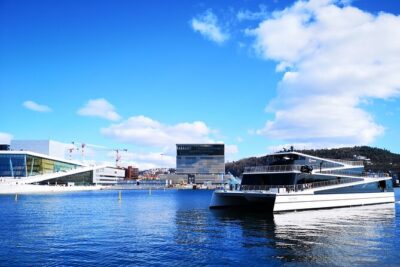
Oslo Combo Tour: Grand City Tour and Oslo Fjord Cruise
Read our review →
Browse the lists this tour appears in