
Reviewed · HISTORICAL TOURS
Oslo City Walks – Historic River Walk
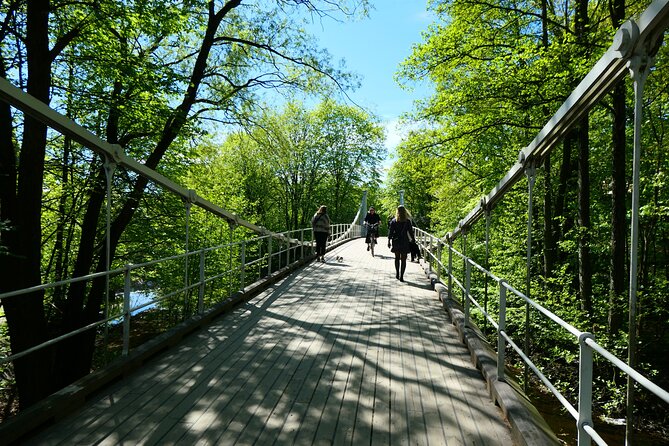
Oslo’s Akerselva River is more than a pleasant strip of water through town. It marks the old divide between east and west, and its banks tell the story of Oslo’s industrial growth, decline, and renewal. This two-hour walk follows that story through a greener, more modern city.
I like the route for two clear reasons: the history is tied to real buildings and working waterways, and Mathallen gives you a useful place to pause for food after the walk. The main drawback is that the tour ends at Beierbrua rather than returning you to central Oslo, so you need to plan your next move.
This is a small-group walk of up to 20 people, offered in English at 2:00 pm. It costs $53.28 per person, which is reasonable if you want context and orientation rather than simply following the river on your own. Its published score is 4.8 from 31 ratings, with 94 percent recommending it.
Key points to know before you book
- Akerselva is Oslo’s old industrial spine: You see the river that helped power the city and separated its eastern and western sides.
- The walk is about two hours: Most of the route is spent beside the river, with a short stop at Mathallen.
- Mathallen adds a practical food stop: You can browse Norwegian and international food options in a former industrial building.
- The route finishes at Beierbrua waterfall: This is a scenic endpoint, not a return to the starting point.
- The group is capped at 20 people: That keeps the walk more manageable than a large city sightseeing group.
- You need to dress for Oslo weather: The walk operates in all weather, and a moderate level of fitness is expected.
Why Akerselva tells Oslo’s story so well
If you have only seen Oslo’s central streets, Akerselva gives you a different view of the capital. The river runs through the city as a green corridor, but its past is firmly tied to factories, mills, and industrial work. This is where the city’s growth took physical shape.
The river also helps explain Oslo’s east-west divide. Your guide points out how the waterway sits between different parts of the city and uses the riverbanks to explain how Oslo developed. That kind of setting makes the information easier to remember than a list of dates in a museum.
The appeal is not just the water or the trees. It is the contrast. Along the route, old industrial structures have been adapted for modern use, with cafés, galleries, and other public spaces appearing beside the river. You get a walking tour that connects urban change to things you can see right in front of you.
I especially like this approach for a first visit. You are not only checking off sights. You are learning why this part of Oslo looks the way it does today.
More City Tours in Oslo
- Oslo: City Sightseeing Hop-On Hop-Off Bus Tour
★ 3.6 · 724 reviews - Oslo: Grand City Sightseeing Tour by Bus with Fjord Cruise
★ 4.6 · 647 reviews - Oslo Combo Tour: Grand City Tour and Oslo Fjord Cruise
★ 4.5 · 555 reviews
Starting at Oslo Visitor Center at 2:00 pm
The walk begins at Oslo Visitor Center, at Jernbanetorget 1. This is a practical meeting point near Oslo’s main transport hub, and the central location makes it easier to fit the tour into a day of sightseeing.
The 2:00 pm start gives you time to have lunch first, which may be useful since Mathallen comes later in the walk. It also leaves the morning free for museums, the harbor, or other central sights. Since the tour ends outside the starting area, avoid scheduling a tight appointment immediately afterward.
Your mobile ticket is accepted, and the tour is offered in English. The booking confirmation arrives at the time of booking, so you should have the meeting details ready on your phone. The guide is included in the price, while hotel pickup and drop-off are not.
This is a guided walk rather than a private transfer or a hop-on, hop-off experience. You meet the guide in central Oslo, follow the route on foot, and finish at a different point. That simple setup keeps the focus on the river and the story of the neighborhood.
Walking through Akerselva Miljopark
The main part of the experience takes place in Akerselva Miljopark, where you spend about an hour beside the river. The park is known as Oslo’s Green Lung, and the name makes sense once you leave the harder urban setting behind.
Expect the guide to explain the river’s role in Oslo’s industrial past and its place between the city’s eastern and western districts. The walk is not simply a scenic stroll. The point is to understand how the river supported industry and how the area later became a popular outdoor space.
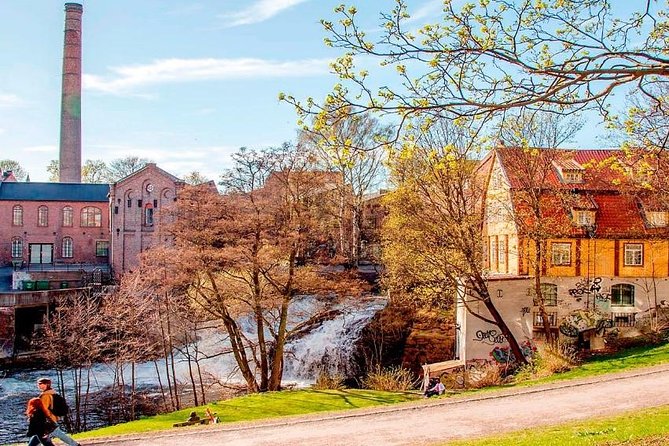
The strongest part of this stop is the link between old and new. Industrial buildings have been given fresh uses, and the riverbanks now support places to eat, see art, and spend time outdoors. You get a sense of Oslo as a city that has reused its past rather than wiping it away.
A previous description of the walk called it short and pleasant while highlighting the transformation of industrial buildings for modern life. That is a useful way to set your expectations. This is not a demanding all-day history program, and it is not a grand parade of famous monuments. It is a compact walk built around one clear theme.
You should expect a moderate level of physical activity. The tour provider does not describe the exact surface or number of inclines, so anyone with mobility concerns should ask before booking. Children can join, but they must be accompanied by an adult. Service animals are allowed.
The industrial character of the riverfront
Akerselva works well as a tour route because the surroundings give the guide plenty to point out. The river once formed part of a working industrial zone. Today, the same setting is connected with outdoor recreation, cafés, and art galleries.
That change is important for understanding modern Oslo. Urban renewal can sound abstract when explained in a lecture, but here it is presented through reused buildings and public space. You can see how a former industrial area can become part of everyday city life without losing all signs of its earlier purpose.
The route may appeal to you if you have already seen Oslo’s most famous central sights and want something more local in character. It also works early in a visit because it gives you a wider sense of the city. You come away with a better idea of how different districts connect, rather than viewing the center as an isolated tourist zone.
There is a limit, though. The information supplied for the tour does not list particular factories, bridges, or historic structures by name. If you want a highly detailed industrial archaeology tour, this may feel too general. Its strength is the overall story and the walkable setting.
More Historical Tours in Oslo
- Oslo: Historic Myths & Legends Evening Walking Tour
★ 4.8 · 408 reviews - Oslo: History, Art and Secrets Tour
★ 4.7 · 62 reviews - A Well Balanced History and Food Tour with Focus on the Scandinavian Kitchen
★ 4.5 · 29 reviews - Jewish Heritage Tour in Oslo
★ 5.0 · 16 reviews
A 15-minute pause inside Mathallen Oslo
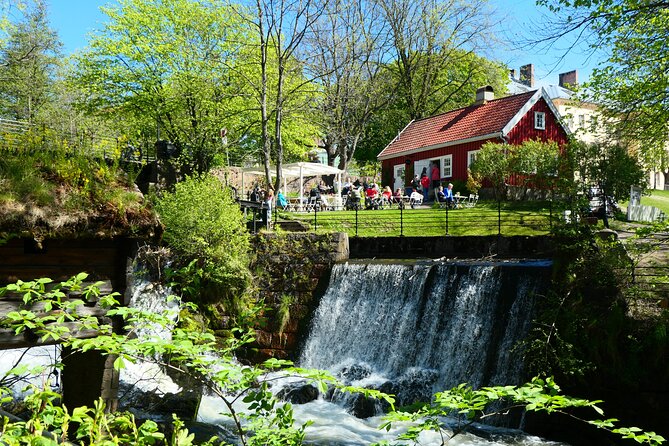
After about an hour along the river, the route reaches Mathallen Oslo. This food court occupies an old industrial building and serves as both a short stop and the tour’s toilet break.
The timing is brief, about 15 minutes, so think of Mathallen as a sample of Oslo’s food scene rather than a full meal. You can look over Norwegian specialties and international options, but you may not have time for a relaxed sit-down lunch. If you want to eat properly, plan to return later or continue on your own after the tour.
This stop adds value because it connects the industrial theme to present-day city life. An old working building now houses food stalls and public activity. The setting reinforces the tour’s main point: Oslo’s industrial past has not disappeared, it has been repurposed.
I would not count on this being a formal tasting experience. Food is not included, and the short stop means any purchase is up to you. Still, it is a smart break in the route, especially if you want a quick Norwegian bite or need a restroom before the final stretch.
Mathallen also gives you a useful option after the guided portion. Since the walk ends at Beierbrua, you could return to Mathallen independently if you want more time there, though the tour information does not specify the best route or travel time back.
Ending at Beierbrua waterfall
The final point is a bridge over a spectacular waterfall at Beierbrua. This gives the walk a strong visual finish. After hearing about factories and urban redevelopment, you end beside moving water rather than on an ordinary city street.
The endpoint is at Beierbrua, 0459 Oslo. There is no hotel drop-off and no return transfer included, so check your plans before you start. The tour’s appeal partly comes from ending in a quieter, scenic place, but that also means you should be ready to continue independently.
The waterfall is a fitting close to the route because it brings the story back to the river itself. You have followed the water from an urban meeting point through the city’s former industrial zone to a dramatic section of the river. It gives the tour a sense of progression without needing a long list of separate attractions.
The provided details do not state how long the group stays at the waterfall or provide directions from Beierbrua afterward. If you need to reach a train, restaurant, or timed attraction, leave extra room in your schedule.
Is $53.28 a fair price?
At $53.28 per person, this is not the cheapest way to walk beside Akerselva. You can explore a public river path without paying an admission fee. The price pays for the guide, the organized route, and the historical explanation that turns a pleasant walk into a lesson about Oslo’s growth.
I see the value most clearly if you prefer guided context. A self-guided walk can show you the river and waterfall, but it may not explain why the waterway mattered, how it divided the city, or how the old industrial buildings found new uses.
The group limit of 20 helps support the price. It is not a private tour, but it should be easier to hear the guide than in a very large group. The experience also combines several useful elements: a green riverside walk, city history, a food stop, and a scenic finish.
You should be less interested if your main goal is to save money or spend a long time eating at Mathallen. The food court stop is only 15 minutes, and the tour does not include food, drinks, transport, or hotel pickup.
The tour is often booked about 39 days ahead. That suggests you should reserve early if your Oslo dates are fixed, especially if you want the 2:00 pm departure. Free cancellation is available up to 24 hours before the start time, which gives you some flexibility.
Weather, clothing, and walking pace
The tour operates in all weather. Oslo’s conditions can change, and a riverside walk is less enjoyable if you are dressed only for a sunny afternoon. Bring suitable outdoor clothing, and wear comfortable shoes for a walk that lasts about two hours.
The provider asks for a moderate level of physical fitness. That wording matters more than the short duration. You are on foot for most of the experience, and the route is not designed as a seated sightseeing tour.
The tour is not described as wheelchair accessible, and the exact path conditions are not provided. If you have specific mobility needs, contact Oslo Guidebureau before booking. Service animals are allowed.
Because children must be accompanied by an adult, this can work for families who are comfortable with a guided walk. The history may be most useful for older children who can follow a discussion about industrial change, but the supplied details do not give a minimum age.
Who will enjoy this Oslo walk?
I would recommend it to you if you want to understand Oslo beyond its postcard center. It suits first-time visitors who like a guide-led introduction, as well as returning visitors looking for a different part of the city.
It is also a good match for anyone interested in urban history, architecture, former industrial sites, and public spaces. The route gives you a clear subject rather than a loose collection of sights.
Food-minded visitors may like the Mathallen stop, but you should treat it as a preview rather than the main event. The short pause lets you see the food court and perhaps grab something quick, but it does not leave much time for a leisurely meal.
You may want to skip it if you prefer to set your own pace. The tour has a fixed start time, a fixed endpoint, and a group of up to 20 people. You also need to keep walking in changing weather.
Should you book Oslo’s Historic River Walk?
Book this walk if you want a compact, guided look at how Oslo changed from an industrial city into a greener urban center. The best reasons are the Akerselva setting, the clear east-west story, the reused industrial buildings, and the waterfall finish at Beierbrua.
Do not book it expecting a major food tour, a private guide, or transportation back to central Oslo. The value lies in the explanation and the route, not in included meals or a long list of headline attractions.
For many visitors, it is a smart way to spend two hours, especially early in a stay. You get a calmer side of Oslo, a bit of local history, and a practical stop at Mathallen. Just wear weather-ready shoes and plan what you will do after the walk ends.
FAQ
How much does the Historic River Walk cost?
The tour costs $53.28 per person.
How long does the tour last?
The walk lasts approximately two hours.
What time does the tour start?
The tour starts at 2:00 pm.
Where does the tour begin?
It begins at Oslo Visitor Center, Jernbanetorget 1, 0154 Oslo, Norway.
Where does the tour end?
It ends at Beierbrua, 0459 Oslo, near the waterfall.
Is a guide included?
Yes. A guide is included in the tour price.
Is food included at Mathallen Oslo?
No. Food is not included. Mathallen is a short stop where you can choose from Norwegian and international food options.
Is the walk offered in English?
Yes. The experience is offered in English.
Can I cancel for a full refund?
Yes, if you cancel at least 24 hours before the experience start time. Cancellations made less than 24 hours in advance are not refunded, and changes within that period are not accepted.
More Walking Tours in Oslo
- Oslo: Best of Oslo Walking Tour
★ 4.5 · 458 reviews - Oslo: Guided Walking Tour of Central Oslo
★ 4.7 · 438 reviews - Taste of Oslo Walking Tour
★ 4.5 · 282 reviews - Central Oslo Guided Walking Tour with Local Guide
★ 4.5 · 278 reviews
Just added around Oslo
- The Viking Planet Museum – Mini Group (4 adults)★ 4.0 · 16 reviews
- Oslo Winter Highlights Bike Tour★ 5.0 · 36 reviews
- 4 hours Best View of the Oslofjord Winter Edition★ 4.0 · 15 reviews
- Unknown war. Oslo and Norway during 1940-45★ 5.0 · 74 reviews
- The Ultimate Norwegian Skiing Experience★ 5.0 · 16 reviews
- The Scenic Roadtrip, Oslo to Bergen via Flam & the Fjords★ 5.0 · 25 reviews
- Fjord Houseboat Cruise in Oslo. 100 % electric. BYO★ 5.0 · 3 reviews
- 3 Hours Walking Tour for Great Food in Oslo★ 5.0 · 32 reviews
Historical Tours, compared.

Reindeer Camp and Sami Cultural Tour with Lunch
Read our review →

Sightseeing Cruise of Bergen’s Historic Landmarks
Read our review →


A Well Balanced History and Food Tour with Focus on the Scandinavian Kitchen
Read our review →Browse the lists this tour appears in