
Reviewed · WALKING TOURS
Central Oslo Guided Walking Tour with Local Guide
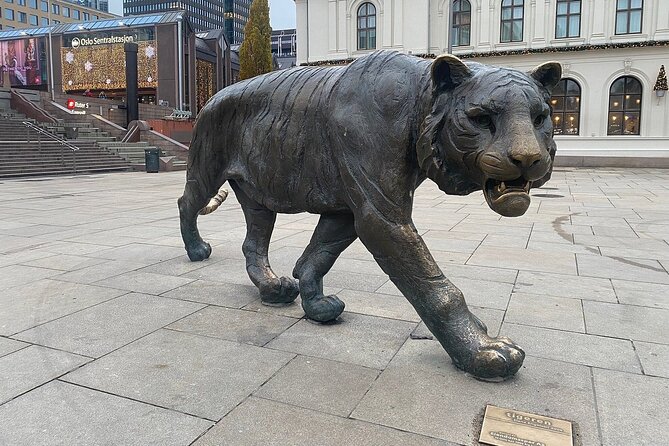
Oslo’s best first look comes on foot, and this two-hour central Oslo walk connects the city’s major landmarks without burying you in museum detail. You begin at the Tiger sculpture beside Central Station and finish at the Royal Palace, with a useful route through old streets, waterfront districts, and Norway’s political heart.
I like the low price, $16.94, and the way the tour gives you a working map of central Oslo in a short time. I also like the guides’ mix of history, Norwegian culture, Scandinavian rivalries, and humor. The main catch is that buildings are viewed from outside, so you should not book this expecting an interior visit to the castle, cathedral, Parliament, or Opera House.
Key points to know before you book
- The Tiger starts the story: Meet at Jernbanetorget and learn why Oslo is known as the Tiger City.
- Akershus Fortress is seen from the grounds: You get its medieval setting and history, but interior admission is not included.
- The route links old and new Oslo: Rådhusgata, City Hall, Karl Johans gate, Aker Brygge, and the Opera House show how the capital has changed.
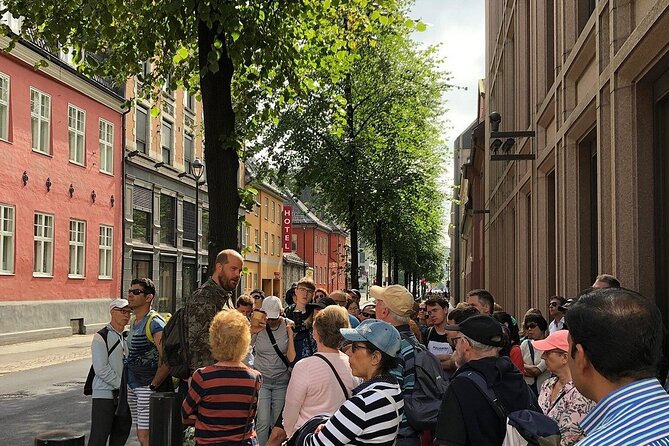
- Guides shape the experience: Suzanne, Alexia, Marta, Daniel, Kamil, Camille, and others have led tours, with humor and clear local context often praised.
- Expect a real city walk: The pace is generally easy, but the route covers several blocks and can feel long if walking is difficult.
- It works best early in your stay: You finish near the Royal Palace with a clear sense of where to return for shopping, food, museums, and more sightseeing.
Why this route works for a first day in Oslo
I like city walks that help you make decisions for the rest of a trip. This one does that well because it crosses several different parts of central Oslo rather than circling one square.
You see the transport hub around Jernbanetorget, the modern waterfront near the Opera House, the old military stronghold of Akershus, the government district around City Hall and Parliament, the shopping spine of Karl Johans gate, and the polished restaurants and shops of Aker Brygge.
That variety gives you context. Oslo is not just a medieval town, nor is it only a modern Scandinavian capital. Within two hours, you see traces of royal power, military defense, civic government, religious life, commerce, and waterfront redevelopment.
The format is also practical. The tour is offered in English, uses a mobile ticket, and allows up to 27 people. That is not a private walk, but it is still small enough to keep moving as a group. Several guides use a portable speaker, which matters on noisy streets and helps you hear without crowding around the guide.
You should allow more than two hours in your day, since the listed duration is approximate. The walk finishes at the Royal Palace, not back at Central Station. That is useful if you plan to continue toward the palace gardens or explore the west end of central Oslo, but you should know where you are going next before you start.
More Walking Tours in Oslo
- Oslo: Best of Oslo Walking Tour
★ 4.5 · 458 reviews - Oslo: Guided Walking Tour of Central Oslo
★ 4.7 · 438 reviews - Oslo: Historic Myths & Legends Evening Walking Tour
★ 4.8 · 408 reviews
Meeting the Tiger at Jernbanetorget
The tour opens beside Tigeren, the large tiger sculpture at Jernbanetorget. Created in 2000 for Oslo’s millennium, it refers to the city’s nickname, Tiger City.
This is a smart meeting point. Oslo Central Station is nearby, public transportation is close, and the square is easy to identify. It also gives the guide an engaging opening rather than starting with a dry list of dates.
You spend about 10 minutes here. That is enough time for a photo, a short explanation, and a first taste of the city’s habit of mixing modern public art with older stories.
I would arrive a little early. A central station square can be busy, and a group of up to 27 people needs time to gather. Have your mobile ticket ready and wear shoes suited to pavement rather than polished shoes meant only for dinner.
The Opera House and Oslo’s modern waterfront
The Oslo Opera House is one of the route’s clearest examples of present-day Oslo. Completed in 2008, it is home to the Norwegian National Opera and Ballet and is known for its contemporary design beside the water.
The building is especially useful on a walking tour because its shape and location are easy to understand from the outside. Your guide can place it in the story of Oslo’s waterfront and explain how the city has made the harbor a central part of urban life.
Do not expect an opera performance or an included interior visit. The tour’s purpose here is orientation and architecture, not a full look inside the venue.
I like this early contrast between the Tiger and the Opera House. One is a playful city symbol, the other a major cultural building. Together they show that Oslo’s identity is not fixed in one period.
Rådhusgata and the older city center
Rådhusgata brings you into Oslo’s older street pattern. The street dates from the 1620s and leads toward City Hall, making it a useful link between the historic center and the civic waterfront.
This portion helps you notice the city at walking speed. Instead of seeing Oslo only through major monuments, you get a sense of how streets connect the old center with the buildings that shaped modern Norway.
The stop lasts about 10 minutes. That is long enough for the guide to explain the street’s place in Oslo’s growth while keeping the group on schedule.
The strongest guides add the kind of background that is hard to pick up from a map. Several tour accounts praise guides such as Suzanne, Marta, and Alexia for answering questions and adding historical detail without turning the walk into a lecture. That conversational style is a real advantage here, since Rådhusgata rewards explanation more than photography alone.
A few more Oslo half-days to weigh up
- Oslo: Scenic Fjord Cruise with Audio Guide Commentary
★ 4.5 · 5,375 reviews - Oslo Nature Walks: Island Hopping Tour
★ 4.8 · 2,713 reviews - Oslo: 100% Electric Oslofjord Sightseeing Cruise
★ 4.4 · 2,041 reviews - Oslo: Fjord Evening Cruise with Shrimp Buffet
★ 4.5 · 1,956 reviews
Akershus Fortress, with an important limitation
Akershus Fortress is the route’s most substantial historic sight. Built around 1299 to protect Oslo from invasion, the medieval castle later served as a military base and prison. Today, it is also a museum and historic site.
The fortress gives you a strong sense of Oslo’s strategic position. From this part of the route, the city’s waterfront, government buildings, and old defensive center begin to fit together.
Here is the detail you need to keep straight: the tour does not include visits inside buildings. The supplied highlights describe entering Akershus Castle, but the inclusion details say interior admission is not part of the experience. Plan on seeing the fortress grounds and exterior areas with the guide, not touring the museum rooms.
That is not a major problem if you want a quick introduction. It is a drawback if Akershus is your main reason for booking. You would need to arrange a separate visit for the interior and allow extra time beyond this walk.
The fortress can also be one of the more physically demanding parts of the route, depending on the exact path and conditions. The walk is described as manageable, but it covers many blocks. If you have difficulty walking, take the distance seriously even though the pace is generally leisurely.
City Hall and the Nobel Peace Prize connection
Oslo City Hall is scheduled for about 15 minutes, the longest named stop on the route. Built between 1931 and 1950, it is an important municipal building and one of Oslo’s best-known civic landmarks.
The building is closely linked with the Nobel Peace Prize ceremony, held there each year. That connection gives the stop international importance, while the guide’s local explanation can make the building relevant to Oslo’s own civic life.
Again, you see City Hall from the outside. The walk is best for understanding where it is, why it matters, and how it fits into the harbor-side center. It is not a substitute for a guided interior visit.
I would listen for the political and cultural context here, not just the construction dates. The better guides use City Hall to explain Norwegian public life and the country’s place in Scandinavia. The tour’s strongest feedback repeatedly points to that blend of facts, culture, and humor.
Oslo Cathedral and Karl Johans gate
The route continues toward Oslo Cathedral, originally built in 1697. Its Baroque design and long religious history make it a useful reminder that the capital’s center is older than its sleek waterfront image suggests.
The cathedral has been renovated several times, including major work in the 20th century. You can expect a short exterior explanation rather than an interior church visit, since no building entry is included.
From there, Karl Johans gate gives you Oslo’s main urban spine. The street runs between Oslo Central Station and the Royal Palace, passing historic buildings, shops, restaurants, and cultural sights.
This is one of the most useful sections for your own sightseeing. You can note where to return for a meal, shopping, or a later walk toward the palace. It also makes the ending feel logical: the tour moves from the station at one end of Karl Johans gate toward the royal residence at the other.
The route does not rush through every sight. Several accounts describe the pace as slow or leisurely, while still covering the key points in about two hours. That balance suits you if you want time for questions and photographs. It may feel too brief if you want detailed architectural analysis at every stop.
Aker Brygge and the changed harbor
Aker Brygge was once a shipyard, established in 1854, before its conversion into a shopping, dining, and entertainment district in the 1980s. Today, it offers one of central Oslo’s easiest waterfront strolls.
The stop is valuable because it shows change rather than simply preserving the past. You can see how former industrial land became a place for restaurants, shops, and public leisure.
This is also a natural spot to return later in the day. The tour does not include food or shopping, but your guide can help you understand where Aker Brygge sits in relation to City Hall, the fortress, and the rest of the center.
Do not expect a long break here. It is part of the walking route, not a meal stop. If you want lunch by the water, plan it after the tour or make a separate reservation.
Parliament and the walk to the Royal Palace
The Storting building, home of the Norwegian Parliament, brings the tour back to national government. Built between 1861 and 1866, it is an important 19th-century building and a clear symbol of Norway’s legislative life.
Like the other major buildings, it is viewed from outside. That is enough for a first orientation, but you should not expect an explanation of parliamentary proceedings beyond what your guide can cover during the stop.
The tour then finishes at Slottsplassen, the square in front of the Royal Palace. You get a view of Det Kongelige Slott, the official royal landmark at the west end of the central route.
This ending is well chosen. You can finish with photographs, continue sightseeing, or walk back along Karl Johans gate. It also gives you a useful reference point for the rest of your visit.
The guides and the tone of the walk
The guide is the main variable in any history walk, and this experience has received strong marks for its personal style. Guides named in tour accounts include Suzanne, Alexia, Marta, Daniel, Kamil, and Camille.
The qualities I would hope for are clear voice, local examples, humor, and room for questions. Those are repeatedly reflected in the experience details, with Daniel praised for handling a large group and Alexia noted for combining Norwegian culture with history.
One useful point: group size can reach 27 people. That is large enough for the guide to need a microphone or portable speaker, especially beside traffic and city noise. Most of the feedback suggests groups are kept together well, but one concern is worth noting: a large group can make it harder to hear if the guide speaks quickly.
If you are sensitive to fast speech, stay near the guide and ask for clarification. A guide such as Marta may provide a great deal of information in a short time, and the walk has several historical periods to cover.
The tone is not meant to be an academic seminar. You get a broad introduction, stories about Oslo, Scandinavian connections, and practical suggestions for the rest of your visit. One weak experience in the supplied feedback found the content too surface-level, so expectations matter. Book this for orientation and accessible context, not for an expert study of Norwegian history.
Price, pace, weather, and practical value
At $16.94 per person, this is inexpensive for a two-hour guided city walk. I consider it good value if you use it as a starting point for your Oslo stay. The guide helps you place major sights on the map, explains why they matter, and can point you toward places worth revisiting.
The price is less compelling if you want interior access, a very small group, or detailed treatment of every landmark. You are paying for the guide’s route, commentary, and local perspective, not entry tickets or meals.
The tour requires good weather. Oslo rain can make a long pavement walk less pleasant, so bring suitable outerwear and check the forecast. If poor weather cancels the experience, you are offered another date or a full refund.
Free cancellation is available up to 24 hours before the start time. Changes or cancellations inside that window are not accepted for a refund. The experience also requires a minimum number of participants, and a cancellation for that reason brings an alternative date or experience, or a full refund.
Most people can take part, and service animals are allowed. Still, you should be comfortable walking several blocks over roughly two hours. This is not a coach tour, and it is not designed for someone who wants to avoid walking.
Who should book this Oslo walk?
I would book it on the first or second day of an Oslo visit. It gives you a useful layout before you spend time at museums, restaurants, or the waterfront, and the finish at the Royal Palace leaves you well placed for more exploring.
It suits couples, families, solo visitors, and anyone who likes learning through stories rather than reading plaques. One account specifically notes that children enjoyed the walk, which fits the mix of the Tiger sculpture, castle, royal setting, and humorous guide commentary.
It is also a good match for a short stay. You see many of the central sights in two hours, then decide which ones deserve more time.
I would choose another product if you want a private guide, extensive interior visits, or a tightly focused tour of Akershus Fortress alone. I would also think twice if long city walks are difficult for you, even though the pace is usually comfortable.
FAQ
How long is the Central Oslo Guided Walking Tour?
The tour lasts approximately two hours.
Where does the tour start?
It starts at the Tiger sculpture, Tigeren, at Jernbanetorget, 0154 Oslo, near Oslo Central Station.
Where does the tour finish?
The tour finishes at Slottsplassen in front of the Royal Palace, Det Kongelige Slott, at Slottsplassen 1, 0010 Oslo.
Is the tour offered in English?
Yes. The experience is offered in English.
Are admission tickets to the buildings included?
No. The tour does not include visits inside buildings. The landmarks are viewed from the outside, including Akershus Fortress, City Hall, the cathedral, Parliament, the Opera House, and the Royal Palace.
How many people can join the tour?
The maximum group size is 27 people.
Should you book it?
Book this tour if you want an affordable, friendly introduction to central Oslo, especially early in your stay. The route covers an unusually useful range of sights, and the best guides add humor, Scandinavian context, and practical advice without making the walk feel like a classroom.
Skip it if you need interior access or a private, highly detailed history tour. For most first-time visitors, though, $16.94 is a sensible price for two hours of orientation, provided you are ready to walk and prepared for the possibility of rain.
Just added around Oslo
- The Viking Planet Museum – Mini Group (4 adults)★ 4.0 · 16 reviews
- Oslo Winter Highlights Bike Tour★ 5.0 · 36 reviews
- 4 hours Best View of the Oslofjord Winter Edition★ 4.0 · 15 reviews
- Unknown war. Oslo and Norway during 1940-45★ 5.0 · 74 reviews
- The Scenic Roadtrip, Oslo to Bergen via Flam & the Fjords★ 5.0 · 25 reviews
- Fjord Houseboat Cruise in Oslo. 100 % electric. BYO★ 5.0 · 3 reviews
- The Ultimate Norwegian Skiing Experience★ 5.0 · 16 reviews
- 3 Hours Walking Tour for Great Food in Oslo★ 5.0 · 32 reviews
Walking Tours, compared.
Past & Present Small Group Guided Walking Tour
Read our review →


Browse the lists this tour appears in