
Reviewed · HISTORICAL TOURS
Oslo: Historic Myths & Legends Evening Walking Tour
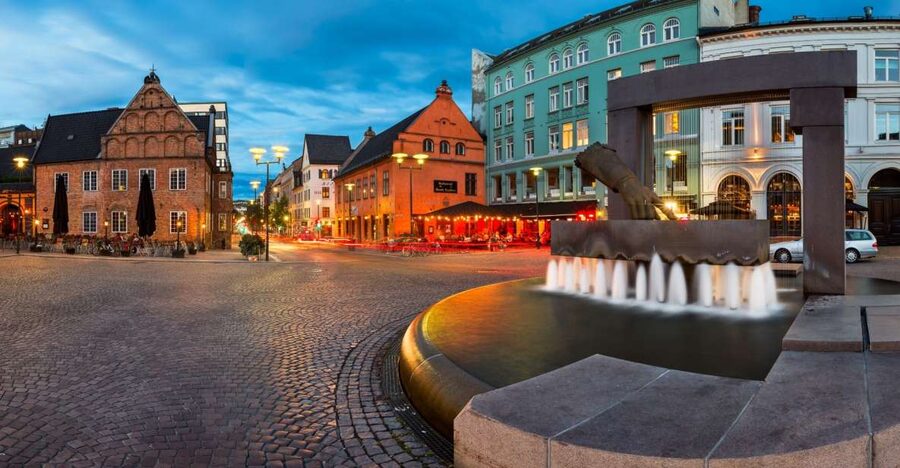
Oslo’s past gets more interesting after sunset, when trolls, nisse, huldra, and Viking beliefs give its streets a second layer. This two-hour walk links folklore with real places, from the City Hall murals to the medieval walls of Akershus Fortress and the old square at Christiania Torv.
I like the way the tour mixes myth with urban history, rather than treating folklore as a separate fantasy show. I also like its easy pace and useful city introduction, with guides such as Maria and Anastasia answering questions and suggesting other places to see. The main drawback is the weather: evening wind can feel sharp, especially in winter, and the route is not suited to wheelchair users or people with mobility problems.
Key points at a glance
- Norse stories in City Hall: See wooden friezes and murals linked to Viking beliefs, then connect them with older Norwegian folklore.
- Christiania Torv’s changing past: Hear how one of Oslo’s historic squares reflects the city’s growth and upheavals.
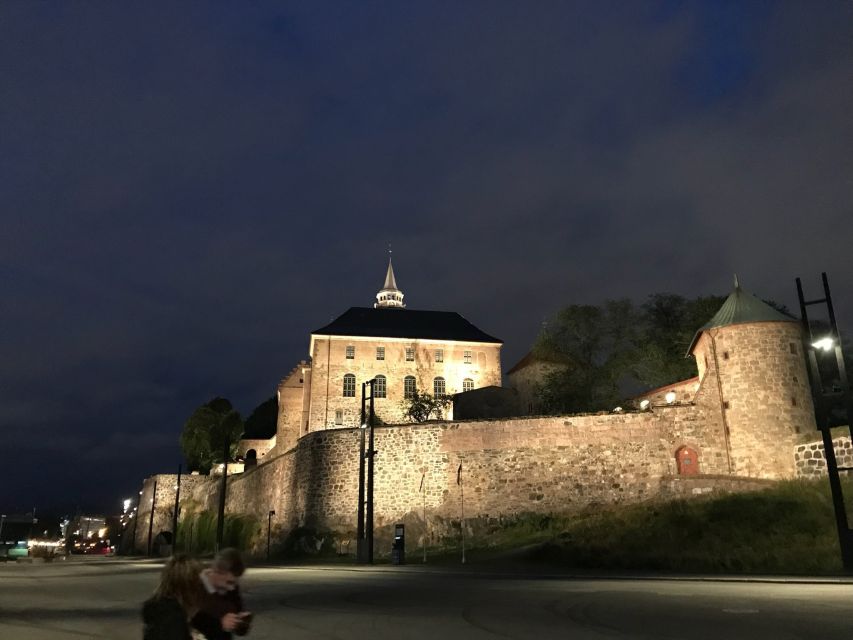
- Akershus Fortress after dark: Explore the castle area through stories of medieval defenses, prisoners, spirits, and survival.
- Crime and punishment at Bankplassen: Learn about audacious thefts and the justice system used in earlier Oslo.
- A relaxed English-language walk: The route lasts two hours, with time for questions and photographs.
- Strong guide-led storytelling: Maria, Anastasia, and other guides are praised for humor, warmth, clear English, and practical tips.
Why Oslo’s myths work so well on an evening walk
This is not a ghost-hunting expedition. You will not go underground, search for apparitions, or explore secret tunnels. Instead, the guide uses ghost stories and tales of underground kingdoms to explain how people in Norway made sense of danger, nature, illness, luck, and the unknown.
That approach gives the tour more value than a simple list of spooky anecdotes. When you hear about protective bells, feared flutes, trolls, and household nisse, you also get a glimpse of the beliefs that shaped daily life. The stories help you look at Oslo’s buildings and streets with more curiosity.
The evening setting adds atmosphere without turning the walk into theater. In summer, you might catch a late sunset. In autumn, the lit buildings give the city a softer mood. In December, the walk may take place in darkness from start to finish, so the guide’s storytelling becomes especially important.
You should think of this as a history walk with folklore, not a frightening attraction. The tone is educational, friendly, and often funny. That makes it a good choice if you want a first introduction to Oslo that feels less formal than a museum visit.
More Historical Tours in Oslo
- Oslo: History, Art and Secrets Tour
★ 4.7 · 62 reviews - Oslo City Walks – Historic River Walk
★ 5.0 · 31 reviews - A Well Balanced History and Food Tour with Focus on the Scandinavian Kitchen
★ 4.5 · 29 reviews
Starting by the Swans fountain at City Hall
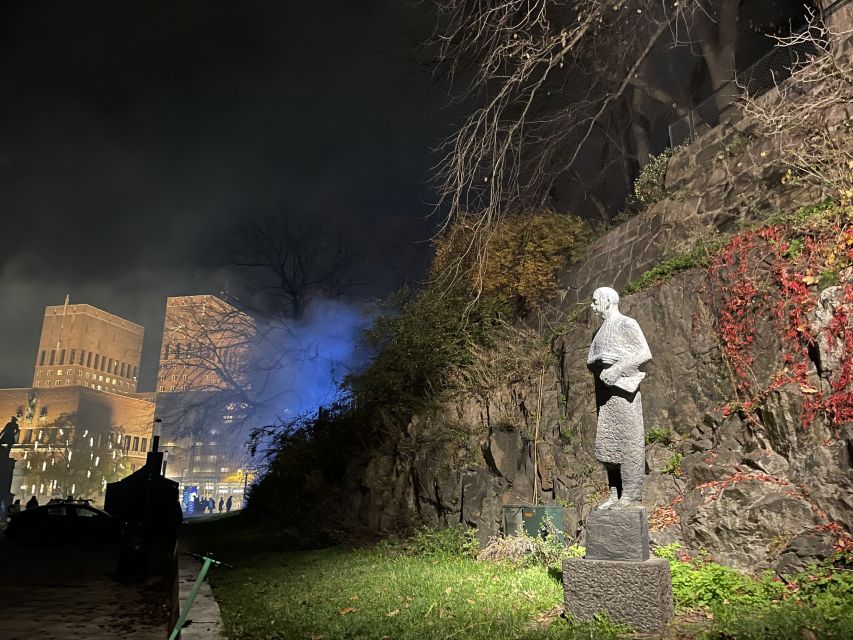
The meeting point is near the Swans fountain at the entrance to Oslo City Hall, on Fridtjof Nansen’s Square. This is a useful starting place because City Hall is one of Oslo’s best-known public buildings, and the opening story immediately connects the modern capital with its older past.
Inside or around the City Hall setting, the guide explains Viking beliefs and points out wooden friezes and other decorative details showing figures and ideas from Norse tradition. These are not just attractive decorations. They give you a visual way to remember names, symbols, and stories that can otherwise blur together.
I especially like this opening because it puts folklore on the walls rather than leaving it in the realm of spoken tales. You can see how national stories were given a place in a civic building. The result is a useful introduction to the way Norway presents its past today.
Guides named Maria and Anastasia have led this experience, though your guide may be someone else. The strongest feature of the guiding style is the blend of information and personality. You can expect clear explanations, humor, and room to ask questions rather than a long speech delivered without pause.
If this is your first day in Oslo, the City Hall start also helps you get oriented. Guides have offered suggestions for other parts of the city to explore, so keep a note on your phone if you want to follow up on places that catch your interest.
Christiania Torv and the old city beneath modern Oslo
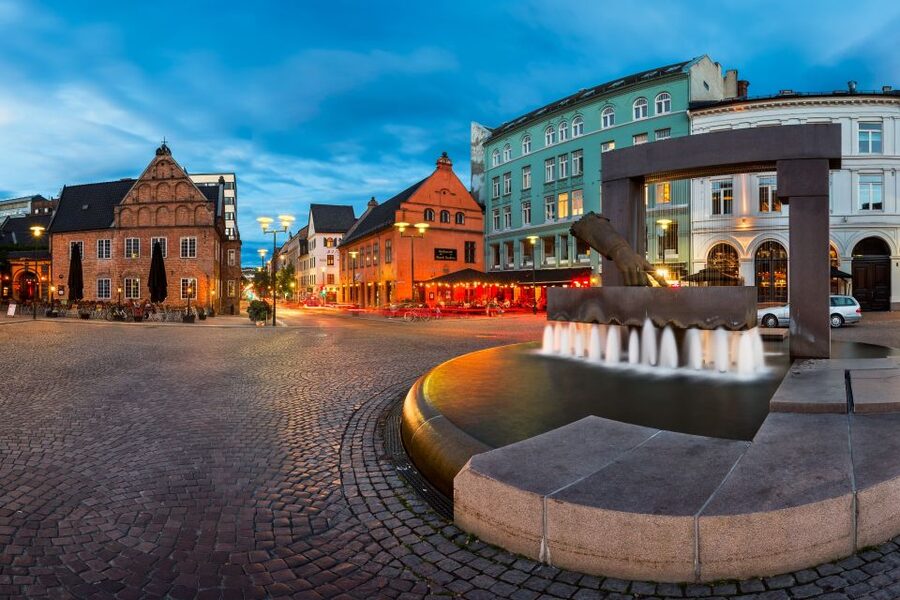
From City Hall, the walk continues to Christiania Torv, one of the historic squares in central Oslo. The stop matters because it helps explain how the city changed over time. The guide uses the square as a setting for stories about events, people, and turning points that left their mark on Oslo.
You will not simply pause for a photograph and move on. The value here comes from hearing how the square fits into the wider story of the city. Oslo’s past is not confined to one castle or one museum. It is spread through ordinary public spaces, and a guide can point out connections that are easy to miss when you walk alone.
This section is also where the tour’s balance becomes clear. You may hear a legend, then receive the historical or cultural context behind it. That keeps the walk entertaining without asking you to accept every tale as fact.
The pace is described as relaxed and manageable. That leaves room for questions, personal anecdotes, and photos. Still, remember that you are walking on city streets and moving between several sites, so comfortable shoes are essential.
Akershus Fortress, engineering, prisoners, and spirits
Akershus Fortress is the visual centerpiece of the route. Its walls and castle buildings give the folklore a dramatic setting, but the guide’s focus is on how the complex worked and why Oslo needed such defenses through the centuries.
You will hear about medieval engineering and fortress design, including the practical reasons for its layout and defenses. This gives the site more meaning than simply seeing old stone walls at dusk. The fortress becomes a place shaped by military needs, political power, imprisonment, and changing ideas about security.
The prison stories are among the more memorable parts of the walk. The guide discusses prisoners held within the fortress and the fates they faced. These accounts add a human element to the architecture, although the tour does not appear to be a detailed prison-history lecture.
Stories of spirits connected with the fortress may also enter the conversation. Again, the emphasis is cultural and historical. If you want a theatrical haunted-house experience, this will feel too restrained. If you want to know why certain places collect ghost stories, it should suit you well.
Akershus can be atmospheric in the evening, but the same conditions that create that mood can make the walk less comfortable. Cold, darkness, snow, and wind all affect the experience. Several winter departures have been enjoyed in temperatures below freezing, but that is a reminder to dress seriously, not casually.
Wear warm layers, a hat, gloves, and shoes with good grip if the forecast calls for snow or ice. The official advice specifically calls for comfortable shoes, and I would treat that as basic equipment rather than a suggestion.
More Walking Tours in Oslo
- Oslo: Best of Oslo Walking Tour
★ 4.5 · 458 reviews - Oslo: Guided Walking Tour of Central Oslo
★ 4.7 · 438 reviews - Taste of Oslo Walking Tour
★ 4.5 · 282 reviews - Central Oslo Guided Walking Tour with Local Guide
★ 4.5 · 278 reviews
Bankplassen and Oslo’s memorable theft stories
At Bankplassen, the subject shifts from fortifications and folklore to crime. The guide tells stories of daring heists and complicated robberies that once shook the city. This change of subject keeps the walk from becoming a repeated sequence of Norse gods and supernatural creatures.
The crime stories also lead into old systems of justice and punishment. You learn how medieval Oslo treated offenses and how the response to crime reflected the values and limits of the period. For many people, this is one of the most useful sections because it turns a general history lesson into specific human drama.
Bankplassen is a good place for this theme. The name and setting naturally suggest money, authority, and public order, while the stories show how much effort people have always put into acquiring, protecting, and recovering wealth.
Do not expect a forensic investigation or a modern true-crime presentation. The emphasis is on historical episodes and the way justice worked in earlier Oslo. The guide’s role is to make the details easy to follow and connect them to places you can see around you.
Oslo Cathedral and the route’s wider city view

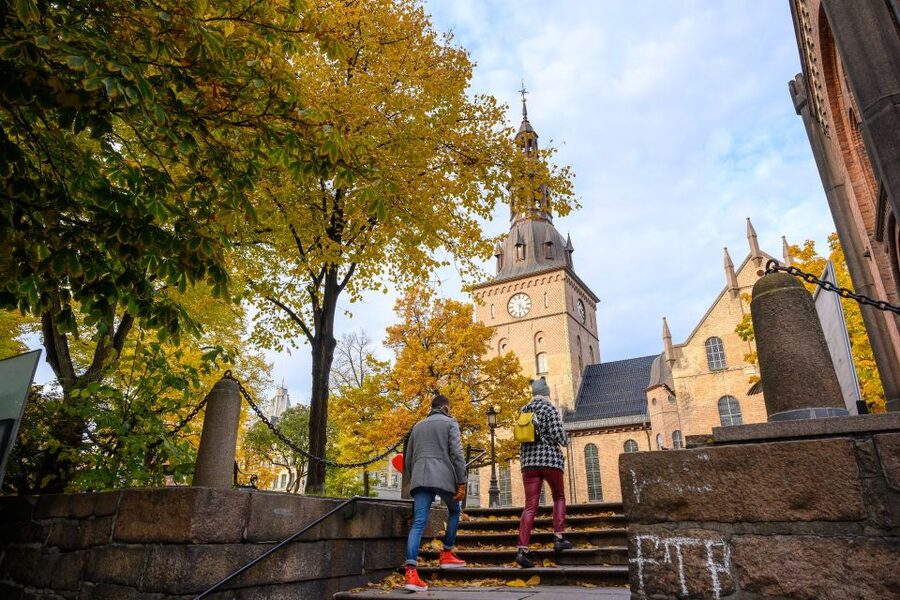
Oslo Cathedral is included among the landmarks visited or discussed along the route. It adds another kind of historic setting, one tied to public life, religion, and the development of the capital.
The supplied details do not promise an interior visit or a lengthy architectural study, so you should not book this walk expecting a cathedral tour. Instead, expect the cathedral to form part of a broader route through central Oslo, with the guide adding stories and context as the group moves through the city.
That broader view is one reason the tour works well early in a stay. You see major sights, but you also hear about smaller details and local stories that may influence what you choose to visit later. The walk gives you a framework for the city rather than trying to cover every museum and monument in depth.
What the guides add to the experience
The guide is the main reason this tour works. The route itself includes several important sights, but you can walk past City Hall, Christiania Torv, Akershus, and the cathedral on your own. You book the tour for the connections between them.
Maria has been praised for being funny, approachable, and full of useful information about Oslo and Norway. Anastasia has also been praised for vivid storytelling, strong English, enthusiasm, and detailed explanations. Guides have been willing to answer questions, listen to personal stories, and point out other places worth visiting.
That matters because myths can be confusing when presented without context. A good guide explains which ideas belong to folklore, which stories relate to history, and how the two have influenced one another. The best moments come when a building detail, a local custom, or an old fear suddenly makes sense.
The tone is interactive but not demanding. Solo visitors can join comfortably, and families with older children may find the stories appealing. The stated minimum age is 13, although one family reported that children aged 8 and 10 enjoyed the walk. Since the official restriction says children under 13 are not suitable, you should follow that rule when booking.
Is $42 fair for two hours?
At $42 per person, the tour sits in the reasonable range for a guided city walk, especially in Oslo, where everyday costs can add up quickly. You are paying for two hours with a live English-speaking guide, not for admission to a major attraction, food, drinks, or hotel transportation.
The value depends on how you like to explore. If you are content to read signs and use a map, you can visit many of these areas independently. But you will miss the linking stories, the folklore, the crime episodes, and the quick explanations that turn separate landmarks into one readable story.
I think the price makes the most sense on your first or second day in Oslo. A good guide can help you understand the city, suggest places for the rest of your stay, and show you details you might otherwise pass without noticing.
The tour also offers free cancellation up to 24 hours before departure and a reserve-now, pay-later option. Those policies make it easier to fit the walk into a changing itinerary, though you should still check the available starting times when booking.
Who should book this walk?
I would choose this tour if you enjoy local legends, old crimes, Norse mythology, and historic buildings but do not want a solemn lecture. It suits solo visitors, couples, friends, and families with children aged 13 or older.
It is also a smart choice for anyone who wants a gentle introduction to Oslo. You get landmarks, cultural background, and practical suggestions in one outing. The English-language format is helpful if you want detailed explanations without relying on translated signs.
You should think twice if you have difficulty walking for two hours, need wheelchair access, or dislike being outdoors in cold and windy weather. The tour is not suitable for wheelchair users or people with mobility impairments, and winter conditions can be severe.
The experience is less suitable if you want to enter every building or spend a long time at each site. This is a moving city walk, not a series of full museum visits. Its strength is the story carried from one place to the next.
Practical advice for a comfortable evening
Meet the guide near the Swans fountain by City Hall, not at your hotel. Plan to arrive with enough time to identify the meeting point, particularly if you are unfamiliar with central Oslo.
Wear shoes made for walking on ordinary city surfaces and possible winter conditions. In cold months, add layers and protection from wind. Several departures have taken place in very low temperatures, and a warm coat alone may not be enough.
Food and drinks are not included, so eat beforehand or plan a meal afterward. The two-hour duration is long enough to make you hungry, but the tour is not built around a café stop.
Bring a phone or camera if you like taking photographs. The evening light, illuminated buildings, fortress walls, and seasonal skies can make the route especially attractive, but photography should not distract you from staying with the group.
Should you book the Oslo myths and legends walk?
Book it if you want Oslo explained through stories rather than dates alone. The strongest parts are the guide-led connections between Viking beliefs, local folklore, fortress life, old crimes, and the city you can see around you.
I would especially recommend it for a first visit, a solo traveler looking for an easy group activity, or anyone curious about trolls and Norse tradition but still wanting solid historical context. Just dress for the forecast and be ready to walk outdoors for two hours.
Skip it if you need step-free access, prefer indoor sightseeing, or want a serious architectural tour with long visits inside each landmark. For most visitors who enjoy lively storytelling and a little mystery, $42 is a fair price for a memorable introduction to central Oslo.
FAQ
How long is the Oslo Historic Myths & Legends Evening Walking Tour?
The tour lasts two hours.
What language is the tour conducted in?
The tour is conducted in English with a live English-speaking guide.
Where is the meeting point?
Meet near the Swans fountain at the entrance to Oslo City Hall on Fridtjof Nansen’s Square.
What landmarks are included?
The route includes Oslo City Hall, Christiania Torv, Akershus Fortress, Oslo Cathedral, and Bankplassen.
What stories will I hear?
You will hear Norwegian folklore about trolls, nisse, and huldra, along with Viking beliefs, fortress stories, prison accounts, famous thefts, robberies, and old systems of justice.
Is this a ghost tour?
No. The tour discusses ghost stories and underground kingdoms in their historical and cultural context, but it is not a ghost-hunting expedition and does not go underground.
What should I bring?
Bring comfortable shoes. Warm clothing is also sensible for evening departures, particularly in winter.
Is the tour suitable for children?
The activity is listed as unsuitable for children under 13 years old.
Is the tour wheelchair accessible?
No. It is not suitable for wheelchair users or people with mobility impairments.
Are food and drinks included?
No. Food and drinks are not included in the tour price.
Is hotel pickup included?
No. You meet the guide at City Hall, and hotel pickup and drop-off are not included.
Can I cancel the booking?
You can cancel up to 24 hours in advance for a full refund. A reserve-now, pay-later option is also available.
More Evening Tours in Oslo
- Oslo: Fjord Evening Cruise with Shrimp Buffet
★ 4.5 · 1,956 reviews - Oslo Fjord Evening Cruise with Shrimp Buffet on a Sailing Ship
★ 4.0 · 170 reviews - Oslo Fjord Evening Live Rock music cruise with Shrimp buffet
★ 4.9 · 15 reviews - Tromsø: Evening Aurora Cruise (dinner optional)
★ 4.4 · 1,570 reviews
Just added around Oslo
- The Viking Planet Museum – Mini Group (4 adults)★ 4.0 · 16 reviews
- Oslo Winter Highlights Bike Tour★ 5.0 · 36 reviews
- 4 hours Best View of the Oslofjord Winter Edition★ 4.0 · 15 reviews
- Unknown war. Oslo and Norway during 1940-45★ 5.0 · 74 reviews
- The Scenic Roadtrip, Oslo to Bergen via Flam & the Fjords★ 5.0 · 25 reviews
- Fjord Houseboat Cruise in Oslo. 100 % electric. BYO★ 5.0 · 3 reviews
- The Ultimate Norwegian Skiing Experience★ 5.0 · 16 reviews
- Visit the Instaworthy Spots of Oslo’s Vigeland Park with a Local★ 5.0 · 4 reviews
Historical Tours, compared.

Reindeer Camp and Sami Cultural Tour with Lunch
Read our review →
Sightseeing Cruise of Bergen’s Historic Landmarks
Read our review →




A Well Balanced History and Food Tour with Focus on the Scandinavian Kitchen
Read our review →Browse the lists this tour appears in