
Reviewed · WALKING TOURS
Oslo: 3-hour Private Walking Tour of Bohemian Grünerløkka
Oslo’s Grünerløkka district gives you a different city from the one found around the Royal Palace and main harbor. Here, a bubbling river passes old brick buildings, street art, colorful wooden houses, music venues, parks, and one of Oslo’s best food halls. You also visit the cemetery where Edvard Munch is buried.
I like the route’s mix of art and ordinary neighborhood life, and I like that it ends at Mathallen just before lunch. The main drawback is the price: $461 for a private group up to one is a serious spend for three hours, so the value depends on how much you want a personal guide and a walk away from Oslo’s standard sights.
Key points to know before you book
- See Munch’s grave: Our Saviour’s Cemetery is the resting place of Edvard Munch, Henrik Ibsen, and Bjørnstjerne Bjørnson.
- Follow the Akerselva area: The walk links river scenery with former industrial buildings and creative spaces.
- Stop at Blå: This well-known music venue has a giant chandelier and colorful street art around it.
- Photograph old Oslo: Damstredet and Telthusbakken offer some of the city’s most charming wooden houses and gardens.
- Finish at Mathallen: The tour ends at Vulkan, beside Oslo’s food hall, making lunch an easy next step.
- Choose a private format: Your guide can focus the conversation more closely on your interests than a large group tour can.
Starting at Youngstorget and leaving central Oslo behind
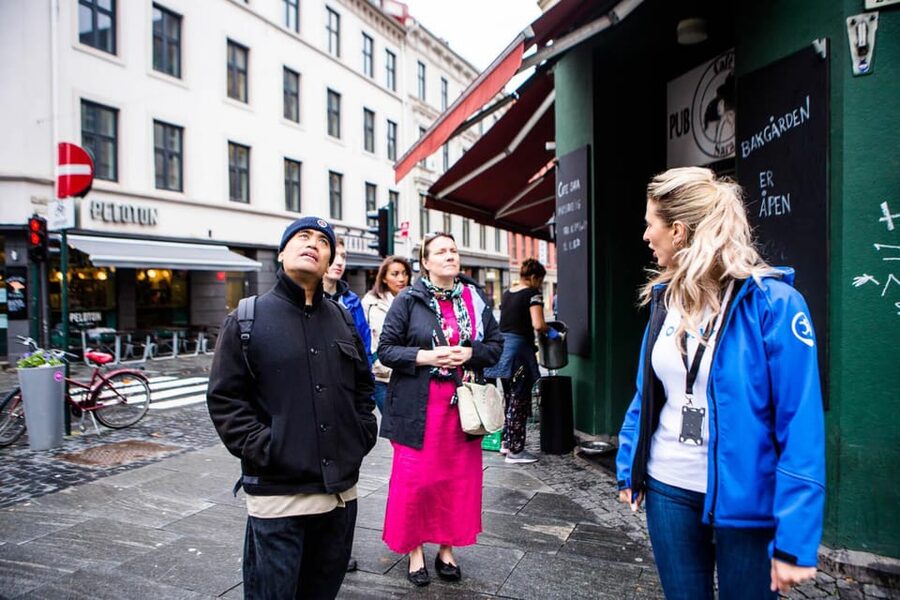
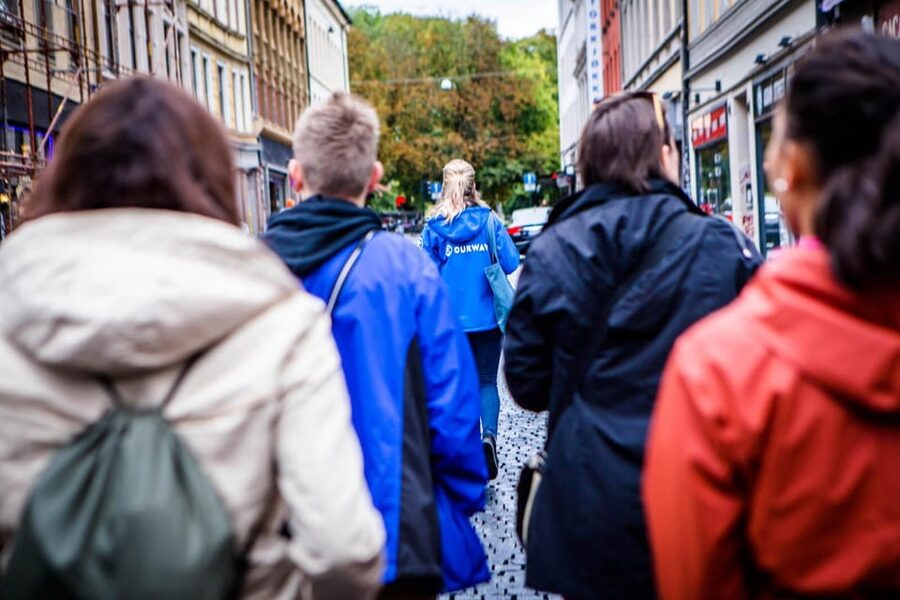
Meet your guide by the fountain in the middle of Youngstorget. The guide arrives about 10 minutes before departure and carries a sign with the local partner’s name, which helps in a busy city-center square.
The first part takes you through Sentrum and along Torggata. This opening section lasts about 30 minutes and helps connect central Oslo with the neighborhoods farther northeast. You are not simply being moved from one landmark to another. The route shows how the city changes as formal central streets give way to creative, residential, and former industrial areas.
Kulturkirken Jakob is one of the early points of interest. The church has a cultural role as well as a religious one, fitting the tour’s interest in artists, music, and alternative spaces. From there, the route continues toward Ankerbrua, a bridge that helps bring you into Grünerløkka.
I like this gradual start. You get your bearings before the longer neighborhood walk begins. If you want a rapid list of Oslo’s biggest sights, this is not the right opening. If you want to understand how one part of the city changes into another, it works well.
More Private Tours in Oslo
- Oslo Private Tour with a Local Guide
★ 4.5 · 234 reviews - Oslo: Private Walking Tour
★ 4.8 · 87 reviews - The Essential Oslo Private Walking Tour
★ 5.0 · 79 reviews
Walking beside the river through Grünerløkka
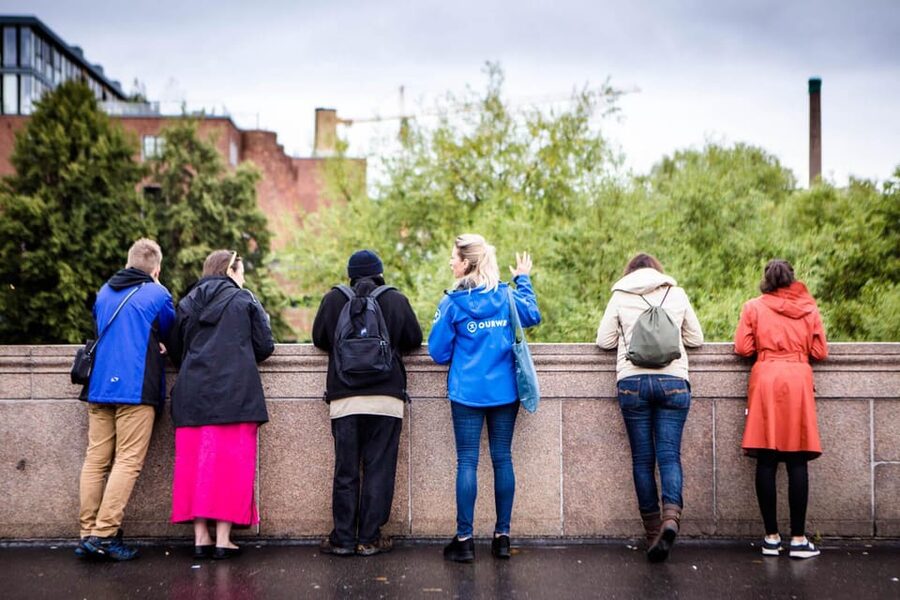
The main portion of the tour lasts about two and a half hours in Grünerløkka. The district is often described as hipster, bohemian, artistic, and trendy, but those labels only tell part of the story. The appeal is in the contrast between its old industrial bones and newer creative life.
Expect stretches beside a bubbling river, brick factory buildings, colorful walls, parks, and small streets. The route includes Olaf Ryes plass, one of the district’s recognizable public spaces, before moving toward Blå and Brenneriveien.
This area rewards a guide who can explain small details as they appear. You may hear about artists and free thinkers, street art, parkland, local culture, and Edvard Munch’s connection to the neighborhood. Munch lived at several addresses in the area, so his presence here is not limited to the cemetery later in the walk.
Past guides have included Tone and Diana. Diana was praised for being flexible, friendly, and well informed about local history. Tone was singled out for making the walk both informative and enjoyable, with special praise for the industrial areas and artwork. You cannot assume either guide will lead your departure, but those names give you an idea of the personal style this tour can offer.
The private format matters here. Grünerløkka is not a single grand monument. It is a series of streets and details. A private guide can spend more time on the subjects you care about, such as Munch, architecture, music, street art, or Oslo’s changing neighborhoods.
Blå and Brenneriveien: music, graffiti, and industrial Oslo
Blå is one of the most memorable photo stops. The music venue is surrounded by colorful street art and has a giant chandelier that has become part of the area’s visual character. The route does not promise a concert or an inside visit, so think of Blå as an outdoor stop and a chance to hear about Oslo’s music and creative scene.
Brenneriveien continues that theme. Its old industrial buildings and painted surfaces show a side of Oslo that is not polished for sightseeing. I especially like this section because it gives the walk some edge. You see working-city architecture repurposed for art, food, music, and social life.
Street art changes over time, so the exact walls and colors you see can differ. That is part of the point. This is a living neighborhood rather than a preserved open-air museum. The tradeoff is that the setting may feel less tidy and predictable than central Oslo. Bring a camera, but also expect to walk through a real urban district with changing uses and uneven surfaces.
Damstredet and Telthusbakken show old Oslo at its prettiest
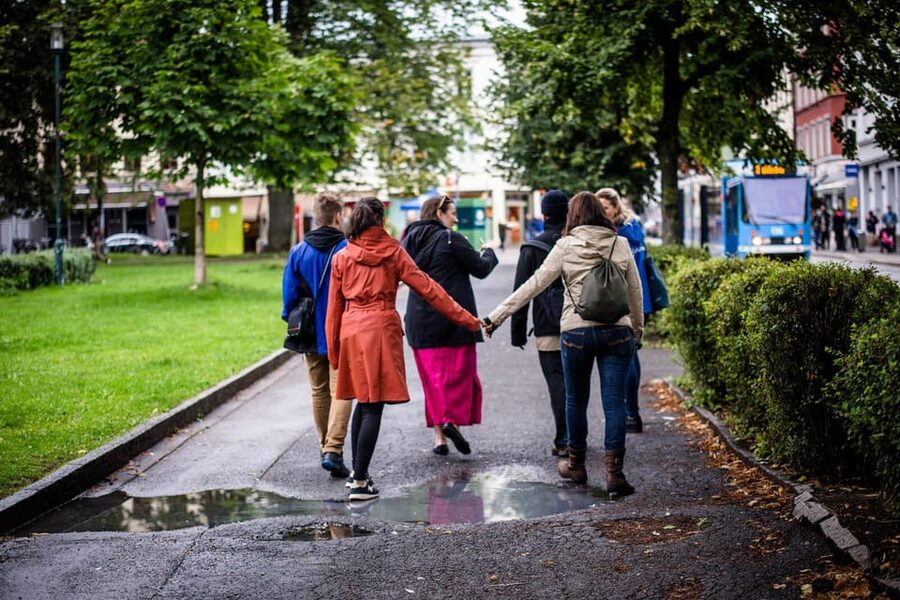
The route then shifts from industrial brick and graffiti to two of the city’s most picturesque streets: Damstredet and Telthusbakken.
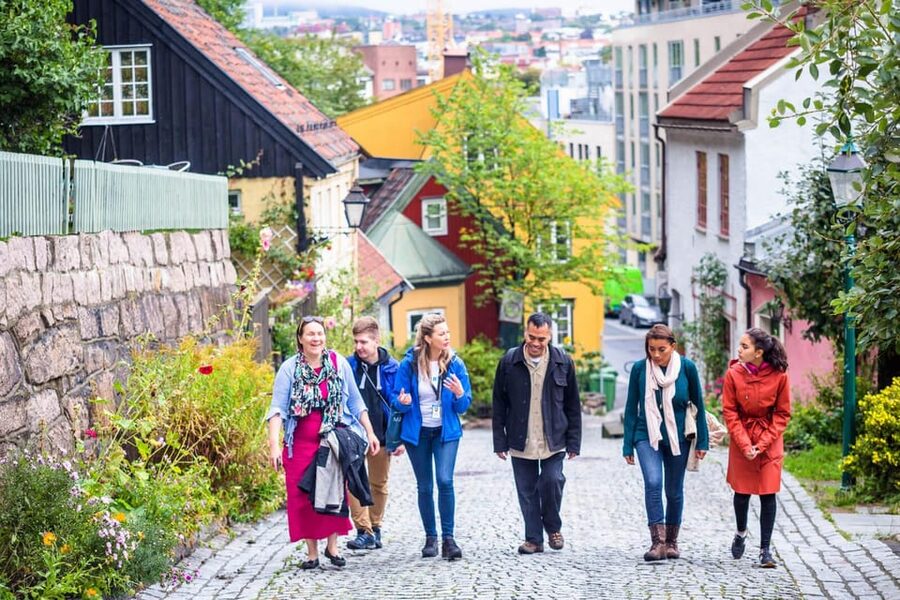
Damstredet is lined with colorful wooden houses. The compact street has the kind of intimate scale that makes a good break from wider city roads. It is a natural place to slow down for photographs and to consider how much of old Oslo survives among newer buildings.
Telthusbakken is a quaint hillside street with charming houses and gardens. The walk takes you down the street, giving you a clear view of the homes as they rise along the slope. This is one of the tour’s strongest visual moments, especially if you enjoy architecture and residential neighborhoods more than major monuments.
You should wear comfortable shoes. The tour is three hours on foot, and the hillside streets add some uneven ground and incline. Weather-appropriate clothing matters in Oslo, where rain and cool conditions can change the feel of an outdoor walk quickly.
These streets also provide balance. Without them, the tour could feel focused only on nightlife, graffiti, and converted factories. With them, you see a more complete Grünerløkka: creative, urban, historic, and residential.
More Walking Tours in Oslo
- Oslo: Best of Oslo Walking Tour
★ 4.5 · 458 reviews - Oslo: Guided Walking Tour of Central Oslo
★ 4.7 · 438 reviews - Oslo: Historic Myths & Legends Evening Walking Tour
★ 4.8 · 408 reviews - Taste of Oslo Walking Tour
★ 4.5 · 282 reviews
Our Saviour’s Cemetery and Oslo’s artistic trio
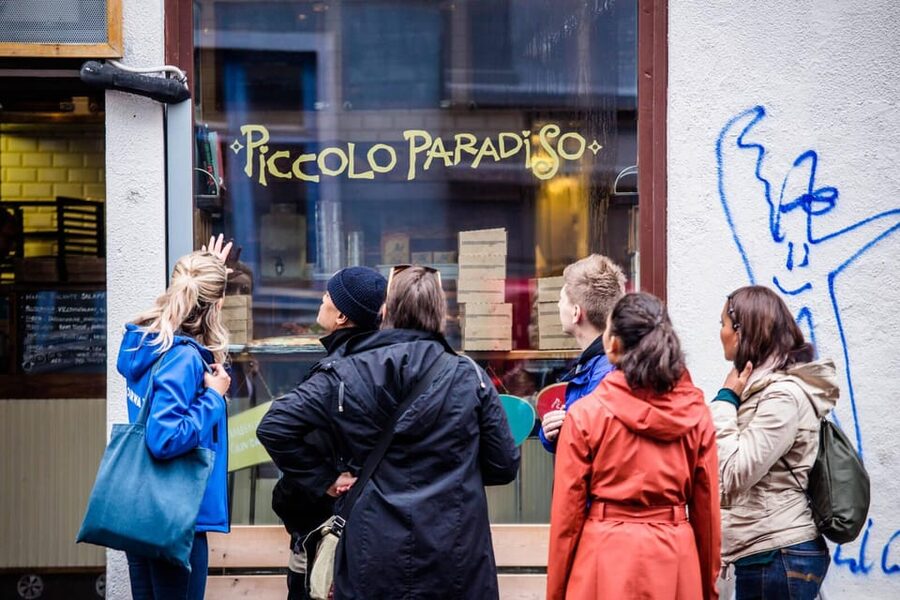
Our Saviour’s Cemetery brings a quieter mood to the route. This is where you find the graves of three major Norwegian cultural figures: Henrik Ibsen, Bjørnstjerne Bjørnson, and Edvard Munch.
For many people, Munch is the main reason this stop matters. His grave gives context to the earlier discussion of his homes in Grünerløkka. You are not only looking at an artist’s name in a museum. You are seeing where he was laid to rest in the city that shaped part of his life.
Ibsen and Bjørnson add a wider cultural frame. The three figures represent Norway’s strong traditions in painting, drama, and literature. The cemetery also gives the tour a pause after the louder visual energy of Blå and Brenneriveien.
Do not expect a full museum-style presentation here. This is a sightseeing stop within a walking tour, not a dedicated Munch tour. If you want detailed analysis of his work, you would need to add a museum visit elsewhere in Oslo. If you want a personal connection between the artist and the neighborhood, this stop does the job.
Quan Thang Ancient House and the route’s smaller surprises
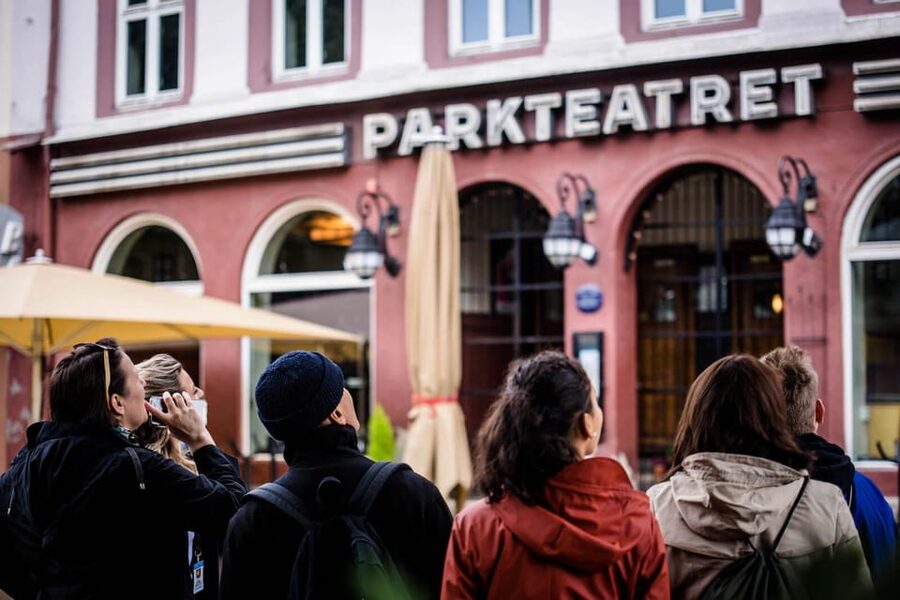
Quan Thang Ancient House appears later in the walk, adding another unusual point of interest to the route. The experience description does not provide much detail about the house, so I would treat it as a smaller discovery rather than the central reason to book.
That is a useful way to think about this tour as a whole. The biggest attractions are not all famous landmarks. Some are brief views, buildings, streets, and stories that make sense because a guide connects them. The route works best if you enjoy the accumulation of details.
A private walk also gives you room to ask about places that catch your eye. That can be more useful than following a fixed speech in a large group, especially in a neighborhood where the appeal lies in small visual clues.
Ending at Vulkan and Mathallen before lunch
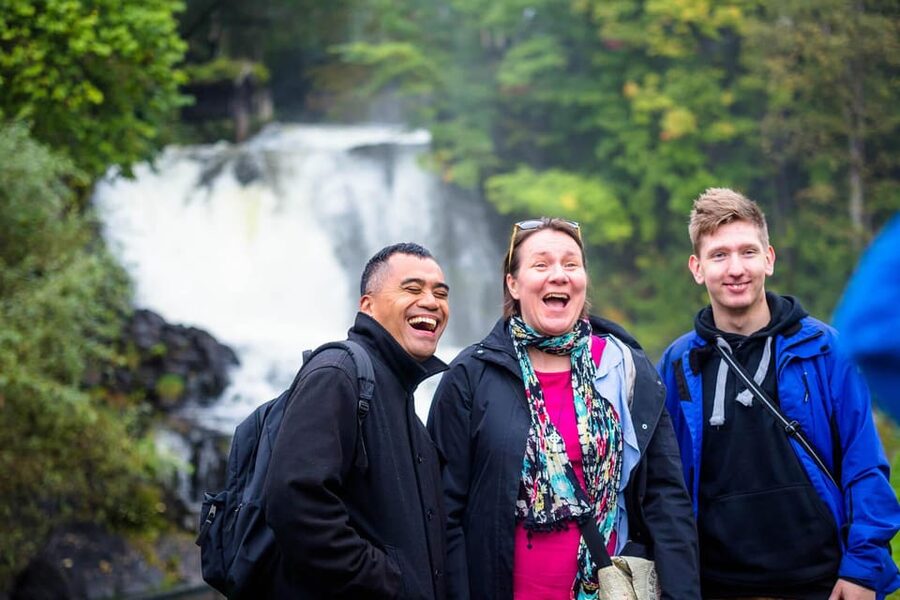
The final stop is Vulkan, a sustainable neighborhood and food-focused area at the end of the Grünerløkka walk. Mathallen Oslo is located here, inside a former industrial setting with colorful graffiti and repurposed buildings.
The tour ends at the entrance to Mathallen, which is one of its smartest practical features. Start in the morning and you should finish around lunchtime, making it easy to continue with a meal while the district is already in front of you.
Mathallen is a food destination rather than simply a final photo stop. You can stay after the guide leaves and explore on your own. The tour does not include lunch, so budget separately for food and drinks.
I would plan to remain in Vulkan rather than hurry back to central Oslo. The walk back to Youngstorget is about 15 minutes, or roughly 1 kilometer. Public transport is another option, but its ticket is not included. Ending here gives you more freedom than returning to the starting point with the group.
The private price and what you receive
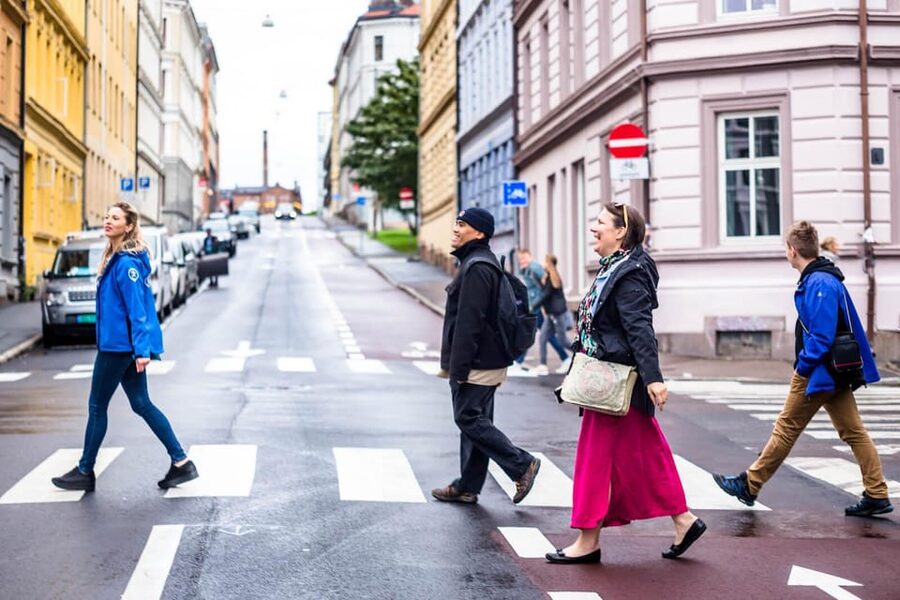
The listed price is $461 per group up to one, with a professional guide and a three-hour private walking tour included. That is expensive compared with a shared city walk, especially if you are judging value by the number of major sights checked off.
The stronger case for the price is the private format. You are paying for a focused route through a specific neighborhood, a guide who can adjust the conversation, and a walk that combines several themes: Munch, old houses, music, street art, parks, industrial buildings, and food culture.
I would consider it better value for someone with a special interest in Oslo’s creative districts, architecture, or Munch than for a first-time visitor who has not yet seen the city’s central landmarks. A private tour can also make sense when your group wants a relaxed pace or prefers conversation over a standard script.
Check the final price carefully for your party before booking, since the stated rate is tied to a group of up to one. The cancellation policy allows a full refund when you cancel at least 24 hours ahead, and you can reserve now and pay later. Those terms make planning easier, but they do not change the basic question: do you want to spend a large amount on a neighborhood-focused private walk?
Who will enjoy this Oslo walk most
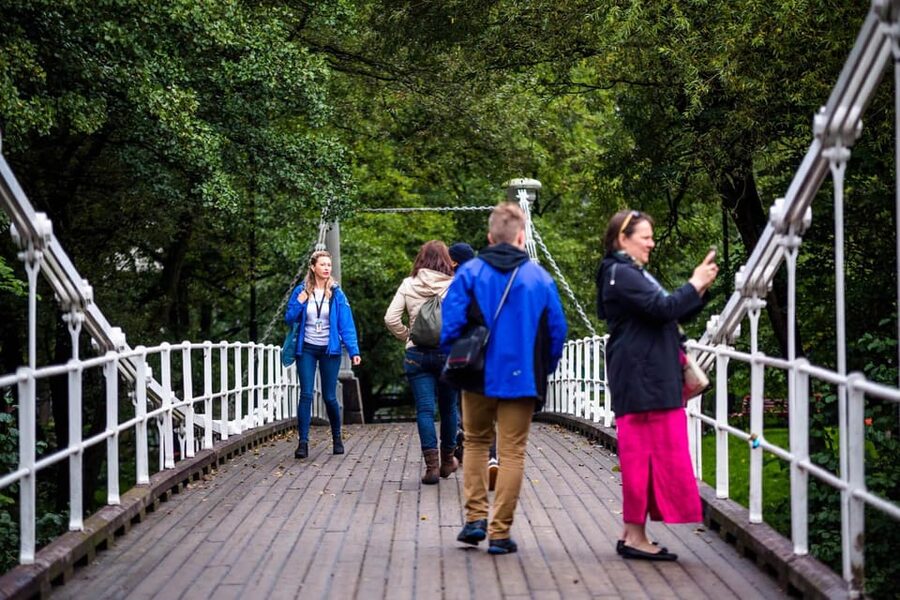
I would recommend the tour to you if you:
- Prefer local streets and creative districts to a standard monument tour
- Want to visit Munch’s grave and hear about his links to Oslo
- Enjoy street art, music venues, old industrial buildings, and unusual urban spaces
- Like taking photographs of colorful wooden houses and gardens
- Want a private guide who can speak English, Spanish, French, German, Italian, or Norwegian
- Appreciate finishing near a good lunch option
I would hesitate if you have limited time in Oslo and still need the city’s major central sights. I would also look elsewhere if your main goal is a museum visit, since this tour is outdoors and does not include entry to a museum or attraction.
The walk is also less suitable for anyone who dislikes three hours on foot. Comfortable shoes are not a minor suggestion here. You move through several districts and street types before reaching Vulkan.
Should you book the Grünerløkka walking tour?
Book it if you want to see Oslo’s creative side, not just its postcard center. The route has a strong shape: central streets, the river and industrial district, Blå, old wooden houses, Munch’s cemetery, and Mathallen for lunch.
The tour earns its appeal from the connections between those places. You see where artists lived, how industrial buildings found new uses, and why Grünerløkka feels different from central Oslo. At $461, it is not a casual bargain, but the private setting may suit you if personal attention matters more than a low per-person price.
For many people, the best plan is simple: book an early start, wear good shoes, bring a rain layer, take photos at Damstredet and Telthusbakken, and stay for lunch at Mathallen. That makes the three hours feel like part of a full Oslo neighborhood day rather than an isolated tour.
FAQ
Where does the tour start?
It starts at Youngstorget 2A, by the fountain in the middle of the square in Oslo’s city center.
Where does the tour end?
The tour ends at Vulkan 16, near the entrance to Mathallen Oslo in the Grünerløkka district.
How long is the walking tour?
The tour lasts three hours. About 30 minutes takes place in Sentrum, followed by about two and a half hours in Grünerløkka.
Is the tour private?
Yes. It is offered as a private group experience.
Which languages are available?
The live guide can conduct the tour in Spanish, English, French, German, Italian, or Norwegian.
Do I visit Edvard Munch’s grave?
Yes. The route includes Our Saviour’s Cemetery, where Edvard Munch is buried, along with Henrik Ibsen and Bjørnstjerne Bjørnson.
Is lunch at Mathallen included?
No. The tour ends near Mathallen, but food and drinks are not included. You can stay and eat there after the walk.
How do I return to Youngstorget afterward?
You can walk back in about 15 minutes, covering roughly 1 kilometer, or use public transport. A public transport ticket is not included.
What should I bring?
Bring comfortable shoes and clothing suited to the weather. This is a three-hour outdoor walking tour.
More 3-Hour Experiences in Oslo
- Oslo: 3-Hour Highlights Bike Tour
★ 4.8 · 1,609 reviews - Oslo: 3-hour Kayaking Trip on the Oslofjord
★ 4.9 · 43 reviews - Private Bike Tour (3 hours)
★ 5.0 · 33 reviews - 3 Hours Walking Tour for Great Food in Oslo
★ 5.0 · 32 reviews
Just added around Oslo
- The Viking Planet Museum – Mini Group (4 adults)★ 4.0 · 16 reviews
- Oslo Winter Highlights Bike Tour★ 5.0 · 36 reviews
- 4 hours Best View of the Oslofjord Winter Edition★ 4.0 · 15 reviews
- Unknown war. Oslo and Norway during 1940-45★ 5.0 · 74 reviews
- The Scenic Roadtrip, Oslo to Bergen via Flam & the Fjords★ 5.0 · 25 reviews
- Fjord Houseboat Cruise in Oslo. 100 % electric. BYO★ 5.0 · 3 reviews
- The Ultimate Norwegian Skiing Experience★ 5.0 · 16 reviews
- 3 Hours Walking Tour for Great Food in Oslo★ 5.0 · 32 reviews
Walking Tours, compared.
Past & Present Small Group Guided Walking Tour
Read our review →

Central Oslo Guided Walking Tour with Local Guide
Read our review →Browse the lists this tour appears in