
Reviewed · CITY TOURS
Oslo: City Highlights Walking Tour
Oslo reveals itself in layers on this two-hour walk: medieval fortress walls, old city squares, grand 19th-century buildings, and a bright-white opera house by the fjord. You begin near the Nobel Peace Center and finish with a view toward the Royal Palace, so you get a useful sweep of central Oslo rather than a single neighborhood.
I love the route’s variety, especially the jump from Akershus Fortress and Christiania Torv to the modern Opera House. I also like the German-language guiding, which can make details about Norway’s ties to Denmark and Sweden, local government, and the Norwegian language easier to follow. The main drawback is the steady walking pace, with little built-in time for photographs, and bad weather usually does not cancel the tour.
Key points at a glance
- Medieval to modern in two hours: Connect Oslo’s fortress, old town plan, 19th-century center, and fjordfront in one compact route.
- German-speaking guides: Emily, Anna Marie, Olav, Maria, and others have led tours praised for clear explanations and friendly group management.
- A strong first-day orientation: The route helps you understand where central Oslo’s key districts and landmarks fit together.
- Excellent photo variety: Expect fortress stone, historic squares, royal buildings, the Cathedral, and the Opera House’s sharp modern lines.
- Weather matters: The tour runs in rain, snow, and ordinary winter cold, so dress for outdoor walking.
- Good value at $37: For a small city-center introduction with a live guide, the price is reasonable if you want context instead of only seeing buildings.
From the Nobel Peace Center into Oslo’s oldest quarter
The meeting point is near the entrance to the Nobel Peace Center. This is a handy central start, close to Oslo’s waterfront and within easy reach of the city’s main sights.
Your guide uses the opening section to place Oslo in context. The city is not simply a collection of attractive buildings. Its story includes medieval beginnings, shifting ties with Denmark and Sweden, changing languages, and a long move from older urban forms toward the modern fjordfront.
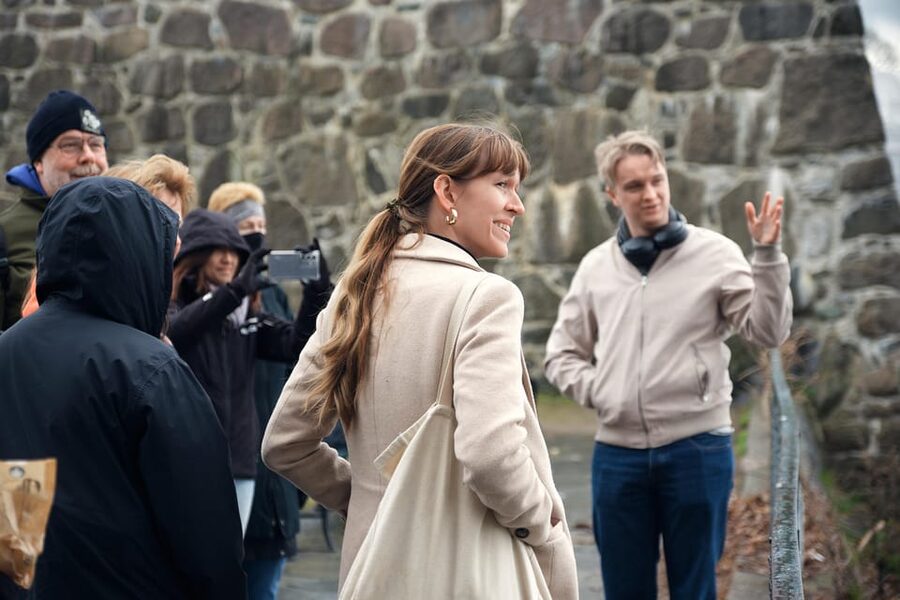
The route then heads toward Akershus Fortress. This is one of the most useful early stops because it gives the city a physical link to its medieval past. The fortress is imposing, and its position helps explain why this part of Oslo mattered for defense and government.
You should not expect a full fortress tour or a long indoor visit. The experience is a walking overview, so the value comes from hearing how the site fits into Oslo’s growth while seeing the exterior and surrounding area.
This opening section also sets the tone for the rest of the walk. Guides have covered topics ranging from city districts to the three city halls of Oslo, so you get more than dates and architectural labels. The strongest guides connect the buildings to how the city developed and how people live in it today.
More City Tours in Oslo
- Oslo: City Sightseeing Hop-On Hop-Off Bus Tour
★ 3.6 · 724 reviews - Oslo: Grand City Sightseeing Tour by Bus with Fjord Cruise
★ 4.6 · 647 reviews - Oslo Combo Tour: Grand City Tour and Oslo Fjord Cruise
★ 4.5 · 555 reviews
Christiania Torv and the grid of Kvadraturen
From the fortress area, the walk continues to Christiania Torv and Kvadraturen, Oslo’s original city layout. This is where the tour becomes especially useful for anyone who wants to understand the shape of central Oslo.
Christiania Torv gives you a sense of the older city center, while Kvadraturen shows how planned streets replaced or organized earlier patterns. Your guide explains the area rather than rushing you through it, helping you see why the old center feels different from Karl Johan Street and the newer waterfront.
I like this part because it turns an ordinary walk into a lesson in city planning. You are not just checking off a square. You are learning to recognize the older core and understand how Oslo expanded beyond it.
The walk also gives your guide room to discuss Norwegian culture and daily life. One especially useful aspect is the attention to language and Norway’s relationships with Denmark and Sweden. These details may not be obvious from the streets alone, but they give the city’s public buildings and historic districts more meaning.
The pace can be brisk. One German-language participant who took the tour alone was able to ask many questions, which suggests that a small group can make this portion more rewarding. In a larger group, you may have less time for individual discussion.
The Opera House and Oslo’s modern waterfront
The route then moves toward the Oslo Opera House, one of the city’s clearest symbols of its modern identity. Its setting beside the fjord gives you a sharp change from the fortress and old square.
This is one of the tour’s best visual transitions. Earlier, you have been looking at defensive stonework and historic streets. Here, you encounter a bold contemporary building and the open water beyond it. The contrast helps you see that Oslo is not preserving its past at the expense of new design.
Allow yourself a moment to take in the building’s angles and waterfront setting, but listen for instructions from the guide about when the group is moving on. The tour covers a lot of ground in only two hours, and one useful criticism of the experience is that the guide may finish speaking at a stop and leave quickly. If you want photographs, take them promptly or ask for a short pause.
The Opera House is not presented as a separate performance visit. There is no ticketed show or interior program included. You are seeing it as part of the city walk, which is ideal if you want an introduction to Oslo’s architecture and waterfront rather than a night at the opera.
Karl Johan Street, Oslo Cathedral, and Parliament
From the waterfront, the route takes you along Karl Johan Street, Oslo’s main thoroughfare. This is the central spine of the tour and the place where several major institutions come together.
The Oslo Cathedral gives you a chance to consider the city’s religious and civic character. The guide then points out the Parliament building, where Norway’s national political life is represented in a grand historic setting.
These stops work well for first-time visitors because they help you connect names on a map with real locations. After the tour, you should have a better sense of where the central boulevard runs and how the Cathedral, Parliament, National Theater, University of Oslo, and Royal Palace relate to one another.
I also value the way this part of the walk can move beyond architecture. Guides have discussed Norwegian government, culture, and life in Oslo, rather than treating the city as an outdoor museum. That broader view is one reason this tour can remain useful even after you have visited the main buildings on your own.
The route is not designed for detailed interior visits. You will pass important landmarks and hear their background, but you should plan separate visits if you want to explore the Cathedral, Parliament, National Theater, or university buildings at length.
More Walking Tours in Oslo
- Oslo: Best of Oslo Walking Tour
★ 4.5 · 458 reviews - Oslo: Guided Walking Tour of Central Oslo
★ 4.7 · 438 reviews - Oslo: Historic Myths & Legends Evening Walking Tour
★ 4.8 · 408 reviews - Taste of Oslo Walking Tour
★ 4.5 · 282 reviews
National Theater, the university Aula, and a royal finale
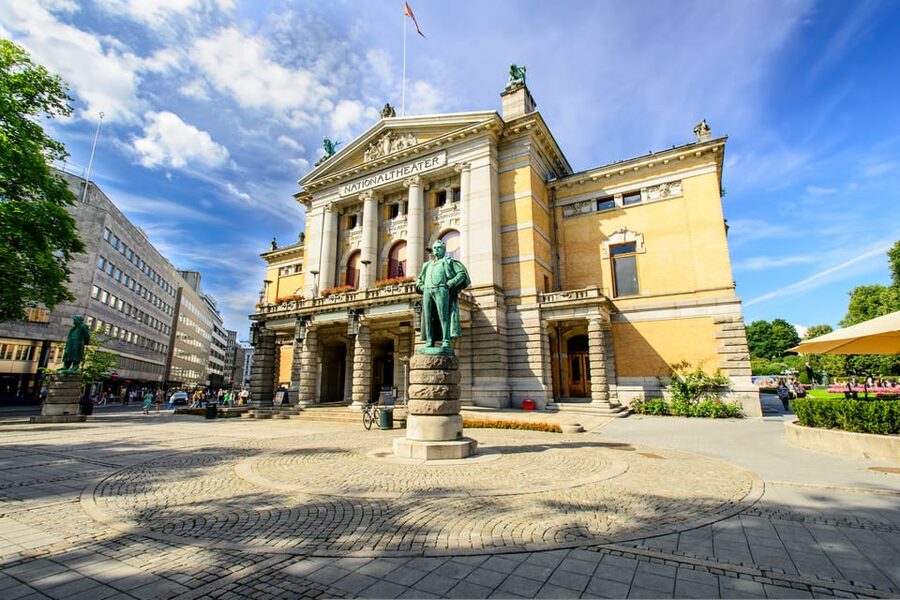
The walk continues past the National Theater and the historic Aula of the University of Oslo. These buildings add a cultural and academic layer to the tour, following the fortress, old urban district, opera house, and government center.
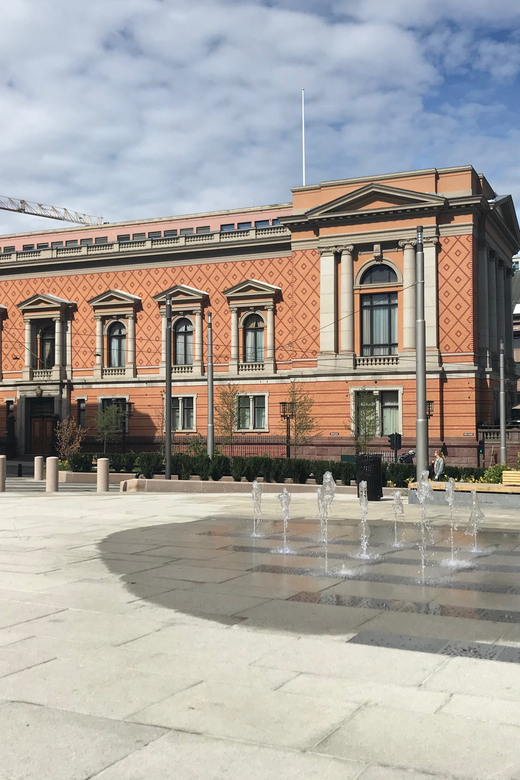
The Aula is a particularly good final-area stop because it represents Oslo’s intellectual and artistic life. Your guide may use it to explain the importance of the university and the role of historic institutions in the capital.
The tour concludes near the University of Oslo with a view toward the Royal Palace. It is a pleasing finish because the route ends in a grand civic setting rather than simply stopping beside a random street corner.
One practical point: the stated meeting point is near the Nobel Peace Center, although one participant described starting near the university before walking toward the older city and back to the modern area. Confirm the exact starting point and route direction when you book, especially if you are joining the tour between other plans.
What the guides add to the walk
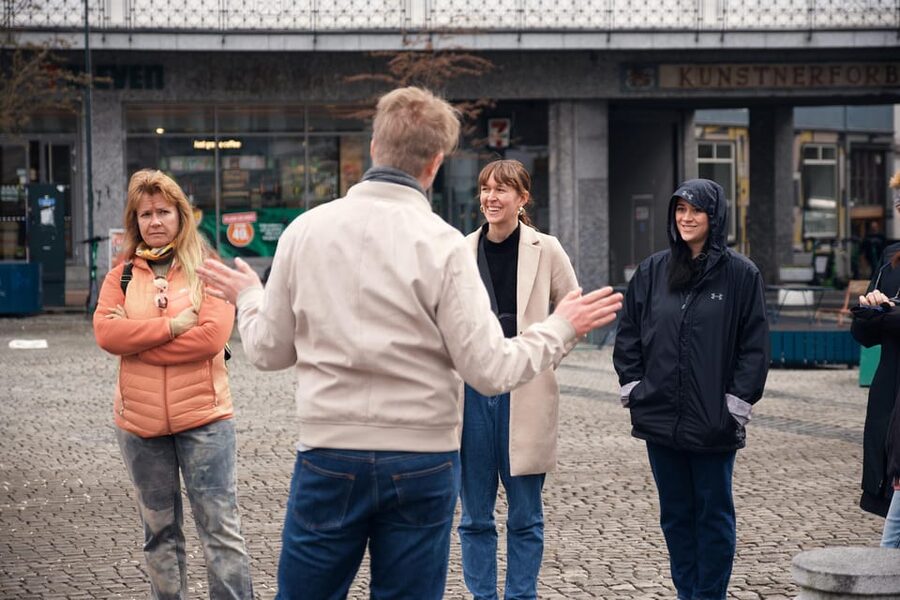
The guide is the main reason to book this experience instead of following a map on your own. The best guides turn a line of landmarks into a connected story.
Emily has been praised for her energy and clear explanation of culture, history, and the city itself. Anna Marie kept a winter tour enjoyable and even stopped at markets for hot chocolate on a particularly cold day. Olav has led tours in rain and after heavy snow, and Maria has been noted for her strong command of the city’s past and her thoughtful way of presenting it.
The names matter less than the pattern: the tour depends on the individual guide, but the format allows for questions and conversation. A German-speaking guide can be especially helpful if you prefer discussing history, public life, and language in German rather than relying on short English explanations.
A small group may give you more room to ask questions. A private-feeling experience is possible, since one German participant described being the only person on the tour. You should not assume every departure will be that intimate, but it shows that the format can become personal when numbers are low.
Pace, weather, and practical comfort
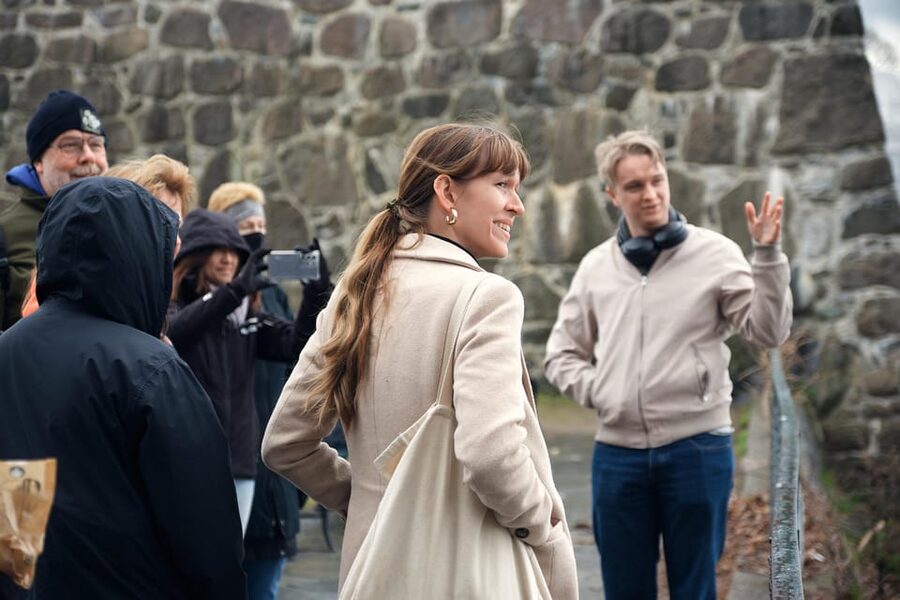
Two hours is enough time to see a lot, but not enough for a relaxed stop at every building. You will cover a moderate amount of ground on foot, so comfortable shoes are important.
Oslo weather can change the feel of the experience. The walk has continued through rain, snow, and bitter winter cold. Ordinary bad weather does not usually cancel the tour, except in severe storms, so check the forecast and dress properly.
In winter, warm layers, a waterproof outer coat, gloves, and shoes with good grip will make a major difference. In wet weather, keep your camera and phone protected. In summer, the main concern is not cold but keeping up while stopping to take pictures.
The route is wheelchair accessible, according to the activity details. Even so, urban walking conditions can vary with weather and crowds, so you may want to confirm current route conditions if you have specific mobility needs.
Toilets are not presented as a regular part of the tour. At the end, one participant was directed toward a public toilet that was in poor condition, while a nearby cafe offered a better option with a purchase. Plan ahead, particularly if you are traveling with children or need frequent facilities.
What $37 buys you in Oslo
At $37 per person, this is a fair price for a live, two-hour introduction to central Oslo. You are paying for a guide who explains the links between landmarks, not for entry to attractions or transportation.
The value is strongest if you have one day in Oslo, are visiting before a longer stay, or want a clear orientation at the start of your trip. After the walk, you can decide which places deserve more of your time. One participant who spent three days in Oslo found that the tour made it easier to keep a sense of direction throughout the visit.
The value is lower if you prefer to move slowly, photograph every building, or enter each attraction. This is a city overview, not a series of extended visits. You will see more than you can study in depth.
The booking terms also reduce the risk. You can reserve now and pay later, and cancellation is free up to 24 hours before the tour for a full refund. That flexibility is useful when your Oslo plans depend on weather, cruise timing, or changing transport arrangements.
Who should book this Oslo walk?

I would choose this tour for a first visit, especially if you want a clear framework for the city center. It suits solo visitors, couples, and families who enjoy learning while walking and who want to see both old and new Oslo in one outing.
It is also a strong choice for German speakers. The route covers complex subjects such as national history, language, government, and urban growth, and discussing those topics in German can make the experience more comfortable and precise.
This tour may not suit you if you want a slow photographic walk or a deep look inside the main buildings. You should also think twice if you dislike walking in cold or wet weather, since the activity normally goes ahead unless conditions become severe.
My advice is simple: book it early in your Oslo stay. Use the two hours to learn the city’s layout, note the buildings you want to revisit, and ask your guide about neighborhoods or sights that fit your schedule. If you have only one day, the route gives you a useful broad picture without taking up the whole day.
Should you book the City Highlights Walking Tour?
Book it if you want a well-rounded introduction to central Oslo in German, with a route that links medieval Akershus Fortress, Christiania Torv, Kvadraturen, the Opera House, Karl Johan Street, Parliament, the university, and the Royal Palace view.
The strongest reasons are the wide range of subjects, the helpful city orientation, and the chance to ask questions of a live guide. Just wear weatherproof clothing, keep your photo stops quick, and plan a toilet break before the finish. At $37, it is good value for a first look at Oslo, especially when your time is short.
FAQ
Where does the Oslo walking tour begin?
The meeting point is near the entrance of the Nobel Peace Center in Oslo.
How long does the tour last?
The walking tour lasts two hours.
What language is the tour offered in?
The live tour guide speaks German.
What landmarks does the tour include?
The route includes the Nobel Peace Center area, Akershus Fortress, Christiania Torv, Kvadraturen, the Oslo Opera House, Karl Johan Street, Oslo Cathedral, the Parliament building, the National Theater, the University of Oslo’s historic Aula, and a view toward the Royal Palace.
Is the tour wheelchair accessible?
Yes. The activity information describes the tour as wheelchair accessible.
How much walking is involved?
A moderate amount of walking is required during the two-hour tour.
Does the tour run in bad weather?
The tour is not canceled for ordinary bad weather. Cancellation due to weather occurs only in severe storms, so you should check the forecast and dress appropriately.
Can I cancel for a full refund?
Yes. You can cancel up to 24 hours in advance for a full refund. You can also reserve now and pay later.
Just added around Oslo
- The Viking Planet Museum – Mini Group (4 adults)★ 4.0 · 16 reviews
- Oslo Winter Highlights Bike Tour★ 5.0 · 36 reviews
- 4 hours Best View of the Oslofjord Winter Edition★ 4.0 · 15 reviews
- Unknown war. Oslo and Norway during 1940-45★ 5.0 · 74 reviews
- The Scenic Roadtrip, Oslo to Bergen via Flam & the Fjords★ 5.0 · 25 reviews
- Fjord Houseboat Cruise in Oslo. 100 % electric. BYO★ 5.0 · 3 reviews
- The Ultimate Norwegian Skiing Experience★ 5.0 · 16 reviews
- Visit the Instaworthy Spots of Oslo’s Vigeland Park with a Local★ 5.0 · 4 reviews
City Tours, compared.
Grand City Sightseeing Tour by Bus with Fjord Cruise
Read our review →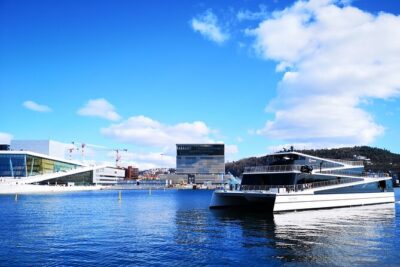
Oslo Combo Tour: Grand City Tour and Oslo Fjord Cruise
Read our review →

Browse the lists this tour appears in