
Reviewed · CITY TOURS
Oslo: City Sightseeing Hop-On Hop-Off Bus Tour
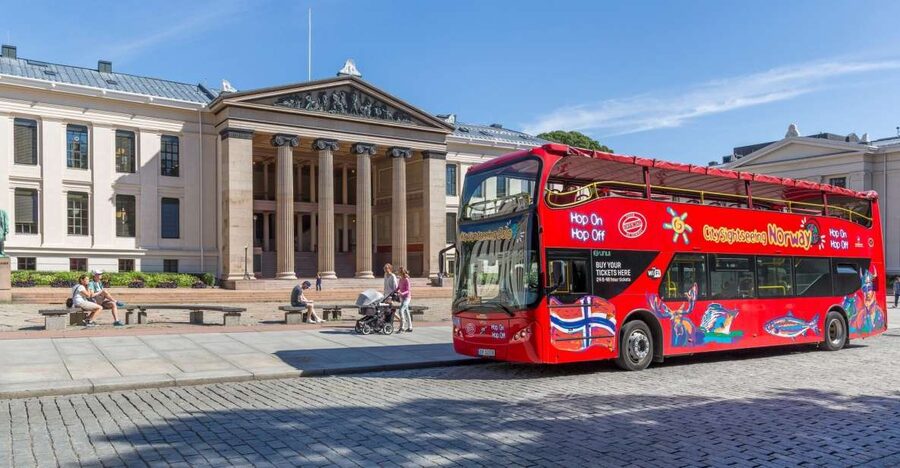
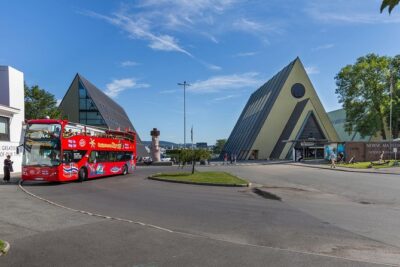
Oslo’s best feature for a short visit is its spread-out collection of sights. This open-top electric bus links the central city with Bygdøy’s museums, Frogner Park, the cruise terminals, and the Opera House without making you figure out several tram, bus, or ferry connections.
I like the easy hop-on, hop-off format and the 90-minute loop, which gives you a useful first look before you choose where to spend time. I also like the flexible 12-month voucher, a real help if a cruise schedule changes. The main drawback is timing: buses run about every 30 minutes, only from 10 a.m. to 4 p.m., and audio equipment has not always worked well.
Key points at a glance
- Start at Nationaltheatret: The first stop sits near the National Theatre, Royal Palace, and Karl Johans Gate.
- Reach Bygdøy’s museums: Hop off for the Viking Ship Museum, Fram Polar Ship Museum, Kon-Tiki Museum, and Norwegian Maritime Museum.
- Use the 90-minute loop for orientation: Stay aboard for a city overview, then ride again to make targeted stops.
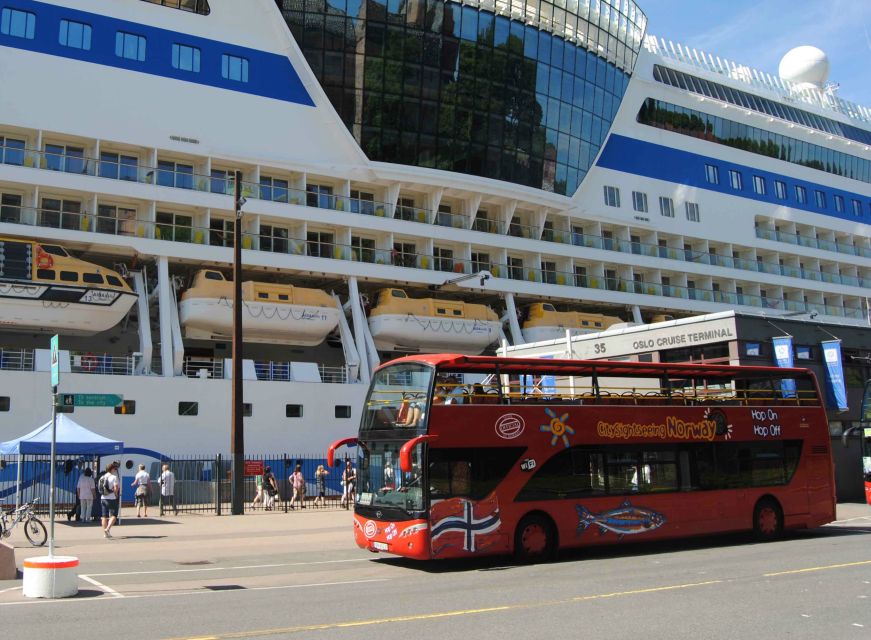
- Cruise passengers get practical access: Stops serve Oslo Cruise Terminal, Color Line Terminal, and Filipstad Cruise Terminal.
- Choose 24 or 48 hours: The longer pass works best if you plan museum visits and a slower day.
- Expect changing weather: The upper deck offers the best views, but the enclosed lower deck is useful in rain and wind.
Why this bus helps you understand Oslo quickly
Oslo is compact in the center but its major museum district sits across the water on Bygdøy. Frogner Park lies west of the center, while the cruise terminals and waterfront sights spread along the harbor. This route ties those pieces together in one circuit.
I would use the bus first as a city orientation tool, not as a replacement for walking. Sit through the entire loop if you have not been to Oslo before. The audio guide points out the main sights and gives you enough background to decide where you want to return on foot.
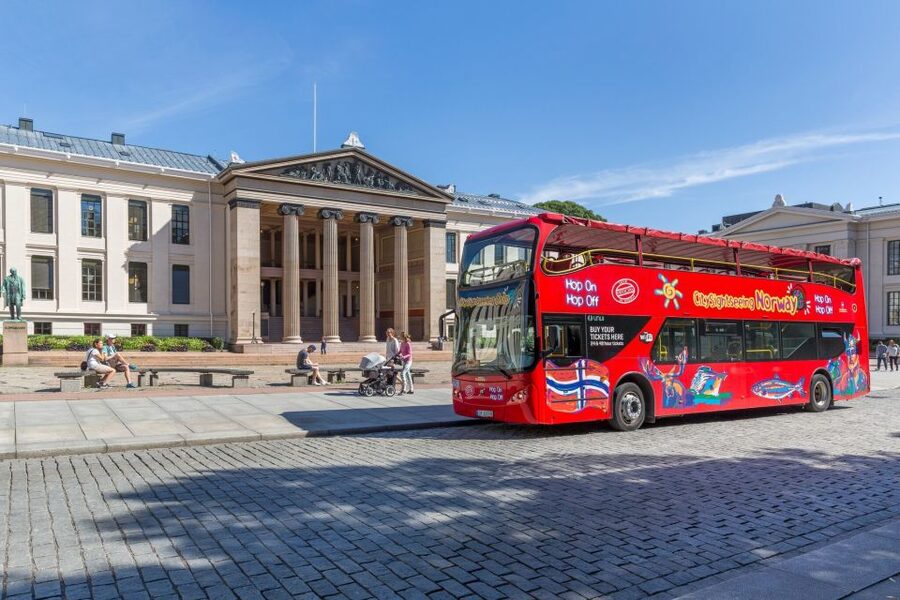
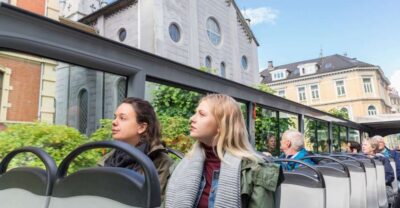
The open roof gives you a clear view of streets, buildings, sculptures, and the harbor. On a dry day, it is a pleasant way to see Oslo without spending the first few hours studying a transit map. On a wet or windy day, the lower level keeps the tour usable, though the view is less open.
The service has earned a 3.6 rating from 724 reviews, which fits the experience well. The route and stop locations are useful, but operations can be uneven. Audio volume, ticket handling, boarding order, and waiting times have caused problems for some passengers. I would book it for convenience and coverage, not for polished luxury.
More City Tours in Oslo
- Oslo: Grand City Sightseeing Tour by Bus with Fjord Cruise
★ 4.6 · 647 reviews - Oslo Combo Tour: Grand City Tour and Oslo Fjord Cruise
★ 4.5 · 555 reviews - City Sightseeing Oslo Hop-On Hop-Off Bus Tour
★ 3.0 · 455 reviews
Starting at Nationaltheatret
The main boarding point is at Nationaltheatret on Karl Johans Gate. This places you close to the Royal Palace, the National Theatre, and Oslo’s main central avenue. The starting stop can be hard to spot on a map, so look near the National Theatre rather than expecting a large terminal-style station.
Starting here has one clear advantage: you can often get a seat before the bus fills at later stops. The first departure is at 10 a.m., and the last departure from this stop is at 4 p.m. Since the full circuit takes about 90 minutes, do not board late in the afternoon if you hope to hop off at several places.
The central route also gives you a good first look at Karl Johans Gate and the Royal Palace area. You can hop off for the palace and central sights, then continue later. Entry to attractions is not included, so plan to pay separately for museums and other ticketed sites.
The central sights, palace, and Karl Johans Gate

The first part of the circuit introduces Oslo’s formal center. The Royal Palace is the official residence of Norway’s present monarch and was also associated with the Norwegian and Swedish King Charles III. The stop is convenient for a walk along Karl Johans Gate and a look at the National Theatre.
This is a good place to begin if you want a broad introduction before choosing a museum. The bus audio is available in English, Spanish, German, French, Chinese, Italian, Dutch, and Japanese. You receive headphones, and you can also use the guide on your own device.
Audio quality is the weak link. Some passengers have found the guide hard to hear, and one report noted that the commentary did not clearly announce the next stop. I suggest watching the route and asking the driver or stop staff if you are unsure where to get off. Do not rely only on the narration to signal your stop.
Majorstuen and Frogner Park
The bus passes through Majorstuen and continues toward Frogner Park. Majorstuen is mainly a passing point on this tour, but Frogner Park is one of the most worthwhile stops on the route.
Frogner Park contains Vigeland Sculpture Park, the section most people come to see. The sculptures are the main draw, and the stop also serves the Oslo Museum. You can get off here for a walk, then wait for the next bus.
Give this stop more time than a quick photograph. The park is spread out, and rushing through it defeats the point. If you have only one day in Oslo, compare your interest in sculpture with the museums on Bygdøy before deciding how long to stay.
The buses are supposed to arrive about every 30 minutes. That sounds frequent, but a missed bus can take a noticeable bite out of a short Oslo visit. Keep the departure window in mind, especially late in the day.
More hop-on hop-off buses in Oslo:
- Oslo: 24 or 48-Hour Hop-On Hop-Off Sightseeing Bus Ticket
★ 4.1 · 1,470 reviews - Oslo Shore Excursion: City Sightseeing Oslo Hop-On Hop-Off Bus Tour
★ 3.0 · 121 reviews - Oslo: Best of Oslo Walking Tour and Hop-on Hop-off Bus Tour
★ 3.7 · 3 reviews - Geiranger: City Sightseeing Hop-On Hop-Off Bus Tour
★ 3.7 · 546 reviews
Bygdøy’s museum cluster
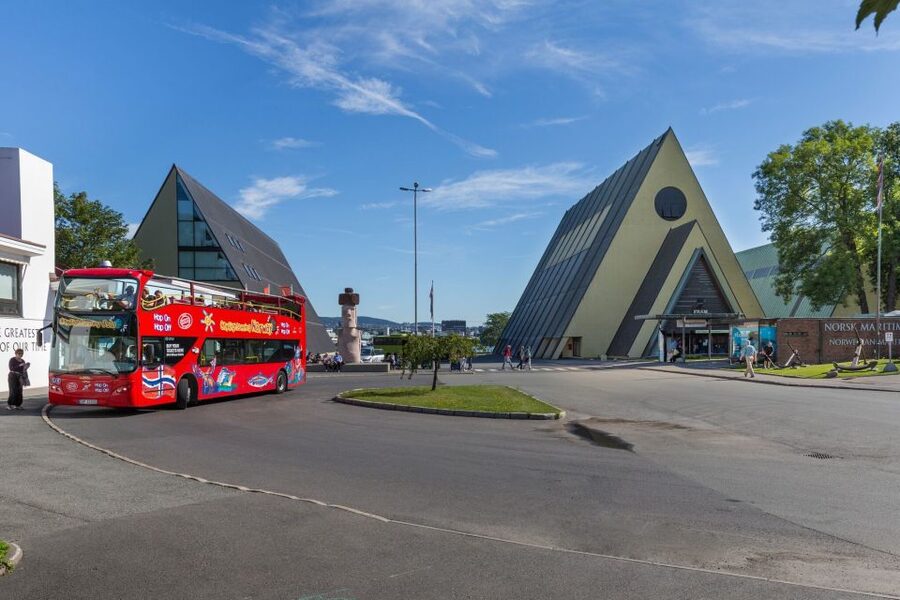
The route’s greatest practical value is its access to Bygdøy. Several major museums sit in this area, including the Viking Ship Museum, the Fram Polar Ship Museum, the Kon-Tiki Museum, the Norwegian Maritime Museum, and the Norwegian Museum of Cultural History.
The itinerary lists the Viking Ship Museum and the Norwegian Museum of Cultural History as pass-by points as well as stops. In practice, you should confirm with the driver where boarding and drop-off are operating on your date. The supplied stop list clearly identifies the Viking Ship Museum and the Norwegian Museum of Cultural History as places where you can board.
The museum choices appeal to different interests:
- Viking Ship Museum: A natural choice if you want to focus on Norway’s Viking past.
- Fram Polar Ship Museum: Best suited to visitors interested in polar exploration and the famous Fram vessel.
- Kon-Tiki Museum: Focuses on the expeditions associated with Thor Heyerdahl.
- Norwegian Maritime Museum: Covers Norway’s seafaring traditions.
- Norwegian Museum of Cultural History: Offers a broader look at Norwegian culture.
You cannot reasonably visit all of these in one short stop. Pick one or two, check their opening hours separately, and use the bus to avoid arranging another connection back to central Oslo. Museum admission is not part of the bus ticket.
This is also where a 48-hour pass makes more sense. A 24-hour ticket can work if you choose one museum and a few central stops. The second day gives you room to spread the museums out instead of racing from one to the next.
The harbor and cruise terminals
The route is especially useful for cruise passengers. Stops serve Oslo Cruise Terminal, the Color Line Terminal at Hjortnes, the Filipstad Cruise Terminal, and the Oslo Ferry Port used by Go Nordic Cruiseline and DFDS. The exact stop names matter because Oslo’s waterfront has several separate arrival points.
If your ship docks near the Oslo Cruise Terminal, you can board without returning to the center first. That makes the bus a practical shore-excursion option when you want a broad view of Oslo but do not want to arrange a private vehicle.
I would allow extra time around the harbor. Traffic can slow the circuit, particularly in the central area. A past city event caused heavy delays, with the bus barely moving through several traffic lights. That is unusual, but it shows why you should not plan a tight museum booking or ship departure around the advertised 90-minute loop.
The 12-month voucher flexibility helps if a cruise itinerary changes. Mobile and printed vouchers are accepted, and the voucher can be used on any day within 12 months of the selected travel date. Still, bring your passport or ID card, and keep the booking screen easy to access.
Oslo Opera House, MUNCH Museum, and Langkaia
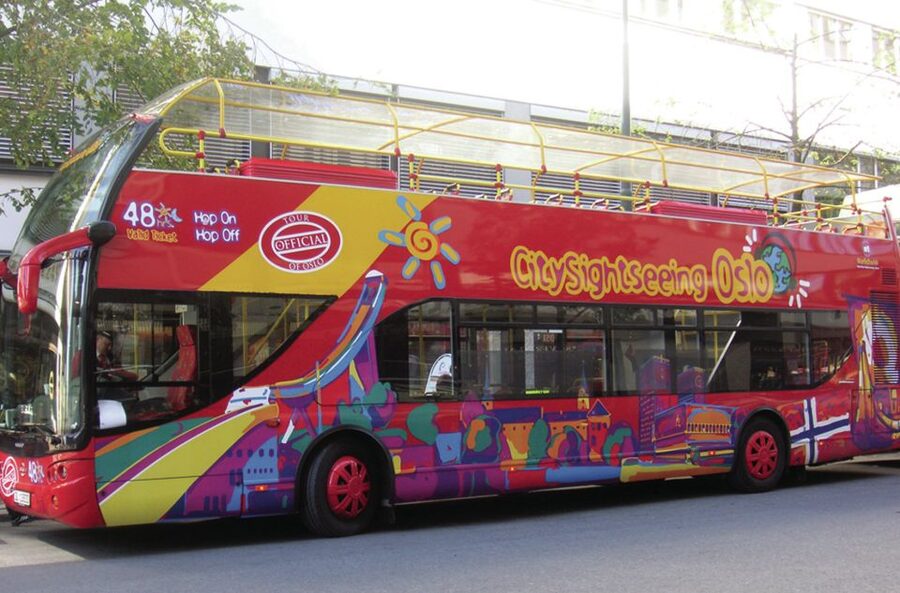
The route returns along the harbor to Langkaia, the Opera House, MUNCH Museum, and Oslo Central Station. This part of the ride gives you an efficient way to connect several modern Oslo sights.
The Oslo Opera House is a natural hop-off point for its striking exterior and waterfront setting. The nearby MUNCH Museum is the place to stop if you want to see work connected with Edvard Munch. The bus ticket does not include entry to either attraction, so check admission prices before you build your day around them.
Langkaia and Oslo Central Station are useful for changing the shape of your visit. You might hop off at the Opera House, walk around the harbor, continue to MUNCH, and later rejoin the bus near the center. The route also finishes back at Nationaltheatret, making it easy to return to Karl Johans Gate.
The harbor section is most enjoyable from the upper deck, but the roof may be covered with plastic in poor weather. That can make photographs difficult and reduce the value of the panoramic view. If the upper deck is enclosed, sit downstairs if the plastic is fogged or wet rather than expecting perfect photos.
How the 24-hour and 48-hour tickets compare
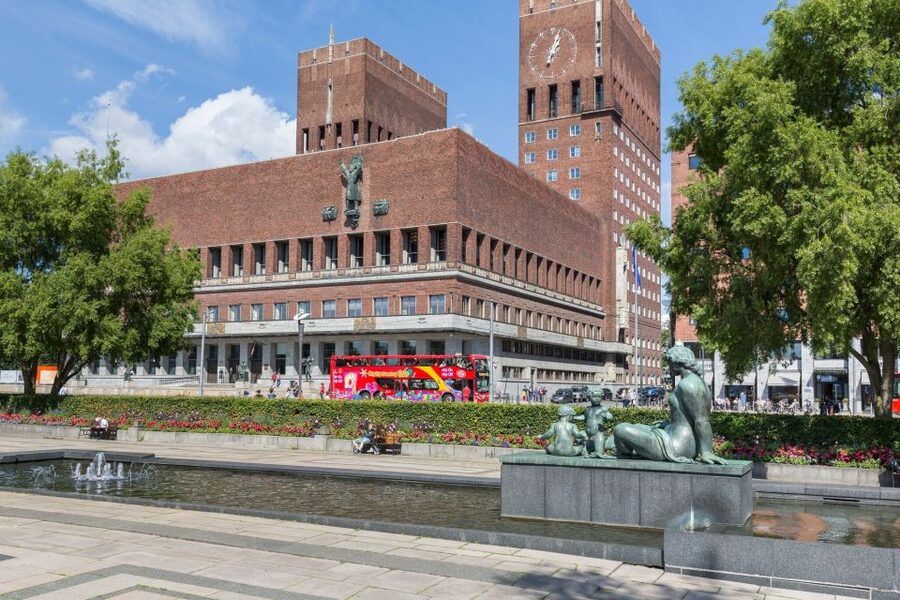
At about $46 per person, this is not a bargain if you simply stay aboard once. The value comes from using the bus as transport between several places, especially Bygdøy and Frogner Park, while also getting the audio commentary.
A 24-hour ticket suits you if:
- You have one full day in Oslo.
- You want a city overview plus one or two stops.
- You are visiting on a cruise and need a simple route.
- You prefer to see the main sights without entering several museums.
A 48-hour ticket suits you if:
- You want to visit several museums.
- You expect rain or changing weather.
- You prefer a slower pace.
- You want to use the bus on two separate days.
The ticket is valid for a full 24 or 48-hour period, not simply until the end of the calendar day. That detail matters if you board in the afternoon. The flexible voucher remains valid for 12 months, but the actual ride still follows the operating hours and schedule on the day you use it.
Discounts on attractions are included, though the specific discounts are not listed here. Ask before buying a museum ticket so you know which discounts apply.
Timing, boarding, and audio guide realities
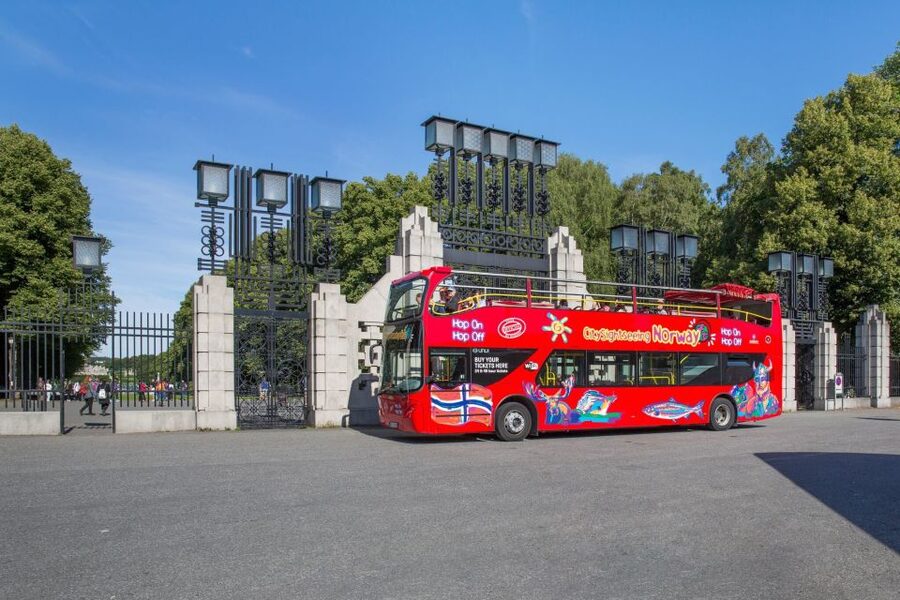
Buses run approximately every 30 minutes, with a 90-minute full loop. That is adequate for a relaxed sightseeing day, but it is not a high-frequency urban bus service. If you miss one, you may wait a while, especially at a popular stop where other passengers are also boarding.
Some buses can fill up. One useful strategy is to board at the first stop when possible, then remain seated for the initial circuit. At later stops, you may have to stand or wait for the next bus. Boarding can also feel disorganized when many people are trying to get on and others are leaving.
The audio guide adds value when it works clearly. It covers eight languages and gives the route more context than a silent ride. However, headphone ports have sometimes failed, and the volume has not always been strong enough. Test your port soon after boarding and tell staff if the commentary is not audible.
The tour accepts both mobile and printed vouchers. Older operating practices caused confusion over printed tickets, so keep a paper copy if it is easy to make one, but the current information says mobile vouchers are accepted. Do not let a ticket issue derail your morning. Show the confirmation clearly and ask the driver or ticket staff for help.
Weather and the upper deck
Oslo weather can change quickly enough to shape the whole experience. The open-top deck gives the best views and photographs, but rain, wind, and wet plastic coverings can make it uncomfortable. One practical approach is to start upstairs for the central portion, then move downstairs if the weather turns.
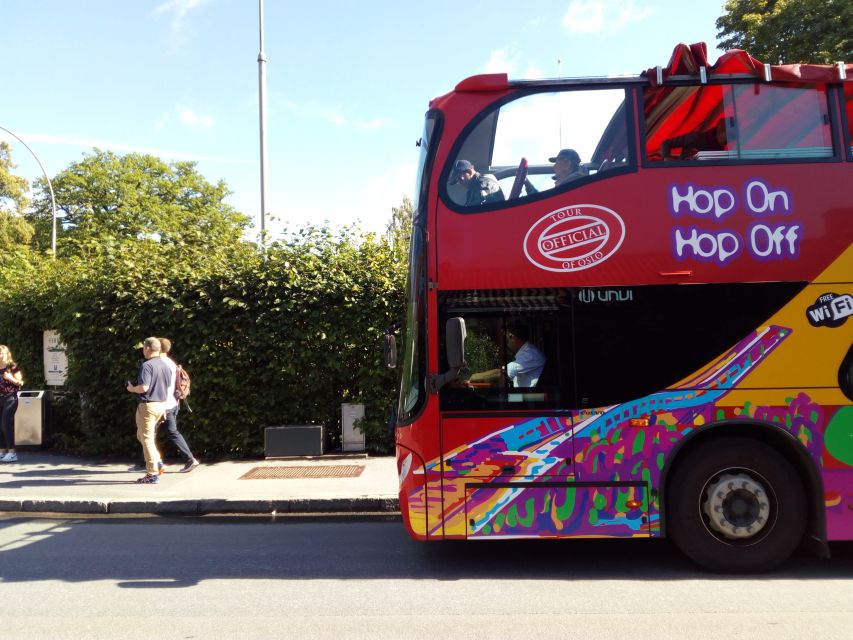
The electric buses are a nice touch for a city tour, particularly along the waterfront and through residential areas. You also get free Wi-Fi onboard, which can help you check museum information or coordinate your next stop.
Bring a light waterproof layer even on a bright morning. Smoking and pets are not allowed, and food and drinks are not included. The tour is meant to connect sights, not provide a meal break, so plan lunch during one of your longer stops.
Who should book this Oslo bus tour?
I would recommend it most strongly to first-time visitors, cruise passengers, families who want to limit walking, and anyone with only one day in Oslo. It is also useful if you want to see the city before committing to a detailed walking route.
It is less useful if you already know Oslo’s public transport system, plan to visit only central sights, or want a quiet, in-depth tour at each museum. The audio commentary is informative but can be superficial, and the bus cannot replace time inside the attractions.
For a first afternoon, I would ride the full loop, note the places that interest you, then use the next circuit to stop at Frogner Park, one Bygdøy museum, and the Opera House or MUNCH Museum. If you have two days, use the first day for orientation and the second for museums.
Should you book it?
Book this tour if convenience and coverage matter more to you than a perfect schedule. It puts Oslo’s central sights, sculpture park, museum district, waterfront, and cruise terminals on one understandable route, with flexible 24-hour or 48-hour use.
Skip it if you plan to stay in the city center and walk everywhere. At $46, the ticket needs several rides or stops to earn its keep. For most first visits, especially from a cruise ship, the ability to reach Bygdøy without planning every connection makes the cost reasonable.
FAQ
Where does the Oslo hop-on hop-off bus start?
The first stop is at Nationaltheatret near the National Theatre on Karl Johans Gate. You can also board at other stops along the route.
How long does one complete loop take?
The sightseeing loop takes about 90 minutes.
How often do the buses run?
Buses operate approximately every 30 minutes.
What are the operating hours?
The first departure from Stop 1 is at 10 a.m., and the last departure from Stop 1 is at 4 p.m.
Which languages are available for the audio guide?
The audio guide is available in English, Spanish, German, French, Chinese, Italian, Dutch, and Japanese.
Does the ticket include museum admission?
No. Entry to attractions, food, and drinks are not included. The ticket does include discounts on attractions.
Can I use a mobile voucher?
Yes. Mobile and printed paper vouchers are accepted and can be redeemed at any stop along the route.
Just added around Oslo
- The Viking Planet Museum – Mini Group (4 adults)★ 4.0 · 16 reviews
- Oslo Winter Highlights Bike Tour★ 5.0 · 36 reviews
- 4 hours Best View of the Oslofjord Winter Edition★ 4.0 · 15 reviews
- Unknown war. Oslo and Norway during 1940-45★ 5.0 · 74 reviews
- Fjord Houseboat Cruise in Oslo. 100 % electric. BYO★ 5.0 · 3 reviews
- The Ultimate Norwegian Skiing Experience★ 5.0 · 16 reviews
- The Scenic Roadtrip, Oslo to Bergen via Flam & the Fjords★ 5.0 · 25 reviews
- 3 Hours Walking Tour for Great Food in Oslo★ 5.0 · 32 reviews
City Tours, compared.

Grand City Sightseeing Tour by Bus with Fjord Cruise
Read our review →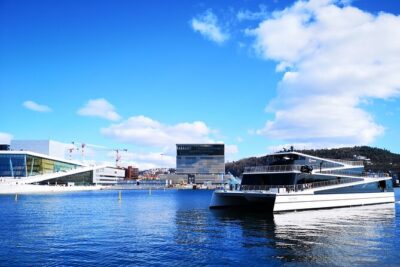
Oslo Combo Tour: Grand City Tour and Oslo Fjord Cruise
Read our review →

Browse the lists this tour appears in