
Reviewed · CITY TOURS
Free City Walking Tour in Oslo
Oslo’s center is compact enough to cross on foot, and this tour makes a smart first look at the city. In about 90 minutes, you move from the Tiger sculpture by the station to the Opera House, Akershus Fortress, the waterfront, City Hall, the Royal Palace, and Parliament. It is a brisk sampler of Oslo’s public face, with local stories added along the way.
I like the easy central meeting point and the broad range of sights. I also like the mix of big landmarks and smaller stories, from the Norwegian royal family to the University Aula, where Edvard Munch painted. The main consideration is pace: one 3-star account found there was more walking than talking, while other feedback praised the guides for being entertaining and detailed.
Key points to know before you go
- Nine major sights in 90 minutes: The route covers Oslo’s central landmarks without asking you to commit half a day.
- A strong first-day orientation: Start at the Tiger sculpture and finish near Parliament, close to Karl Johans gate.
- History with a local angle: Expect stories about royalty, Alfred Nobel, Henrik Ibsen, Munch, Norwegian culture, and daily life.
- A small-group format: The maximum group size is 30 people, though the actual group may be smaller.
- A tip is part of the free-tour model: The booking price is listed as $3.45, and one participant noted that tips of about $10 per person are expected.
- Mostly an outdoor experience: Admission is free at nearly every stop, but the tour does not appear to include interior visits to the museums or palace.
Why this 90-minute walk works well in Oslo
The route gives you a useful mental map of central Oslo. You begin at Jernbanetorget, the transport hub beside the Tiger statue, then walk west through the old center and along the waterfront before reaching Karl Johans gate and the Parliament building.
That order matters. You see the newer Bjørvika district first, with its sharp modern architecture, then move into older neighborhoods and royal, civic, and cultural Oslo. You get a sense of how the city has changed without spending your first morning inside a museum.
The guides named in the feedback include Nicholas, Nikola, Yellena, Zoe, and Mia. The strongest praise centers on guides who mix facts with humor and answer questions without rushing. One account specifically described Nicholas as offering a local view of both history and daily life. Another praised Nikola for explaining the stops carefully despite chilly weather.
Still, this is a walking overview, not a long-form history lecture. The schedule allows only a few minutes at most locations. If you want detailed museum context, Norwegian political history, or a close look at Munch’s work, you will need to continue exploring on your own.
More City Tours in Oslo
- Oslo: City Sightseeing Hop-On Hop-Off Bus Tour
★ 3.6 · 724 reviews - Oslo: Grand City Sightseeing Tour by Bus with Fjord Cruise
★ 4.6 · 647 reviews - Oslo Combo Tour: Grand City Tour and Oslo Fjord Cruise
★ 4.5 · 555 reviews
Meeting the guide by Oslo’s Tiger sculpture
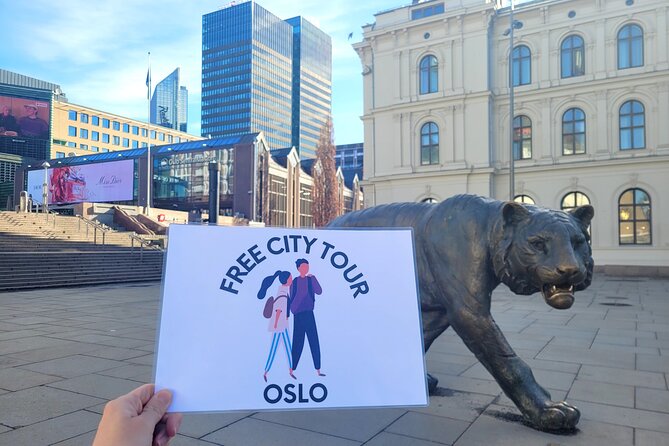
The tour begins beside the Tiger sculpture at Jernbanetorget, address 0154 Oslo. This is a practical meeting place because it is near public transportation and easy to locate in the center.
Allow a little time to find the exact gathering spot. The Tiger is a well-known landmark, but Jernbanetorget can feel busy around trains, trams, buses, and pedestrians. The guide uses the opening minutes to gather the group and set the tone for the walk.
This first stop lasts about eight minutes. It is not a sightseeing stop in the usual sense. Think of it as orientation and introduction before the route heads toward the harbor. Since the group can reach 30 people, staying close to the guide matters from the beginning.
Bjørvika, the Opera House, and Oslo’s changing waterfront
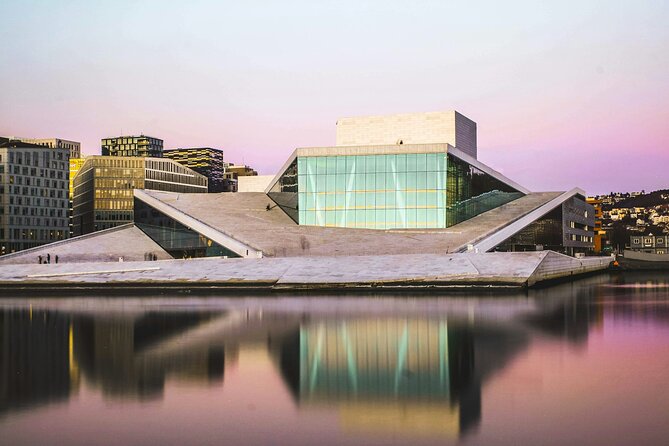
The Oslo Opera House is one of the most memorable stops. Its sloping exterior invites people to walk up and across the roof, and the area around it shows Oslo’s newer side.
The guide also brings in stories about the Public Library, the Munch Museum, Bjørvika, and Sørenga. These references help connect several nearby parts of the waterfront rather than treating the Opera House as an isolated photo stop.
You should expect about ten minutes here. That is enough to hear the main story and look around, but not enough for a full architectural tour or a visit inside the Opera House. The Munch Museum and Public Library are mentioned as part of the surrounding area, not as included admissions.
This is one of the best places to pay attention to the contrast between old and new Oslo. The tour does not spend long in any one district, but the waterfront portion gives you a clear sense of the city’s modern identity. If photographs matter to you, this section offers some of the most striking settings on the route.
The itinerary also mentions the smallest stock exchange in the world as a separate point of interest. No duration is given for this stop, so treat it as a brief story or passing reference rather than a full visit.
Kvadraturen and Christiania Square
From the waterfront, the route reaches Kvadraturen, one of central Oslo’s older quarters. The name refers to the area’s squared street plan, and Christiania Square gives the guide a place to explain Oslo’s earlier urban story.
This stop lasts about seven minutes. That short pause suits the tour’s purpose: you get a quick introduction to the district, then keep moving. The value here is not a long list of buildings. It is the change in mood from Bjørvika’s new architecture to a more traditional central neighborhood.
You may find this section less dramatic than the Opera House or fortress. It rewards attention to the guide’s explanation more than casual sightseeing. If you prefer a walk built around famous views alone, this stop may feel modest. If you want a little context for how Oslo developed, it earns its place.
More Walking Tours in Oslo
- Oslo: Best of Oslo Walking Tour
★ 4.5 · 458 reviews - Oslo: Guided Walking Tour of Central Oslo
★ 4.7 · 438 reviews - Oslo: Historic Myths & Legends Evening Walking Tour
★ 4.8 · 408 reviews - Taste of Oslo Walking Tour
★ 4.5 · 282 reviews
Akershus Fortress and the Alfred Nobel connection
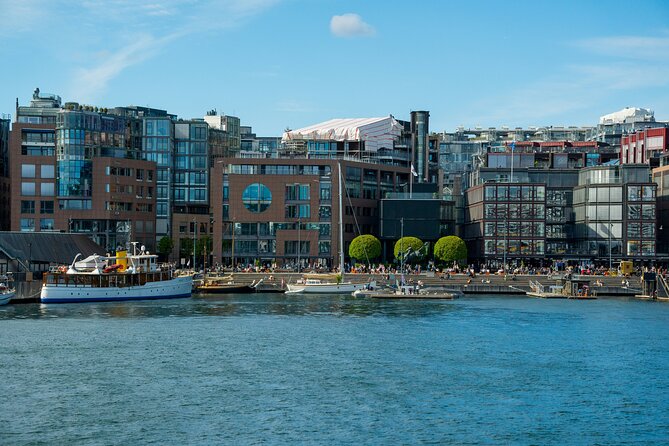
Akershus Castle and Fortress is the route’s most substantial historic setting. The tour allows about eight minutes here and includes the admission point, but the supplied details do not indicate entry into every interior space. Expect to see and hear about the fortress as part of the walking route.
The fortress is especially useful because it gives you a high point and a broad view toward the harbor. The guide also tells the story connected with Alfred Nobel. That link leads naturally toward the Nobel Peace Center later in the walk.
This is one spot where a fast pace can affect your experience. The fortress grounds cover more space than the schedule allows you to explore at leisure. Keep your expectations realistic: you are getting a guided introduction, not a full castle visit.
I would note this stop for a return visit. The tour helps you decide if Akershus deserves more of your time, especially if you want to explore its buildings and grounds beyond the main route.
Aker Brygge, the National Museum, and the Nobel Peace Center
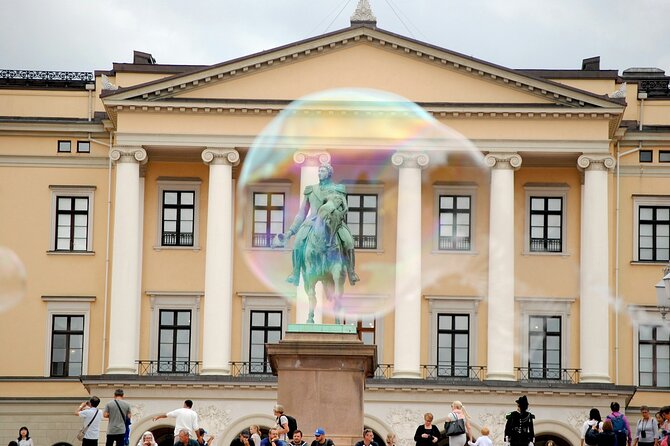
The walk continues to Aker Brygge, a waterfront district associated with dining, shopping, and open harbor views. The National Museum and Nobel Peace Center are included in the guide’s discussion, along with Aker Brygge itself.
The stop lasts roughly seven minutes. That is enough to understand where these institutions are and how they fit into central Oslo, but not enough to visit them. If you plan to enter either museum, save that for another time and check their current opening details separately.
This section connects art, peace work, and the city’s waterfront in a compact way. The Alfred Nobel story from Akershus Fortress now has a second point of reference at the Nobel Peace Center. You also get a practical advantage: after the tour, you will know where to return if one of these places interests you.
Aker Brygge may be one of the more relaxed parts of the route. It offers a break from tight city streets, though the stop itself is short. Bring a layer in cool weather. One participant specifically praised a guide who kept the walk steady and unhurried despite chilly conditions, but Oslo’s waterfront can still feel cold.
City Hall and the public face of Oslo
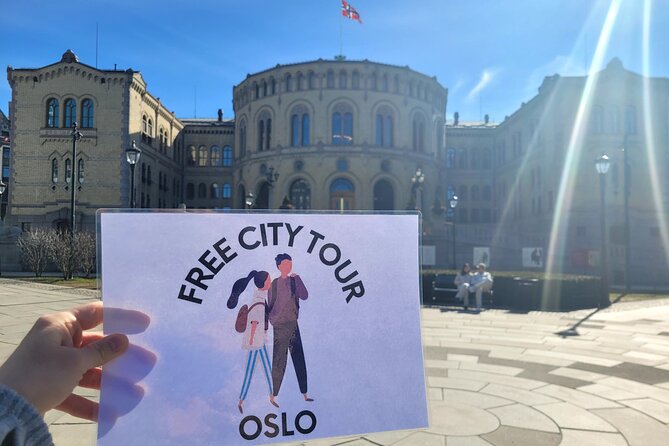
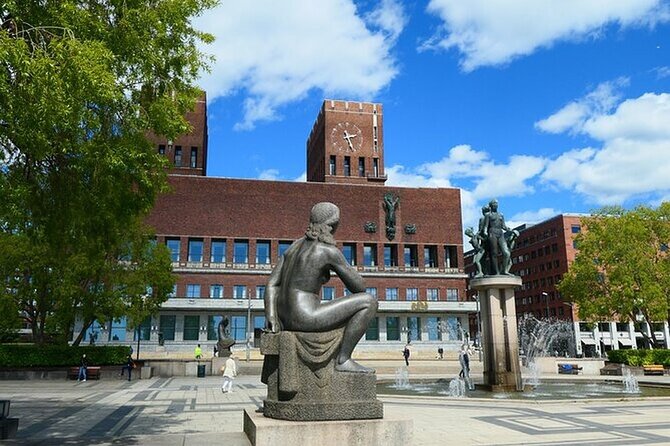
Oslo City Hall, or Rådhuset, receives about ten minutes. This is one of the longer stops, which makes sense. The building is central to Oslo’s civic identity and gives the guide room to discuss the city and its public institutions.
The City Hall stop also helps tie together the route’s themes. You have seen the royal and military sides of Norway at the palace and fortress. Here, the focus shifts to civic life and the city itself.
The walk is not just a procession of photo opportunities. At its best, it gives you a sense of how Norway presents itself through public buildings, cultural sites, and open spaces. Several strong accounts praised the tour for explaining Norwegian culture and daily life, not just dates and monuments.
Nationaltheatret and Henrik Ibsen
Nationaltheatret is a brief six-minute stop linked with Henrik Ibsen. The theater and the writer provide a cultural counterpoint to the political and royal sites earlier in the route.
Because the stop is short, you will likely get a compact explanation rather than a full account of Ibsen’s life and work. That is still useful if you are unfamiliar with his place in Norwegian culture. It may also give you a reason to return to this part of town and spend more time looking at the theater district.
This is a good example of the tour’s range. In a single walk, the guide moves from urban planning and waterfront development to medieval defenses, peace prizes, theater, art, and government. The tradeoff is depth. You get many doors opened, but you must choose which ones to walk through later.
The University Aula and Munch’s Oslo
The University Aula is a very short stop, about four minutes, but it contains one of the route’s more distinctive details: Edvard Munch painted there.
That connection gives the walk a personal thread. Munch is not limited to the museum named earlier. His work also appears in the story of a working university building, making the city feel less like a set of detached attractions.
Do not expect time for an art lesson or an interior tour. The point is to place Munch within Oslo and to show how culture appears in ordinary city institutions. If you are interested in Norwegian art, make a note of the location and return when you have more time.
The Royal Palace and Norway’s royal family
The Royal Palace is allotted about eight minutes. Here, the guide shifts to the Norwegian royal family and the role of the palace in national life.
This stop works well late in the walk because you have already seen the civic center, the university, the theater, and the waterfront. The palace then becomes part of a larger picture of Oslo rather than the sole focus of the tour.
You will hear stories about the royal family, but the supplied details do not promise a palace entry. Plan on viewing the building from the outside and learning about its role through the guide.
The palace can be a strong final stretch for anyone curious about modern Norway. It also offers a calmer change from the harbor and transport hub where the tour began. Keep listening for the guide’s explanation of Norwegian life, since the best parts of this walk seem to come from the connection between famous places and everyday culture.
Parliament and the walk back to the city center
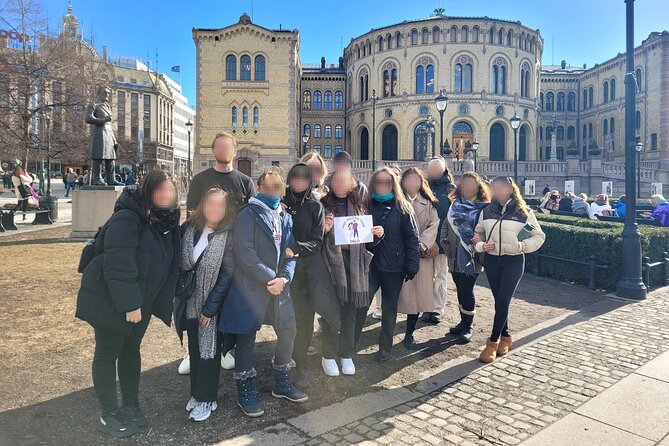
The Norwegian Parliament is the final stop. The tour ends at Karl Johans gate 22, 0026 Oslo, about ten minutes on foot from the Tiger sculpture.
Finishing here is practical. You are left near one of Oslo’s main central streets, with a clear route back toward the station and the places seen earlier. The last stop also completes the tour’s movement through different forms of power: fortress, palace, city government, and Parliament.
The stated duration is about 90 minutes, and most feedback treats that as the right length for a first look. One account found the tour ended around 20 minutes early and felt rushed, though the provider said that description did not match this tour. I would allow some flexibility in your plans, especially because walking time, group size, and the guide’s pace can affect the finish.
What the price really means
The listed price is $3.45 per person, which makes this an inexpensive way to get oriented. The word free refers to the walk itself, not necessarily the total amount you may choose to pay. One participant advised booking directly through a free walking-tour search and budgeting roughly $10 per person in tips.
That makes the value question simple. If you want a low-cost introduction to central Oslo, the route covers a great deal in 90 minutes. If you dislike tip-based pricing or prefer a fixed total, check the payment terms carefully before booking.
Admission is free at nearly all the listed stops, and the route is mainly outdoors. You are paying for the guide’s time, stories, navigation, and local perspective rather than museum entry. That is a fair trade if you use the walk to choose which places deserve a longer visit.
The tour has free cancellation up to 24 hours before the start time. Cancellations or changes within 24 hours are not refundable, and the experience can be canceled if its minimum number is not reached.
Who should choose this Oslo walk?
I would choose this tour near the start of an Oslo visit, particularly if you have only a short stay. The route gives you enough landmarks and neighborhood names to plan the rest of your time with less guesswork.
It also suits you if you enjoy hearing about culture and daily life alongside major sights. The strongest guide experiences appear to come from people such as Nicholas, Nikola, Yellena, Zoe, and Mia, who keep the tone friendly while explaining the city.
You may want another option if you prefer quiet, highly detailed touring or long stops at each attraction. A group of up to 30 can also feel less personal than a private walk, and the short schedule means some stories will remain brief.
Wear comfortable shoes and prepare for cool weather. The route is easy to reach by public transportation, most people can participate, and service animals are allowed. Since the walk stays in the center, you can continue exploring on foot after it ends.
Should you book the Free City Walking Tour in Oslo?
Book it if you want a fast, affordable first look at Oslo’s center, especially on your first day. The Opera House, Akershus Fortress, Aker Brygge, City Hall, University Aula, Royal Palace, and Parliament give you a strong outline of the city.
Skip it if you want a museum-focused visit, palace interiors, or long historical explanations at every stop. For most people who want orientation, local stories, and a useful 90-minute route, the low listed price and central finish make this a sensible start.
FAQ
How long is the Free City Walking Tour in Oslo?
The tour lasts approximately 1 hour and 30 minutes.
Where does the tour begin?
It begins at the Tiger sculpture at Jernbanetorget, 0154 Oslo, Norway.
Where does the tour end?
The final stop is the Norwegian Parliament at Karl Johans gate 22, 0026 Oslo. The end point is about a 10-minute walk from the Tiger sculpture.
What sights are included?
The route includes the Tiger sculpture, Oslo Opera House, the smallest stock exchange in the world, Kvadraturen, Akershus Castle and Fortress, Aker Brygge, City Hall, Nationaltheatret, the University Aula, the Royal Palace, and the Norwegian Parliament.
Is admission included?
Admission is listed as free at most stops. Akershus Castle and Fortress is marked as having admission included, but the information does not specify that the tour includes entry into every building or museum along the route.
How much does the tour cost?
The listed price is $3.45 per person. One participant noted that tips of about $10 per person are expected for the free-tour format.
How large can the group be?
The tour has a maximum group size of 30 people.
Can I cancel the booking?
You can cancel up to 24 hours before the start time for a full refund. Cancellations or changes made less than 24 hours before the experience are not refunded.
Just added around Oslo
- The Viking Planet Museum – Mini Group (4 adults)★ 4.0 · 16 reviews
- Oslo Winter Highlights Bike Tour★ 5.0 · 36 reviews
- 4 hours Best View of the Oslofjord Winter Edition★ 4.0 · 15 reviews
- Unknown war. Oslo and Norway during 1940-45★ 5.0 · 74 reviews
- The Ultimate Norwegian Skiing Experience★ 5.0 · 16 reviews
- The Scenic Roadtrip, Oslo to Bergen via Flam & the Fjords★ 5.0 · 25 reviews
- Fjord Houseboat Cruise in Oslo. 100 % electric. BYO★ 5.0 · 3 reviews
- 3 Hours Walking Tour for Great Food in Oslo★ 5.0 · 32 reviews
City Tours, compared.
Grand City Sightseeing Tour by Bus with Fjord Cruise
Read our review →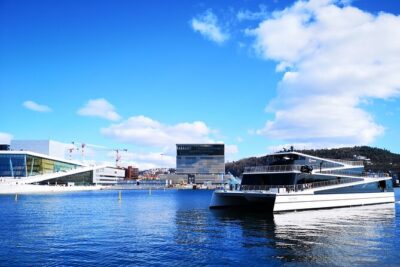
Oslo Combo Tour: Grand City Tour and Oslo Fjord Cruise
Read our review →

Browse the lists this tour appears in