
Reviewed · HISTORICAL TOURS
Oslo City Walks: Historic River Walk
Akerselva is where Oslo’s past and present meet most clearly. This two-hour walk follows the river from Grønland through parks, bridges, and old industrial areas, ending with time at Mathallen, the city’s best-known food destination.
I like the industrial-to-green contrast and the chance to see a side of Oslo that is easy to miss from the main sights. I also like the small, useful scale of the tour: two hours is long enough for context but short enough to fit around a day of sightseeing.
The main drawback is that this is a walking tour, not a food tour or a full city tour. The $52 price does not include food or transport, and the pace may feel brisk if you want long stops at every bridge, park, or shop.
Key points at a glance
- Follow Akerselva through Oslo’s industrial past: See how a working river helped drive Norway’s industrial growth.
- Start at Oslo S: Meet at the Oslo Visitor Center inside Østbanehallen, a simple location for arriving by train or city transport.
- See Beier Bridge waterfall: This is one of the walk’s most striking natural sights.
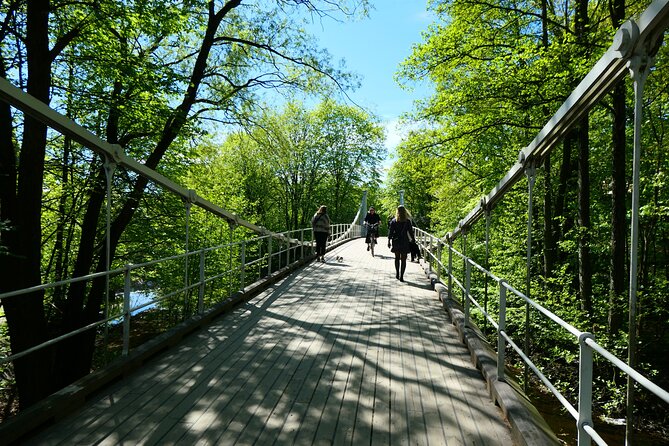
- Cross Fairytale Bridge: A picturesque bridge adds a lighter, more playful note to the route.
- Stop at Mathallen: You can browse Norwegian and international food, but purchases are your responsibility.
- Walk with an authorized Oslo guide: Tours are offered in English or Norwegian and begin at 14:00.
Why Akerselva tells Oslo’s story so well
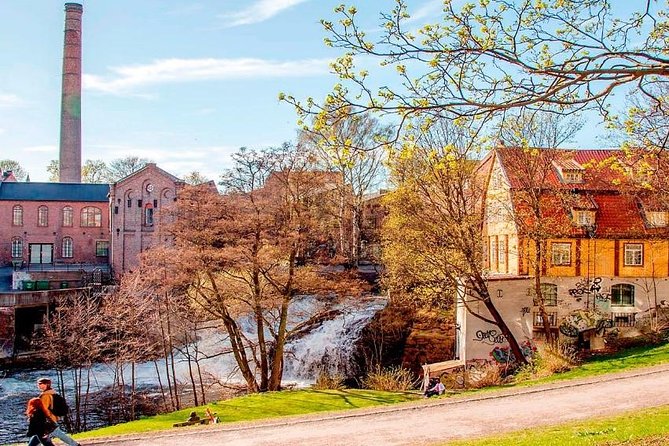
Akerselva is more than a pleasant stream through the city. It is described as Oslo’s green lung and as the cradle of Norwegian industrialisation, which gives the walk a clear purpose beyond sightseeing.
The river once supported industrial activity and suffered from pollution. Today, environmental work has helped turn it into a living waterway with plants, wildlife, paths, and public spaces. That change gives your guide a useful way to explain Oslo’s development without trapping you inside a museum.
I find this kind of tour especially helpful early in a city visit. Instead of learning Oslo as a list of separate attractions, you see how water, work, neighborhoods, and public parks fit together. The river becomes a thread connecting the city’s past with its current life.
The route also offers a change of mood. Grønland brings urban energy and a working-city background, while the riverbanks become calmer and greener. You are still in Oslo, but the traffic and central-city feel begin to fall away.
More City Tours in Oslo
- Oslo: City Sightseeing Hop-On Hop-Off Bus Tour
★ 3.6 · 724 reviews - Oslo: Grand City Sightseeing Tour by Bus with Fjord Cruise
★ 4.6 · 647 reviews - Oslo Combo Tour: Grand City Tour and Oslo Fjord Cruise
★ 4.5 · 555 reviews
Meeting at Oslo S and entering Grønland
The tour begins at 14:00 in front of the Oslo Visitor Center. The center is inside Østbanehallen at Jernbanetorget 1, which makes the meeting point easy to find if you arrive at Oslo Central Station.
You should arrive about 10 minutes early. That gives you time to locate the center, find your guide, and adjust your shoes or clothing before the group sets off. Since the meeting point is indoors, it is also a practical place to wait if the weather is poor.
From Oslo S, the walk heads toward Akerselva and Grønland. This area is important to the tour because it helps show Oslo as a place shaped by industry, trade, and changing city life. You are not simply walking beside water. You are watching the city shift from a work-focused river corridor into a public recreation area.
The walk does not include transport, so you should be ready to cover the full route on foot. The supplied details do not give an exact distance or group size, so I would plan for a steady two-hour walk rather than a slow, stop-and-start outing.
Beier Bridge and the river’s working past
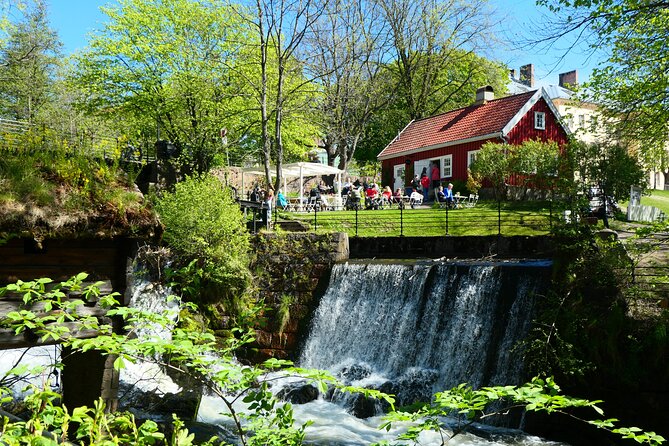
The waterfall at Beier Bridge is one of the route’s strongest visual moments. Water moving through a city always catches the eye, but here it also links directly to the river’s industrial role.
A waterfall could provide power for mills and other forms of industry. Your guide can use this point to explain why factories developed along Akerselva and why the river mattered to Oslo’s growth. The setting makes the story easier to grasp than a paragraph in a guidebook because you can see the water and the built environment together.
This is also a good place to take photographs, though the tour is not designed around extended photo stops. If you like to compose several shots or wait for the perfect light, you may need to make quick choices so the group can stay together.
The river’s environmental recovery adds another layer. Akerselva has gone from a polluted industrial waterway to a healthier ecosystem with flora and fauna. That does not erase its working past. Instead, it shows how Oslo has tried to repair an urban waterway while keeping the area useful for daily life.
Fairytale Bridge and the greener riverbanks
Fairytale Bridge brings a different mood to the route. Its name suggests something decorative and storybook-like, and it gives the walk a memorable visual marker after the more serious industrial discussion.
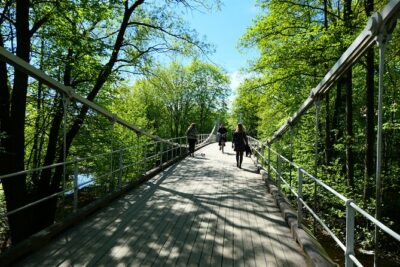
Along this section, you can expect more trees, parks, and nature trails. The river becomes a place for walking and recreation, not just a channel serving factories. This is one of the tour’s best contrasts: old industrial purpose beside modern public use.
I like this part because it keeps the experience from becoming a lecture about factories and pollution. The natural setting lets you enjoy Oslo as a city with access to greenery, while the guide explains how that setting came to be protected and restored.
Still, keep your expectations in check. The tour is not a dedicated nature walk, and the information provided does not promise wildlife sightings or a long stop in each park. Think of the greenery as part of the city story, not as a wilderness outing.
More Historical Tours in Oslo
- Oslo: Historic Myths & Legends Evening Walking Tour
★ 4.8 · 408 reviews - Oslo: History, Art and Secrets Tour
★ 4.7 · 62 reviews - Oslo City Walks – Historic River Walk
★ 5.0 · 31 reviews - A Well Balanced History and Food Tour with Focus on the Scandinavian Kitchen
★ 4.5 · 29 reviews
Mathallen, Oslo’s food stop with a catch
The walk includes a stop at Mathallen, Oslo’s food destination. This is a smart finish because food halls make cities feel immediate. You can browse Norwegian products and international dishes in one place, and the stop gives you a chance to see how Oslo’s food culture fits into its modern identity.
Mathallen is not included as a meal. Food and drinks cost extra, so you should bring a little spending money if you want to sample something. The tour information does not specify how much time you have inside, so do not assume you can sit down for a full meal.
That limitation is worth noting when you compare the $52 price with other Oslo activities. You are paying for the guided walk and the historical interpretation, not for tastings, lunch, or admission to a food attraction.
I would treat Mathallen as a useful orientation stop. You can note places to return to later, pick up a snack if time allows, or simply enjoy the change from river paths to an indoor food market. If food is your main reason for booking, this tour may not be the right choice. If you want history with a practical city stop built in, it works better.
What the guide adds to the experience
The tour is led by an authorized Oslo guide, with English and Norwegian available. That matters here because the most valuable part of the walk is not simply finding the river. It is understanding why each section looks different.
A guide can point out the relationship between the waterway, old industry, public paths, bridges, and neighborhood change. Without that explanation, you might see a waterfall, a bridge, and a pleasant park without understanding how they connect.
The strongest praise in the available feedback focuses on the guide’s kindness, effort, sympathy, and competence. One Italian booking described the guide simply as kind. A German booking praised the walk for reaching beautiful Oslo places that would be hard to find independently and called the guide committed, personable, and capable. A Spanish booking made the same practical point in a different way: the industrial side of Oslo is interesting, but a good guide is essential.
That is a useful warning as well as a compliment. This experience depends heavily on the person leading it. The supplied information does not provide guide names, so you cannot choose a particular guide in advance. The authorized guide status gives you a clear professional standard, but the exact tone and depth may vary by departure.
Is $52 a fair price for two hours?
At $52 per person, this is not Oslo’s cheapest way to take a walk. You can follow many public paths independently and visit Mathallen without joining a tour. If you are comfortable researching Akerselva beforehand, the basic route costs little beyond your time.
The value comes from interpretation and direction. You are paying someone to connect Grønland, the waterfall at Beier Bridge, Fairytale Bridge, the river’s pollution and recovery, and Mathallen into one story. You also avoid spending part of your day figuring out where to go.
I think the price makes the most sense for three kinds of people:
- First-time visitors who want an introduction to Oslo beyond the central landmarks.
- History-minded walkers who enjoy seeing how industry shaped a city.
- Independent explorers who like wandering but want a local guide to reveal places they may otherwise pass.
The price is harder to justify if you mainly want food, photographs, or a slow nature stroll. You will need to buy your own food at Mathallen, and transport is not included. The tour also lasts only two hours, so it is best viewed as a focused introduction rather than a full-day experience.
The four available ratings are all 5 out of 5, which points to a consistently positive response so far. That is encouraging, but the small number of ratings means I would still judge the tour by its format and your own interests rather than treating the score as the whole decision.
Timing, shoes, and weather
The listed start time is 14:00, with a duration of about two hours. That timing suits a day when you want a guided activity after lunch, though it leaves less flexibility for an evening plan than a morning walk would.
Arrive 10 minutes early at the Oslo Visitor Center. Do not cut it close. Oslo S is a major transport hub, and even a clear meeting point can take a few minutes to reach if you are arriving with luggage or unfamiliar with Østbanehallen.
Wear good walking shoes. The route includes urban paths, bridges, parks, and nature trails, so practical footwear matters more than stylish footwear. You should also dress for the weather. The walk goes ahead as an outdoor experience, and the supplied information does not promise shelter along the whole route.
A light rain layer is a sensible choice in Oslo, but I will keep the advice general because the tour details do not specify seasonal conditions or a bad-weather route. Check the forecast before leaving your hotel and plan to be comfortable outdoors for the entire two hours.
Who should book this Akerselva walk?
I would book this tour if you want an easy way to understand Oslo’s industrial side without committing to a museum visit. It is also a good choice if you like city walks that mix built areas, water, bridges, parks, and local food stops.
The experience should suit adults and families who can manage two hours of walking, though the provider gives no specific age guidance. It may also suit solo visitors who want a clear route and a guide at the start of their Oslo stay.
You may want to skip it if your priority is Oslo’s famous landmark circuit. The supplied route centers on Akerselva and does not promise the city’s major museums, royal sights, or waterfront attractions. It is a focused neighborhood and river walk, not a greatest-hits tour.
You should also think twice if you dislike fixed pacing. The guide needs to keep the walk moving, especially with several points of interest and a stop at Mathallen. You can explore Mathallen more fully on your own afterward.
Booking flexibility and practical details
You can cancel up to 24 hours before departure for a full refund. The reserve-now, pay-later option also lets you hold a place without paying immediately, which is useful while your Oslo plans are still shifting.
Tours are available in English and Norwegian. The activity includes only the walk with the authorized guide. Food, drinks, and transport are separate expenses, so budget for those if needed.
The provider is Oslo Guidebureau AS. Since guide names are not supplied, focus your booking decision on the route, subject, timing, and language rather than expecting a named specialist.
Should you book the Historic River Walk?
Book it if you want a compact, guided story of Oslo’s transformation. Akerselva gives you nature, industry, environmental repair, bridges, and food culture in one route, and the two-hour length is easy to fit into a busy schedule.
I especially recommend it for first-time Oslo visitors who want to get beyond the obvious center. The walk’s best quality is its sense of discovery: you may pass through places you would not choose on your own, while the guide explains why they matter.
Skip it if you want a full meal, a landmark tour, or a quiet unhurried stroll. At $52, the tour earns its price through the guide’s local knowledge and the route’s context, not through included food or attractions.
For the right visitor, this is a practical introduction to Oslo’s less polished but more revealing side. Bring walking shoes, arrive early at Oslo S, and leave room in your schedule to return to Mathallen if the food stop gives you an appetite.
FAQ
Where does the Oslo Historic River Walk begin?
Meet your guide in front of the Oslo Visitor Center inside Østbanehallen at Jernbanetorget 1, 0154 Oslo. The meeting point is at Oslo Central Station.
What time does the tour start?
The tour starts at 14:00 and lasts approximately two hours. You should arrive at the departure point 10 minutes early.
Which languages are available?
The live guide offers the tour in English or Norwegian.
What does the tour price include?
The price includes the walk with an authorized Oslo guide. Food and transport are not included.
What sights are included along Akerselva?
The route includes the river through Grønland, the waterfall at Beier Bridge, Fairytale Bridge, green areas and nature trails, and a stop at Mathallen.
What should I wear for the walk?
Wear good walking shoes and dress according to the weather. The experience takes place outdoors and involves walking for about two hours.
More Walking Tours in Oslo
- Oslo: Best of Oslo Walking Tour
★ 4.5 · 458 reviews - Oslo: Guided Walking Tour of Central Oslo
★ 4.7 · 438 reviews - Taste of Oslo Walking Tour
★ 4.5 · 282 reviews - Central Oslo Guided Walking Tour with Local Guide
★ 4.5 · 278 reviews
Just added around Oslo
- The Viking Planet Museum – Mini Group (4 adults)★ 4.0 · 16 reviews
- Oslo Winter Highlights Bike Tour★ 5.0 · 36 reviews
- 4 hours Best View of the Oslofjord Winter Edition★ 4.0 · 15 reviews
- Unknown war. Oslo and Norway during 1940-45★ 5.0 · 74 reviews
- The Scenic Roadtrip, Oslo to Bergen via Flam & the Fjords★ 5.0 · 25 reviews
- Fjord Houseboat Cruise in Oslo. 100 % electric. BYO★ 5.0 · 3 reviews
- The Ultimate Norwegian Skiing Experience★ 5.0 · 16 reviews
- 3 Hours Walking Tour for Great Food in Oslo★ 5.0 · 32 reviews
Historical Tours, compared.

Reindeer Camp and Sami Cultural Tour with Lunch
Read our review →

Sightseeing Cruise of Bergen’s Historic Landmarks
Read our review →


Browse the lists this tour appears in