
Reviewed · CITY TOURS
Oslo City Walks: The City of Contrasts
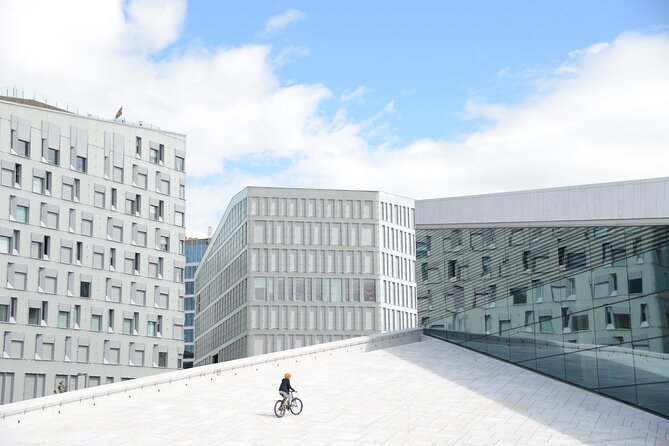
Oslo’s most revealing sight may be the sharp change from old railway halls to bold new buildings. This two-hour walk follows that change from Oslo Central Station into Bjørvika, crossing the Acrobat pedestrian bridge and passing the Munch Museum before finishing near the Opera House and Deichman Library.
I like the clear modernization story and the chance to see Oslo with an authorized local guide rather than simply ticking off landmarks. I also like the compact route and easy meeting point inside Østbanehallen. The tradeoff is important: this is mainly an architecture and city-development walk, not a grand tour of Oslo’s major sights. The available score of 3.4 out of 5 from seven ratings also points to an uneven experience, especially when the group is large or the guide lacks energy.
Key points to know before you book
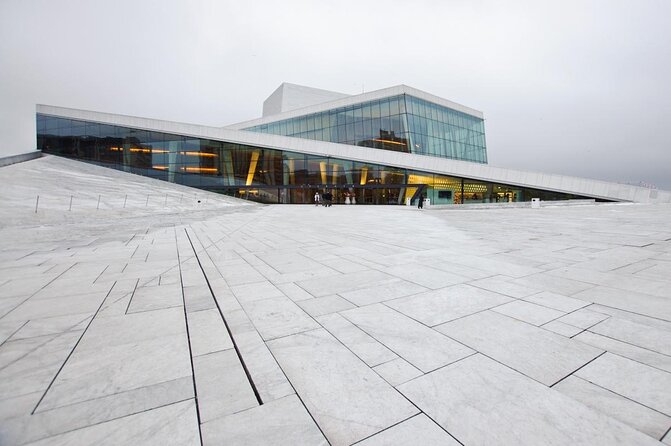
- The route begins at Oslo Central Station and ends by Deichman Library, close to the Opera House.
- The Acrobat pedestrian bridge gives you a strong view of Oslo’s modern railway district and leads directly toward Bjørvika.
- The Munch Museum and new waterfront buildings are central to the walk, not side stops.
- The tour runs for about two hours, with English and Norwegian guides.
- Good walking shoes matter, and high heels are not allowed.
- This suits architecture fans and first-time Oslo visitors, but it may disappoint anyone expecting a full city highlights tour.
Starting at Østbanehallen with Oslo’s old and new sides
Meet your guide in front of the Oslo Visitor Centre inside Østbanehallen, at Jernbanetorget 1. This is a practical starting point. Oslo Central Station is easy to find, and the indoor hall gives you a useful place to orient yourself before heading outside.
Arrive 10 minutes early. The walk is listed for Monday evening, so check the current departure time when you book. The guide speaks English or Norwegian, and the tour is led by an authorized Oslo guide through Oslo Guidebureau AS.
The first useful idea to keep in mind is that Oslo’s growth is not just about shiny new buildings. The city’s expansion came through industrialization, improved transport, and the redevelopment of former industrial areas. Your guide uses the walk to explain how those forces changed the capital.
That focus gives the tour a clear purpose. You are not simply walking from one photo stop to another. You are watching a city make room for new homes, cultural buildings, public spaces, and transport links. I find that kind of explanation more useful than a list of dates, especially when the buildings around you are still part of an ongoing change.
More City Tours in Oslo
- Oslo: City Sightseeing Hop-On Hop-Off Bus Tour
★ 3.6 · 724 reviews - Oslo: Grand City Sightseeing Tour by Bus with Fjord Cruise
★ 4.6 · 647 reviews - Oslo Combo Tour: Grand City Tour and Oslo Fjord Cruise
★ 4.5 · 555 reviews
Crossing the Acrobat bridge above Oslo Central Station
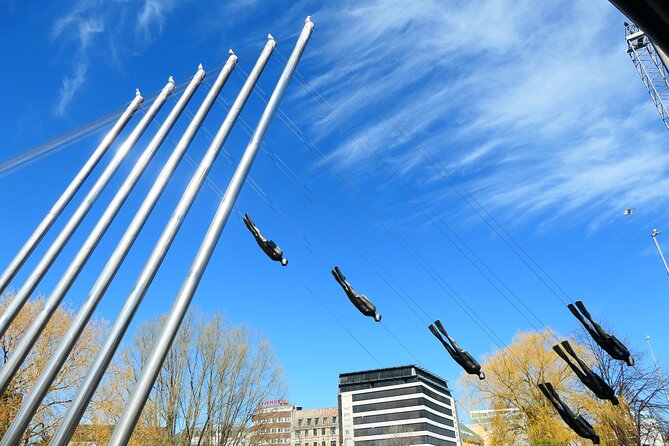
The route heads over the Acrobat pedestrian bridge at Oslo Central Station. The bridge is one of the walk’s most distinctive points because it makes the city’s movement easy to see. Below you is the railway area, while ahead lies Bjørvika and its modern waterfront development.
This is a good place to notice how Oslo connects transport with redevelopment. The bridge is not only a way to get from one side to the other. It also frames the city as a place being rebuilt around walking routes, rail connections, and public access.
You will want your camera ready here, though the value is not only visual. The guide’s commentary should help explain why this part of Oslo looks so different from older sections of the city. The contrast between railway infrastructure and new architecture is the point.
The bridge also makes the walk feel more active than a simple pavement stroll. Still, do not expect a long stop or a formal viewing platform. This is a crossing within the route, so keep listening as you walk and be prepared for the guide to continue the story while the group is moving.
Reading Bjørvika through Bispevika and the waterfront buildings
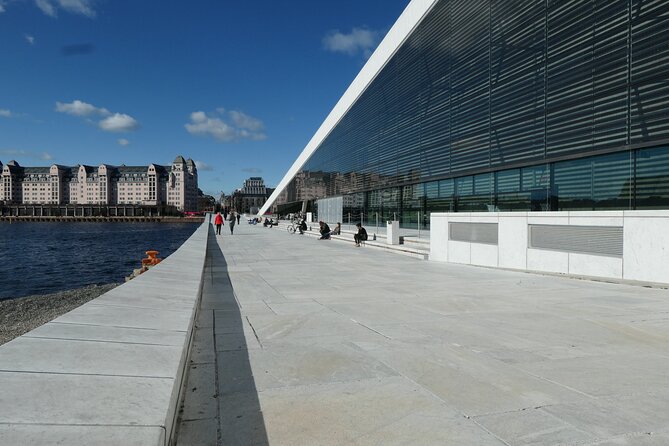
After crossing the bridge, the walk continues into Bjørvika and through Bispevika. These areas show Oslo’s urban expansion most clearly. You see newer buildings placed near older parts of the city, with the guide explaining how the capital has shifted toward a more modern waterfront district.
I like this part because it gives context to buildings that might otherwise seem disconnected. A contemporary structure can look striking in a photograph, but the better question is why it was built there and what role it plays in the city. The guide’s job is to link the architecture to Oslo’s industrial growth and later redevelopment.
The walk is also a chance to study the contrast between traditional and contemporary design. Some people will find that contrast exciting. Others may feel the route gives too much attention to development and not enough to older Oslo sights.
That concern is fair. One past assessment described the tour as covering very few traditional attractions, with the Opera House and an old fort serving as the main familiar sights. Since the current description centers on Bjørvika, Bispevika, and modern architecture, you should book with the right expectations. This is not designed as a complete introduction to every part of Oslo.
The Munch Museum and Oslo’s modern identity
The new Munch Museum is one of the clearest landmarks on the route. Even if you do not enter the museum, its exterior gives the guide a strong example of Oslo’s changing architectural identity.
The building helps show how a cultural institution can become part of a larger city plan. It is not presented as an isolated museum visit. Instead, it fits into the story of the waterfront, new public spaces, and Oslo’s wish to build a stronger cultural center in Bjørvika.
You should note that admission to the Munch Museum is not included. The walk takes you past the building, so plan a separate visit if you want to see the collection. That can be a smart way to use your time: take the walking tour first, then decide if the museum deserves a longer stop on another day.
This is also one of the better photo points. The mix of water, modern lines, and nearby older structures gives you more variety than a single isolated building. Bring a phone or camera, but dress for the weather rather than for a polished city outing. Oslo’s waterfront can feel exposed, and the operator specifically recommends weather-appropriate clothing.
A few more Oslo half-days to weigh up
- Oslo: Scenic Fjord Cruise with Audio Guide Commentary
★ 4.5 · 5,375 reviews - Oslo Nature Walks: Island Hopping Tour
★ 4.8 · 2,713 reviews - Oslo: 100% Electric Oslofjord Sightseeing Cruise
★ 4.4 · 2,041 reviews - Oslo: Fjord Evening Cruise with Shrimp Buffet
★ 4.5 · 1,956 reviews
Finishing beside Deichman Library and the Opera House
The walk ends at Deichman Library, next to the Opera House. This is a useful finish because you remain in one of Oslo’s main modern cultural areas. The ending also leaves you near two major buildings that help complete the city-contrast theme.
The Opera House is particularly well suited to this kind of tour. Its public design and position by the water make it easy to see how modern architecture can change the way people use a city. The tour does not promise an interior visit, so think of this as an exterior stop and a final point for photographs.
Deichman Library adds another civic building to the route. Together, the library and Opera House show that Oslo’s development is not only about offices or housing. Cultural buildings are part of the new city center too.
The finish is practical for anyone who wants to continue sightseeing afterward. You can also treat it as the end of a compact architecture circuit. Just remember that the tour does not provide transport back to the starting point. The listed route ends here, so plan your next move using your own Oslo plans.
What the two-hour format really gives you
Two hours is enough to follow a focused story without wearing yourself out. You get time to walk from the station area into Bjørvika, pause at key buildings, and hear how Oslo changed through industrialization and expansion.
The short length is also useful at the start of a visit. You can use it to get your bearings around Central Station and the waterfront before choosing which buildings to revisit on your own. The route is especially practical if you want a guided introduction without giving up half a day.
The limit is depth. Two hours does not allow a long visit inside museums, a broad tour of historic Oslo, or much time for extended stops. The available score of 3.4 out of 5 reflects why expectations matter. One person found the route flat and the commentary lacking personality, while other scores praised the guide and said the walk helped them understand the city at a comfortable pace.
Guide quality can shape this experience more than the buildings do. A lively guide can turn a railway bridge and new apartment blocks into a clear story about urban change. A less engaging guide may leave you feeling that you simply walked past construction and modern façades.
Group size may also affect the day. One assessment specifically complained that the group was much too large. A large group can make it harder to hear the guide and harder to stop comfortably at busy public spaces. Since no fixed group size is provided, ask the operator if this matters to you before booking.
Is $52 a fair price for this Oslo walk?
At $52 per person, this is not the cheapest way to walk around Bjørvika. The value depends on how much you want the explanation that ties the buildings together.
If you are already comfortable exploring Oslo on your own, you can see much of the route without paying for a guide. The bridge, museum exterior, library, and Opera House are public city sights. For an architecture-minded visitor, though, the fee pays for structure, local interpretation, and the chance to ask questions while the walk is happening.
That last point is worth noting. A strong part of the experience is the ability to ask the guide about the buildings, city growth, and the relationship between old and new Oslo. One particularly positive assessment praised the guide’s friendly pace and the chance to ask as many questions as needed.
I would call the price reasonable for the right audience, but not an automatic bargain. If you want the city’s famous historic sights, spend the money on a broader Oslo tour instead. If you want to understand the new waterfront and modern architecture, the focused route makes more sense.
The booking terms reduce some risk. You can cancel up to 24 hours before the activity for a full refund, and you can reserve now and pay later. Those terms are useful if your Oslo plans may change, but they do not solve the main question: are you interested in city growth and design?
Shoes, weather, and the small practical details
Wear good walking shoes. High heels are not allowed, and the route crosses bridges and follows city streets, so comfort matters more than style. You do not need special hiking equipment, but thin fashion shoes may make the two hours less pleasant.
Dress for the weather. The walk takes place outdoors, with waterfront sections where conditions can change. A waterproof layer and warm clothing are sensible choices in Oslo, though the supplied information does not specify a season for every departure.
Drones are not allowed. The tour includes public urban areas, but no special equipment is needed. Bring only what you normally carry for a city walk, plus a camera if you want pictures of the bridge, Munch Museum, Opera House, and surrounding buildings.
The meeting point is indoors at Østbanehallen, which helps on arrival. Find the Oslo Visitor Centre first, then meet the guide in front of it. Arriving 10 minutes early gives you time to locate the group without rushing.
Who should book this city-contrast walk?
I would recommend it most strongly to:
- First-time Oslo visitors who want a guided orientation around Central Station and Bjørvika.
- People interested in modern architecture and urban planning.
- Visitors who enjoy hearing why a city looks the way it does.
- Photographers looking for a compact route with bridges, waterfront buildings, and cultural landmarks.
- Anyone who prefers a two-hour walk to a long coach tour.
I would be more cautious if you want Oslo’s full historic core, a packed list of famous landmarks, or a tour with a strong entertainment style. The route is narrow in subject. That is its strength, but also its weakness.
You should also consider your tolerance for group tours. The group size is not stated, and one assessment found the group too large. If quiet discussion and easy access to the guide are important, confirm the expected size before paying.
Should you book Oslo City Walks: The City of Contrasts?
Book it if you want to understand Oslo’s new face rather than simply photograph it. The route gives you a useful chain of places, from Østbanehallen and the Acrobat bridge to Bispevika, the Munch Museum, Deichman Library, and the Opera House. Its best feature is the explanation connecting those places to industrialization, transport, and city expansion.
Skip it if you want a broad sightseeing tour or a deep look at historic Oslo. The price is fair for focused guiding, but less attractive if you would rather explore the same public spaces alone.
My practical call is this: choose the walk early in your stay if modern Oslo interests you, arrive early, wear proper shoes, and ask about group size. Go in expecting a city-development lesson with strong photo stops, not a complete tour of the capital. That match between expectations and subject will make the biggest difference.
FAQ
Where does the Oslo City Walks tour begin?
Meet your guide in front of the Oslo Visitor Centre inside Østbanehallen, at Jernbanetorget 1, 0154 Oslo.
Where does the tour finish?
The walk finishes at Deichman Library, next to the Opera House.
How long does the walking tour last?
The tour lasts approximately two hours.
What languages are available?
The live guide leads the tour in English or Norwegian.
What does the tour price include?
The $52 price includes an authorized tour guide. Entry to museums or other attractions is not listed as included.
Should I arrive early?
Yes. You should arrive at the departure point 10 minutes before the scheduled start.
What should I wear?
Wear good walking shoes and dress according to the weather.
Are high heels allowed?
No. High-heeled shoes are not allowed on the tour.
Can I cancel the booking?
Yes. You can cancel up to 24 hours in advance for a full refund. You can also reserve the activity and pay later.
Just added around Oslo
- The Viking Planet Museum – Mini Group (4 adults)★ 4.0 · 16 reviews
- Oslo Winter Highlights Bike Tour★ 5.0 · 36 reviews
- 4 hours Best View of the Oslofjord Winter Edition★ 4.0 · 15 reviews
- Unknown war. Oslo and Norway during 1940-45★ 5.0 · 74 reviews
- The Scenic Roadtrip, Oslo to Bergen via Flam & the Fjords★ 5.0 · 25 reviews
- Fjord Houseboat Cruise in Oslo. 100 % electric. BYO★ 5.0 · 3 reviews
- The Ultimate Norwegian Skiing Experience★ 5.0 · 16 reviews
- Visit the Instaworthy Spots of Oslo’s Vigeland Park with a Local★ 5.0 · 4 reviews
City Tours, compared.
Grand City Sightseeing Tour by Bus with Fjord Cruise
Read our review →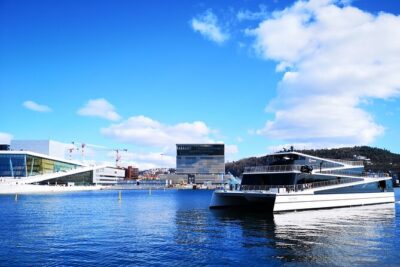
Oslo Combo Tour: Grand City Tour and Oslo Fjord Cruise
Read our review →

Browse the lists this tour appears in