
Reviewed · TRAIN EXPERIENCES
Romsdalen: Rauma Railway Golden Train with Guide
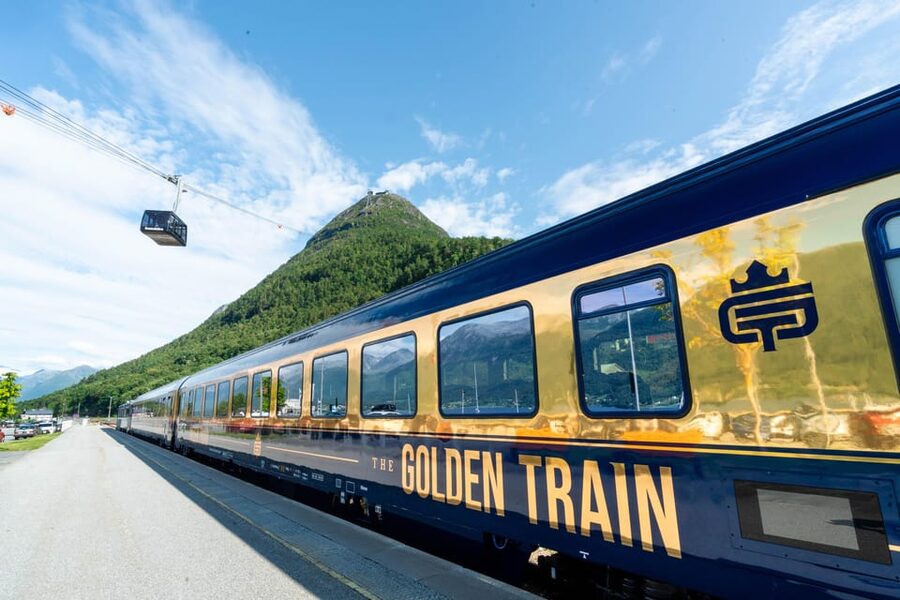
The best part of this train ride is its unhurried pace. The Rauma Railway winds through sharp mountain country, past the Troll Wall, Verma waterfalls, and the famous Kylling Bridge, while an onboard host fills in the human stories behind the scenery. The train itself is the main attraction, not simply a way to reach Bjorli.
I like the slow running speed and the excellent commentary. You have time to frame photographs, move to another window, and actually watch the river and cliffs change. I also like the setting at Åndalsnes station, directly beside the cruise quay, which makes this a handy choice for a port day. The main drawback is the seating system: arrive early, since finding a clear window seat can be awkward, especially on the return ride.
Key points to know before booking
- The two-hour train ride is the real event: Bjorli offers a short break, but the route provides most of the memorable sights.
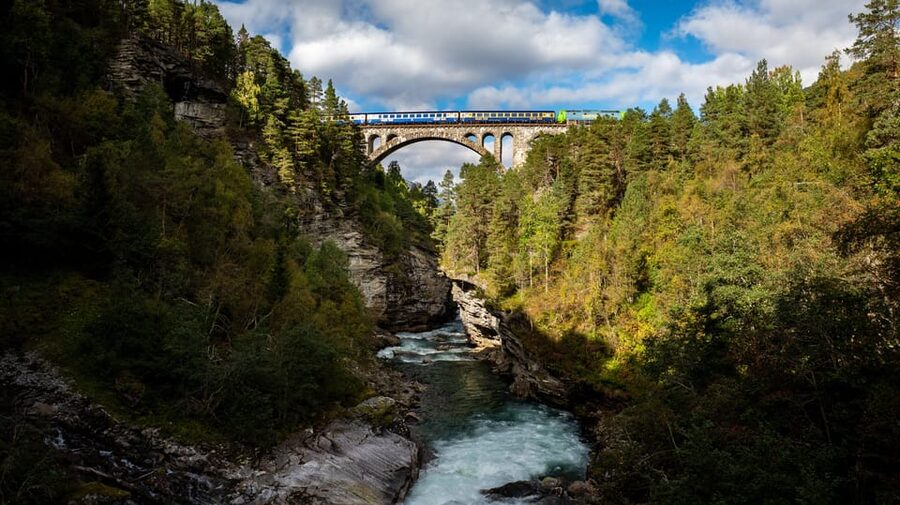
- Kylling Bridge is the photographic high point: Keep your camera ready as the train approaches Norway’s most photographed railway bridge.
- The Troll Wall dominates the route: Look up for huge cliffs and jagged rock faces as the train moves through the Romsdalen valley.
- The guide adds useful context: Expect stories about local mountain life, railway building, and the Second World War.
- Window strategy matters: Sit on the right side for generally better views, but use the open viewing areas and move around when possible.
- The price can be strong value: At $64 per person, it has been reported as roughly half the price charged by some cruise lines for the same outing.
Why the Rauma Railway is worth your time
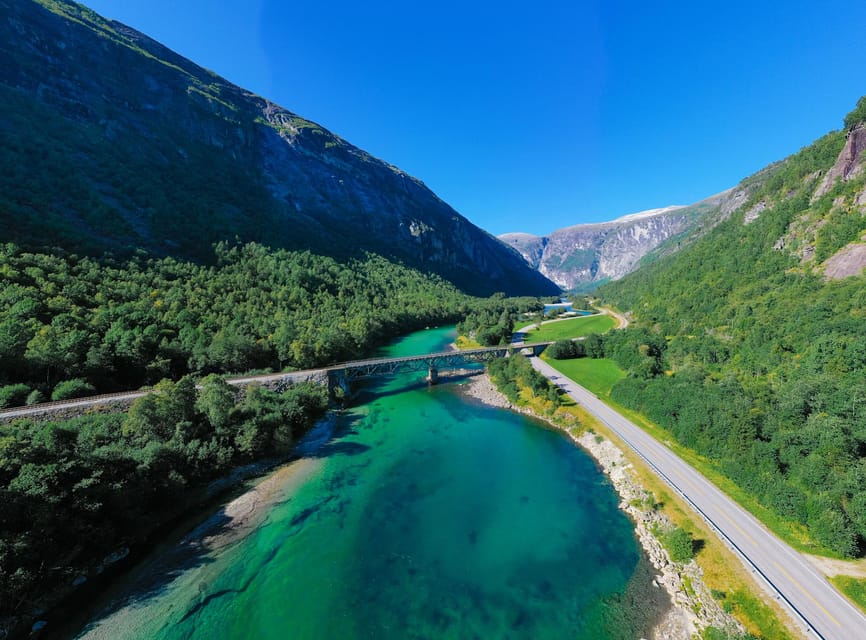
Norway has grand fjord cruises and dramatic roads, but the Rauma Railway offers a different kind of sightseeing. You sit low in the valley, close to the river, with mountain walls rising on both sides. The train moves slowly enough for you to follow the details instead of watching them flash past.
Lonely Planet has called this Europe’s most scenic rail journey. That is a bold label, but the route has the ingredients to support it: high peaks, bare rock, waterfalls, green water, bridges, and a railway line built through difficult country.
I especially like the way the train turns the trip into a moving viewpoint. You are not stopping at every sight, yet the slow pace gives you a fair chance to see and photograph the major ones. The carriage also has extra viewing areas, so you are not trapped behind one window for the entire journey.
The experience lasts about 2.5 hours, including the stop at Bjorli. The train ride takes about an hour in each direction. That timing makes it easy to fit into a day in Åndalsnes, including a cruise stop, though you should keep an eye on the clock if your ship has a fixed departure.
A few more Åndalsnes half-days to weigh up
- Geiranger Shore Excursion: Mt. Dalsnibba and Eagle Road
★ 4.5 · 718 reviews - Geiranger: RIB Fjordsafari Geirangefjord
★ 4.5 · 651 reviews - From Ålesund: Trollstigen Sightseeing Village & Fjord Tour
★ 4.4 · 651 reviews
Starting at Åndalsnes station
The trip begins at Åndalsnes stasjon, a short and practical starting point for anyone arriving by cruise. The station is right by the quay, so you do not need a separate transfer across town. That simple location is one of the tour’s biggest advantages.
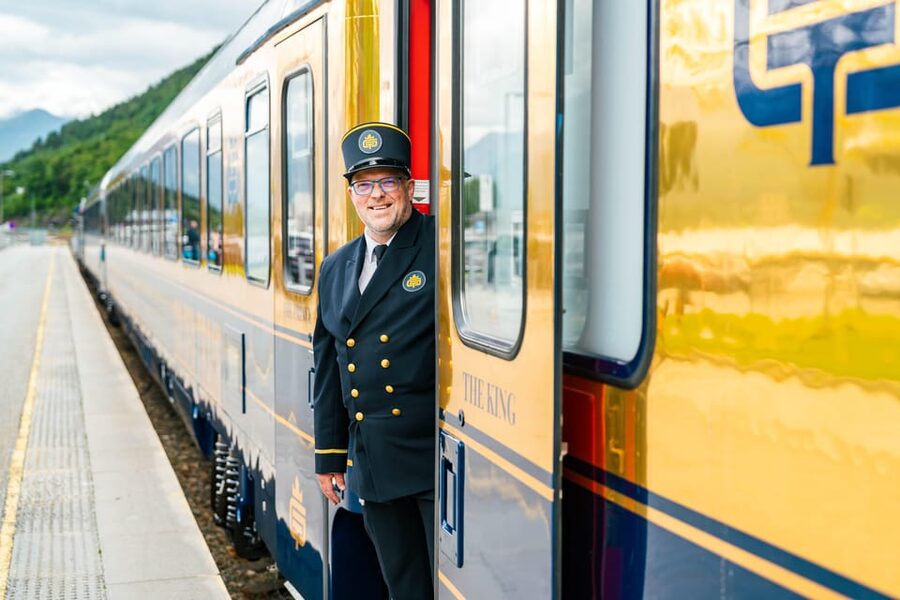
The train hosts welcome you onboard and help set the tone for the ride. You can settle into a regular seat, but arriving early is sensible if getting a good window matters to you. Clear glass and clean carriages help, yet a window pillar can still spoil an otherwise fine view.
The train has a toilet onboard, and drinks and snacks are available according to the supplied trip details. Bring a charged smartphone and headphones because the booking information refers to an audio guide on your own phone. At the same time, the onboard host provides spoken commentary on the train, so you may hear live explanations as well as recorded material.
The first hour through Romsdalen
Once the train leaves Åndalsnes, the route quickly settles into its scenic rhythm. The valley narrows, the river appears, and the cliffs begin to feel much larger than they did from the station. You will cross bridges and pass through a part of Norway shaped by water, rock, and steep slopes.
The train crosses 32 bridges on the route. That number matters because each crossing gives you a slightly different angle on the river and mountains. Some views are broad and distant, while others put you close to rushing water and steep rock.
The commentary gives the scenery a human side. You hear about people who lived among the sharp peaks, relied on the river, and climbed the surrounding mountains. These details prevent the ride from becoming a silent parade of postcard views. The mountains are impressive, but the stories explain how people used and endured this difficult country.
The guide also covers the railway’s past and the events of the Second World War. That history gives the name Golden Train more weight. At Bjorli, a small collection of related memorabilia adds another layer to the trip, even though the museum visit is brief.
Troll Wall and the great mountain views
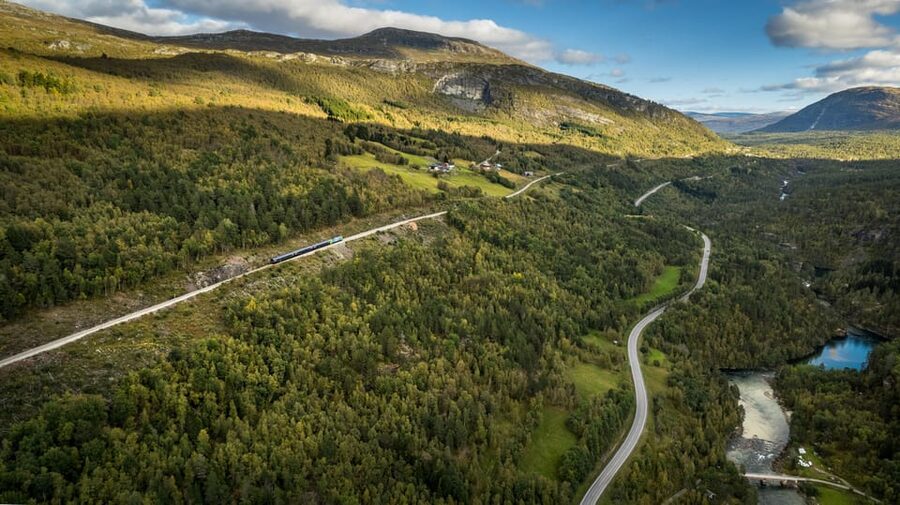
Trollveggen, or the Troll Wall, is one of the route’s signature sights. The cliffs rise sharply above the valley and show why this part of Norway attracts climbers and mountain walkers. From the train, you get a broad view rather than a close walking encounter, but the scale is still striking.
Keep watching the windows as the train moves. The best views do not arrive as a single formal stop. You may catch a waterfall, a green bend in the river, or a sudden wall of rock from one side of the carriage. This is why sitting rigidly in one seat can be a mistake.
Several people have found the right side of the train better for views, though the left side still offers plenty to see. The practical answer is to arrive early, claim a window seat, and use the extra viewing areas when you want a look across the other side. On the return journey, try to change sides rather than viewing the same angle twice.
The train’s slow pace helps photographers. You can raise your phone without rushing every frame, and you have time to watch a scene develop. Still, reflections and pillars can interfere, so the best photograph may come from a viewing area rather than your assigned seat.
More rail trips out of Åndalsnes:
- The Golden Train on Rauma Railway in Romsdalen
★ 4.5 · 21 reviews - Bergen: Viking Village, Nærøyfjord Cruise & Flåm Railway
★ 4.8 · 1,047 reviews - From Narvik: Roundtrip Arctic Train Ride on Ofoten Railway
★ 4.4 · 407 reviews - Guided tour – Viking Village, Nærøyfjord Cruise and Flåm Railway
★ 4.5 · 371 reviews
Kylling Bridge, the route’s signature structure
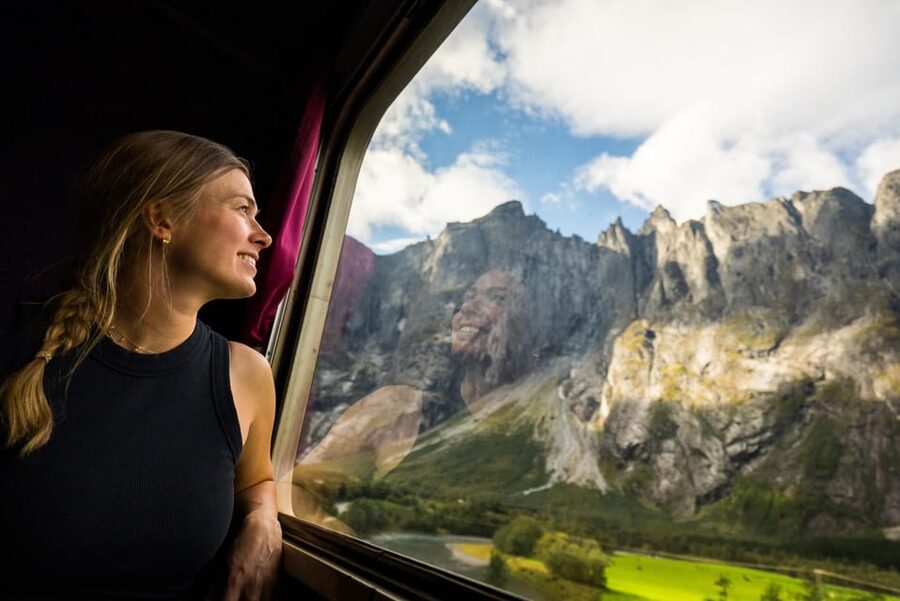
The Kylling Bridge is the main engineering sight on the journey and one of the moments when you should have your camera ready. It is widely regarded as Norway’s most photographed railway bridge, and the train provides an unusual angle as it crosses or approaches the structure.
The bridge matters for more than its appearance. It shows how the railway was built through steep and awkward country, where the route had to work with the valley rather than flatten it. The surrounding cliffs and river make the scene feel larger than a simple bridge photograph.
Do not expect a long stop here. The train passes the bridge as part of the journey, so listen for the guide’s warning and keep your phone ready. If you are sitting on the wrong side, use the viewing areas or move when possible.
Verma waterfalls and the ride toward Bjorli
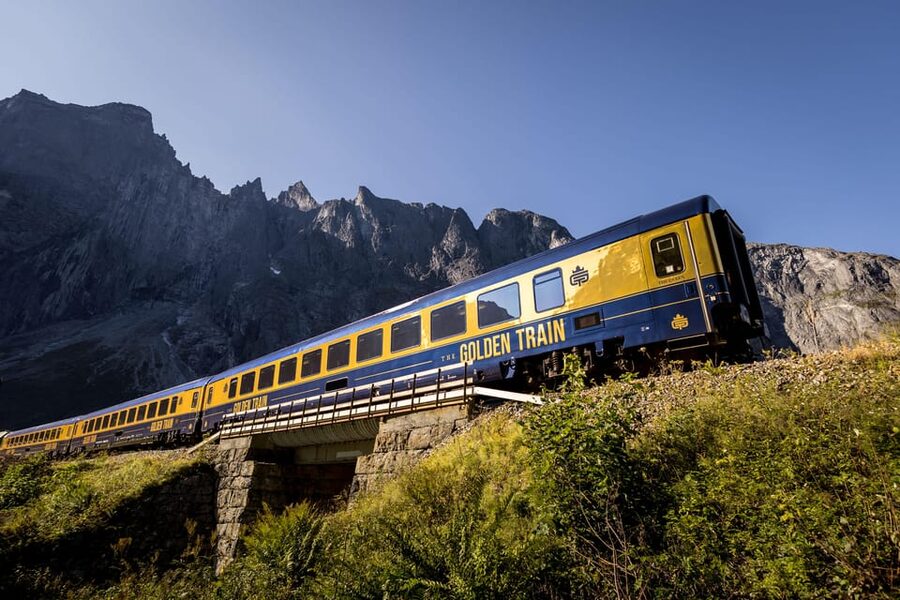
The Verma waterfalls bring motion to the route. Against the hard rock and tall peaks, the falling water gives you a clear sense of the forces that shaped the valley. Waterfalls can change with weather and season, so the exact appearance will vary, but they are among the journey’s main natural sights.
As the train continues toward Bjorli, the scenery remains the focus. The route is not packed with separate attractions or long walking stops. That is good if you want a restful rail trip, but less ideal if you expect a full sightseeing program on foot.
The commentary helps bridge those stretches between headline sights. The guide’s delivery has been described as funny and engaging, and the spoken presentation can be easier than trying to read while looking out the window. One point to note: the information says to bring headphones for the phone-based audio guide, while the onboard host also speaks during the ride. Bring the headphones, but expect live commentary too.
What happens at Bjorli
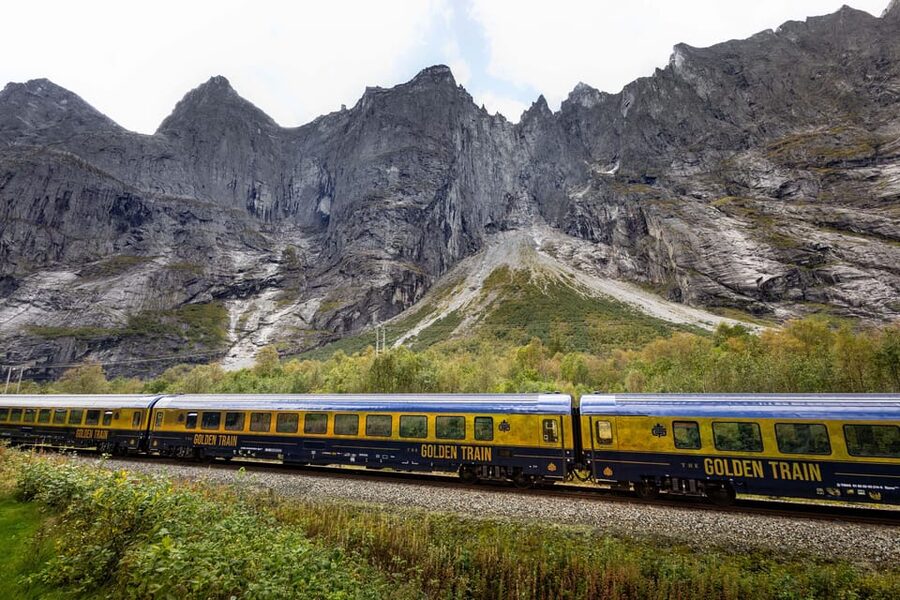
Bjorli is the turnaround point. You get a short break of about 30 minutes, allowing you to leave the train, stretch your legs, take photographs, and look around the station area. The pause is welcome after an hour of sitting, especially if you want a few pictures without shooting through glass.
Keep your expectations realistic. Bjorli is not presented as a major town visit, and there is not a long list of things to do nearby. The railway experience is the attraction. The small station collection connected with the Norwegian gold run during the Second World War can be interesting, but it may take only a few minutes to see.
The break may also be shorter than advertised if the train is delayed by freight traffic. One trip lost much of its planned Bjorli time after waiting for freight trains, leaving only about 10 minutes at the station. That is an important practical warning: the total tour length remains about 2.5 hours, so delays can reduce your time off the train.
The return journey to Åndalsnes
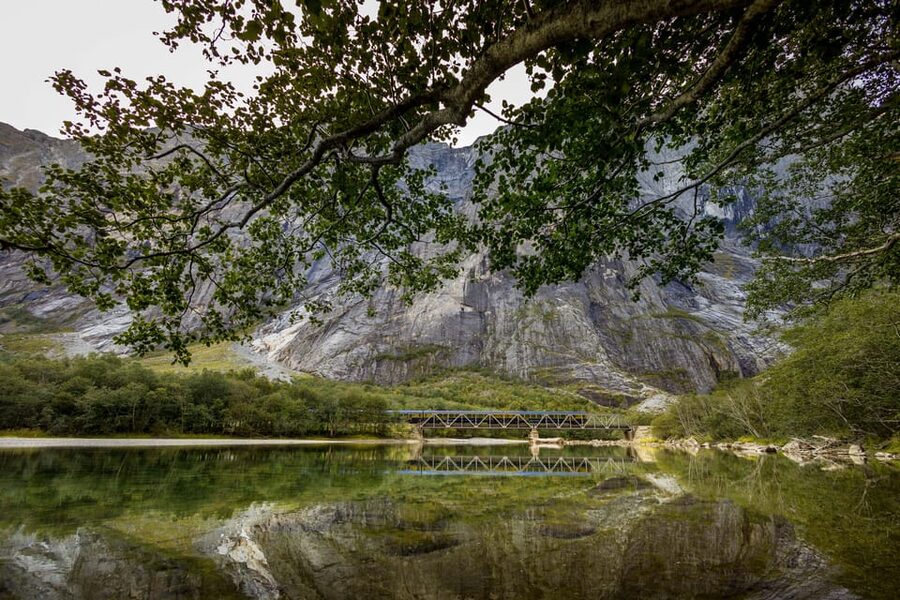
The ride back gives you a second chance at the valley, and you should use it differently. Change sides if you can, since the return view can reveal details you missed on the outward trip. The same bridges and cliffs feel different when seen from the opposite direction.
This is also the time to use the viewing areas. You can move around when the train is not crowded, look through another window, and avoid spending the entire return ride behind a pillar. If the weather turns poor, the trip still has value because the guide’s stories and railway history remain available, but clear weather makes the scenery much stronger.
The return to Åndalsnes is convenient for cruise passengers because the station is beside the quay. Even so, allow a sensible margin before your ship’s departure. The trip normally takes 2.5 hours, but freight traffic can affect the schedule.
Price, value, and who should book
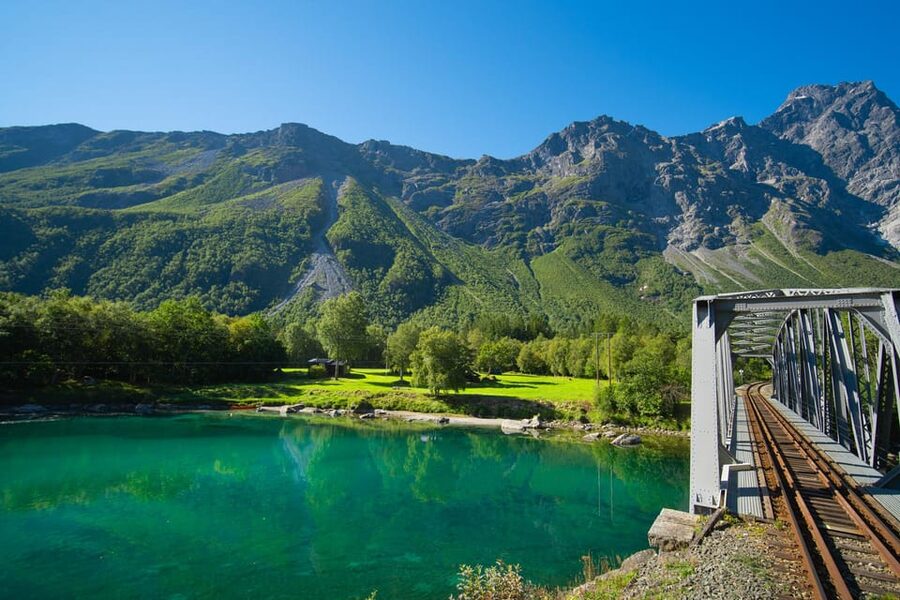
At $64 per person, this is a good-value rail excursion if you want big scenery without paying for a private vehicle or a full-day outing. The value improves for cruise passengers: the station’s location reduces transfer hassle, and the same trip has reportedly cost about twice as much when booked through a cruise company.
You are paying for a round-trip train ticket, a host, commentary, and access to a route that would be difficult to appreciate from a single roadside viewpoint. You are not paying for an extensive stop at Bjorli, a long walk, or a meal. Think of it as a scenic railway ride with local and wartime stories, not a multi-stop mountain tour.
I would recommend it most strongly to:
- Cruise passengers with a half-day in Åndalsnes
- Photographers who prefer a slow-moving viewpoint
- Families or older visitors who want dramatic scenery without strenuous walking
- Railway fans and anyone interested in how people built through severe mountain country
- Visitors who want a structured activity with English commentary
You may want something else if your priority is hiking, spending a long time at one waterfall, or exploring Bjorli itself. The route is the reason to book. The turnaround stop is useful, but it is not the main reward.
Seats, weather, and useful preparation
Arrive early if you want the best chance of a clear window. The right side is often recommended for stronger views, though no seat guarantees the perfect angle. Compartments seating six people can offer views from both sides, and the extra viewing areas let you move around for photographs.
Bring:
- A charged smartphone
- Headphones
- A camera or phone with free storage
- A light layer suitable for getting off at Bjorli
- Water or a small snack if you prefer your own supplies
The train has a toilet onboard, which is useful on a 2.5-hour round trip. Drinks and snacks are available on the train, according to the trip information.
Weather changes the visual impact. In clear conditions, the high peaks, cliffs, river, and waterfalls can be spectacular. Cloud and rain may hide the upper rock faces, but the railway, bridges, guide commentary, and close valley views still give you reasons to go. I would not cancel solely because the forecast is imperfect, unless your main goal is distant mountain photography.
Free cancellation is available up to 24 hours before departure, and you can reserve now and pay later. Check the available starting time before booking, especially if you are working around a cruise schedule.
Should you book the Golden Train?
Yes, if you want a relaxed and well-priced way to see the Romsdalen valley. The scenery earns the attention, but the slow train, useful commentary, Kylling Bridge, Troll Wall, waterfalls, and wartime stories make the experience more than a simple ride from Åndalsnes to Bjorli.
Book early enough to improve your seat options, bring headphones and a charged phone, and treat Bjorli as a short pause rather than a destination. If you have only a few hours in Åndalsnes, this is one of the most efficient ways to reach the area’s great mountain views without spending the day on foot.
FAQ
How long is the Golden Train experience?
The full round trip lasts about 2.5 hours. The train takes roughly one hour from Åndalsnes to Bjorli and about one hour back, with a short break at Bjorli.
Where does the train depart?
The journey starts and ends at Åndalsnes stasjon. The station is located beside the cruise quay.
Is the tour conducted in English?
Yes. English is the listed tour language, and an English-speaking live guide provides commentary onboard.
Do I need headphones and a smartphone?
Yes. Bring headphones and a charged smartphone for the audio guide on your own phone. Live commentary is also provided onboard.
What sights will I see from the train?
The route includes views of Troll Wall, Verma waterfalls, Kylling Bridge, high mountain peaks, jagged rock faces, rivers, and 32 bridges.
Is there a toilet on the train?
Yes. The train has a toilet onboard.
Can I cancel the booking?
You can cancel up to 24 hours in advance for a full refund. The reserve-now, pay-later option lets you book without paying immediately.
Just added around Åndalsnes
- Geiranger: Sky to Fjord Downhill Biking Adventure★ 4.5 · 23 reviews
- The Golden Train on Rauma Railway in Romsdalen★ 4.5 · 21 reviews
- Geiranger: Excursions.no Mount Dalsnibba & Eagle’s Bend★ 4.5 · 101 reviews
- 3-Hour Kayak Tour in Åndalsnes★ 5.0 · 6 reviews
- Double Kayak Rental in Geiranger (Excursions.no)★ 4.5 · 4 reviews
- Geiranger by Royal route, 5 hours with visiting a high-mountain farm★ 5.0 · 3 reviews
- Private tour Geiranger and Glaciers 1 to 15 people★ 5.0 · 4 reviews
- Fjord Sightseeing Tour by Boat in Geiranger★ 4.0 · 69 reviews
Train Experiences, compared.
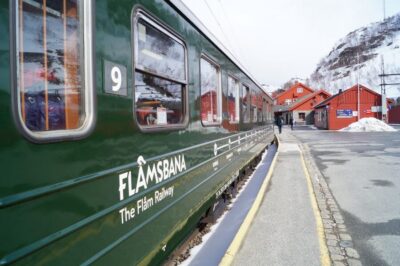
Viking Village, Nærøyfjord Cruise & Flåm Railway
Read our review →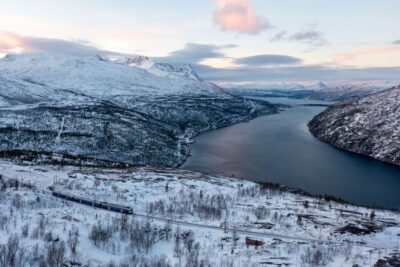
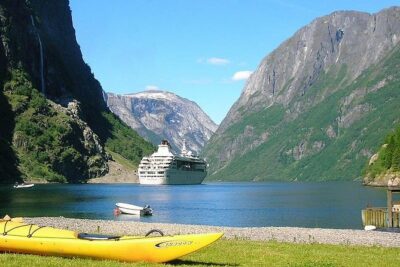
Guided tour – Viking Village, Nærøyfjord Cruise and Flåm Railway
Read our review →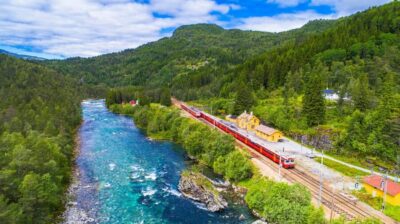
Viking Village, Nærøyfjorden Cruise and Flåm Railway
Read our review →
Oslo To Sognefjord Private Full Day Roundtrip Including Flam Railway
Read our review →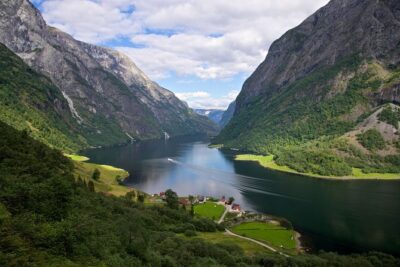
Oslo To Bergen Self-Guided Full Day Trip with Flåm Railway And Fjord Cruise
Read our review →
Private Full-Day Round Trip from Oslo to Sognefjord via Flåm Railway
Read our review →
Browse the lists this tour appears in