
Reviewed · MUSEUMS
Oslo: Paradox Museum Entry Ticket
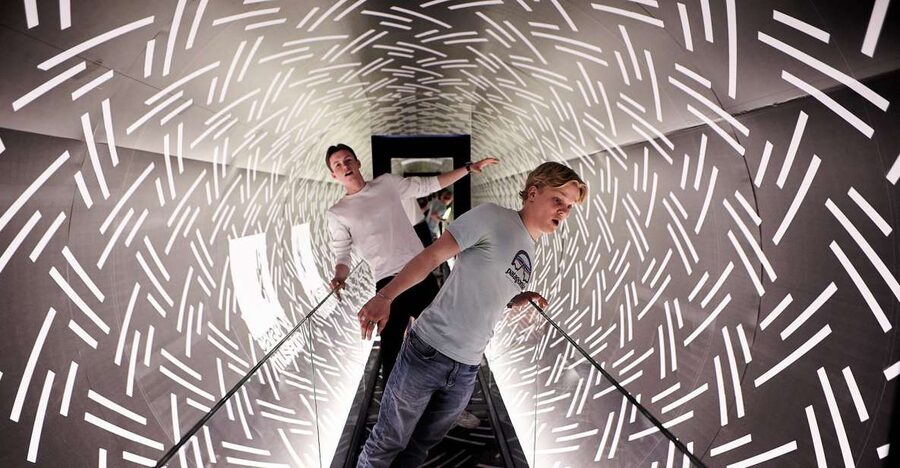
The best part of Paradox Museum Oslo is that it turns your own senses into the exhibit. Rooms twist perspective, confuse your balance, and make ordinary photos look impossible. You follow a one-way route through more than 70 hands-on displays, with marked spots showing where to stand for the best picture.
I like the photo-friendly design and the short explanations that connect each trick to perception, physics, or perspective. I also like the easy central location, just a few minutes from Nationaltheatret and Stortinget. The main drawback is value: at $29 per person, the visit can feel costly if you finish in less than an hour or expect a large traditional museum.
Key points to know before you go
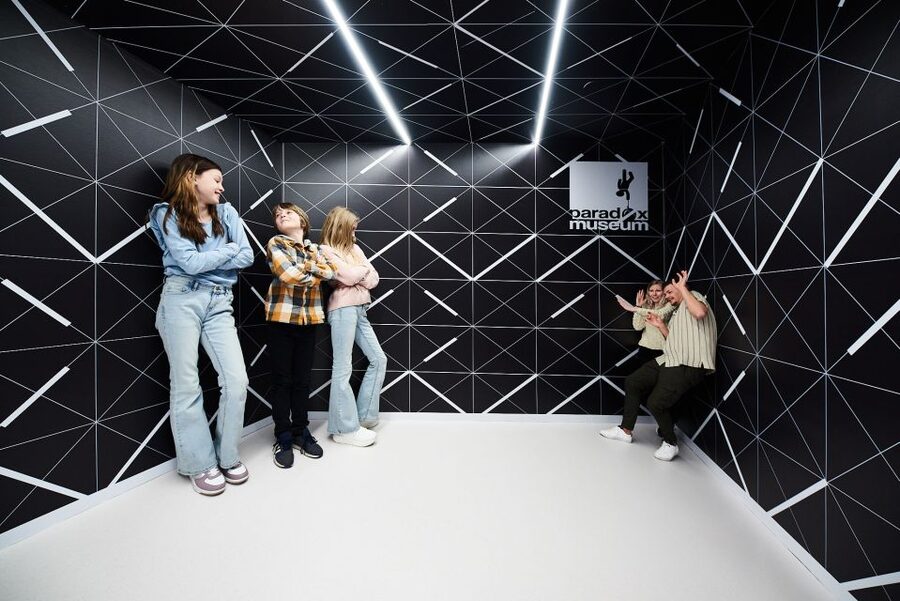
- More than 70 interactive exhibits: Expect visual tricks, altered perspectives, and hands-on displays rather than paintings or historical objects.
- Marked photo points: Follow the floor or wall prompts to find the intended angle for each illusion.
- One-way route: Signs guide you from one exhibit to the next, so you cannot freely wander back and forth.
- Staff help varies: Friendly employees may explain an illusion or take your photo, but staff are not stationed at every display.
- Best for groups: Couples, families, friends, and curious adults get more from the exhibits when they can pose and take pictures together.
- About one hour: Some people move through quickly, while groups with children or plenty of photos may stay longer.
What Paradox Museum Oslo actually is
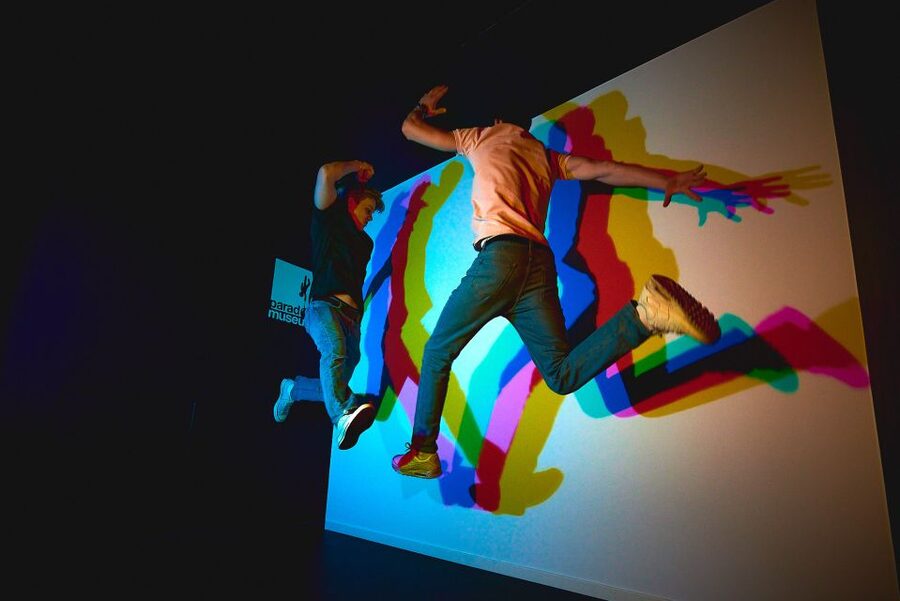
Paradox Museum Oslo is a playful science attraction in central Oslo. It is not a quiet museum built around art, archaeology, or Norwegian history. Instead, it uses rooms, objects, mirrors, angles, and visual effects to show how easily your brain can misread what your eyes see.
That distinction matters when you decide if the $29 ticket is right for you. You are paying for participation, not for a long collection of objects or a guided lecture. The fun comes from standing in the right place, testing an effect, posing for a picture, then checking the short explanation beside it.
The museum works well for families because the ideas are easy to grasp through action. Children can try an illusion first and read the science afterward. Adults get the same basic appeal, especially when a familiar room suddenly seems to defy scale or direction.
You can also treat it as a compact indoor stop in the middle of an Oslo sightseeing day. The one-hour format is useful when you have a gap before a meal, train, or flight. It is less suitable if you want a full afternoon attraction.
More Museums in Oslo
- Kon-Tiki Museum Entrance Ticket
★ 4.5 · 1,096 reviews - The Fram Museum Admission Ticket
★ 4.5 · 490 reviews - Oslo: Oslo Discovery Tour with 2 Museums Included
★ 4.6 · 334 reviews
Following the one-way route through the exhibits
The visit follows a one-way flow. Signs point you toward the next display, which keeps the experience orderly and helps prevent people from crossing through the same small spaces in opposite directions.
This layout is simple, but it shapes the visit. You are not choosing your own museum path or returning whenever you like to a favorite display. Pay attention as you go, particularly if you want another attempt at a photo. The route is designed to keep the group moving forward.
At the start, give yourself a moment to understand how the exhibits work. A few displays may seem obvious, while others need a little trial and error. Short descriptions and QR codes explain the mechanics, but the amount of help can differ from one station to the next.
That is part of the charm. You often get a quick surprise first, then the reason behind it. The museum is at its best when you let yourself test the effect instead of rushing only to the next photo.
Optical illusions, perspective, and the science behind the fun
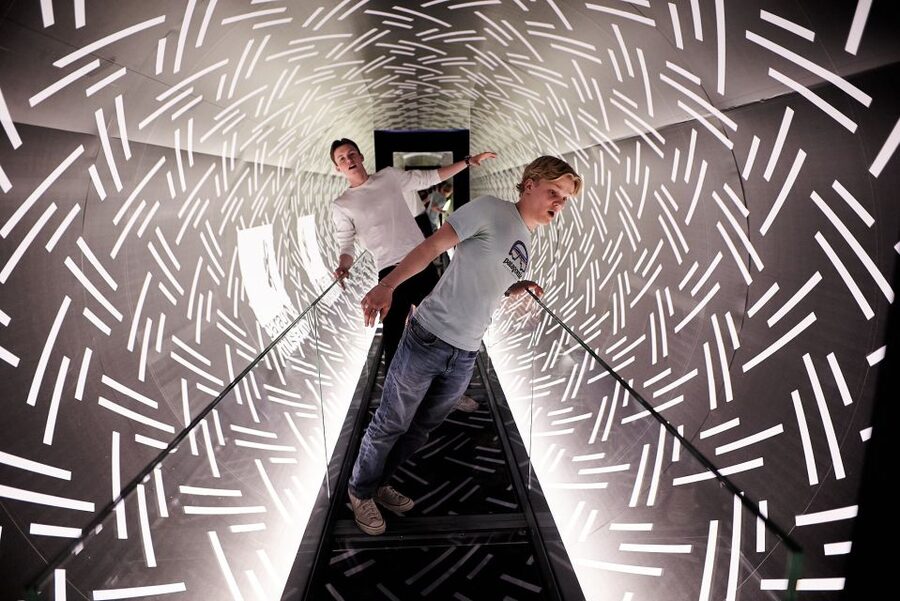
The displays focus on visual trickery and altered perception. You may find that a room appears to change size, that a person looks out of proportion, or that an angle makes a simple scene look impossible. The exact impact depends on where you stand and how you look at it.
The museum ties these tricks to basic ideas in physics, perspective, and the way the brain interprets visual information. You do not need a science background. The explanations are there to make the surprise more satisfying, not to turn the visit into a classroom lesson.
Some illusions use ideas that you may have seen in other optical illusion attractions. That is worth knowing before you book. The collection is attractively arranged and offers plenty to try, but it is not built around entirely new discoveries.
The stronger displays are the larger or more physical ones, where you become part of the illusion. Smaller exhibits can feel more average, especially if you have already visited similar reality-bending attractions. I would spend less time trying to rank each display and more time finding the best angle and making the trick work for your group.
Getting the best photos without holding up the line
Photography is a central part of the visit. Clearly marked photo points show where you or your companion should stand. These markers save time and remove much of the guesswork, especially when an illusion only works from one precise position.
If you are visiting with a partner or friends, take turns. One person can stand in the marked spot while another takes the picture, then swap roles. Families can create a small series of unusual photos, though younger children may need help following the positioning instructions.
The museum does not have a staff member at every exhibit. Some employees may help explain a display or take photos, but that support is not guaranteed throughout the route. This is an important practical point if you are visiting alone.
Solo visitors can still enjoy the museum, but photo opportunities take more planning. A staff member may offer to help, and that can make a real difference, but you should not assume someone will be available at every station. If taking pictures is your main reason for going, a companion gives you more freedom.
The clearest advice is to read the prompt before posing. The marked points are not decorative. They are there to show the camera position or the place where the illusion lines up. A few seconds of preparation can turn a confusing shot into a convincing one.
A few more Oslo half-days to weigh up
- Oslo: Scenic Fjord Cruise with Audio Guide Commentary
★ 4.5 · 5,375 reviews - Oslo Nature Walks: Island Hopping Tour
★ 4.8 · 2,713 reviews - Oslo: 100% Electric Oslofjord Sightseeing Cruise
★ 4.4 · 2,041 reviews - Oslo: Fjord Evening Cruise with Shrimp Buffet
★ 4.5 · 1,956 reviews
How long the visit takes
The stated duration is one hour, and that is a sensible planning estimate. A person moving briskly and taking few photos may finish in less than an hour. A family or couple that tests each effect, reads the notes, and takes several pictures can stay longer.
One visitor with time before a flight completed the route in under an hour when visiting alone. That does not mean the museum is too short for everyone. Children, couples, and groups usually spend more time at each station because they repeat the effects and pose for pictures.
I would allow at least an hour and avoid booking it as a rushed stop between two fixed appointments. The timed entry helps manage the flow, but you still need time to check in 10 minutes before your booked time.
The attraction can work well on a rainy day or during a spare hour in central Oslo. It is also a reasonable choice when your group has different interests. You can get the basic idea of each exhibit quickly, while anyone who enjoys puzzles and photos can linger.
Is $29 per person good value?
At $29, Paradox Museum Oslo is not a cheap filler activity. Oslo is an expensive city, but that does not automatically make a short attraction good value. You should judge the ticket against the way you plan to use the museum.
The price makes more sense for a family, couple, or group of friends who will interact with the displays and take plenty of photos. The experience becomes less convincing if you simply walk from room to room without trying the effects. It also feels less attractive for a solo visitor who completes the route quickly.
The educational element adds value. You are not only looking at a trick. You can read how it works and connect it to perception, physics, and perspective. Still, many of the basic visual ideas will be familiar if you have visited other illusion museums.
I would book it when you want an active, lighthearted stop and your group enjoys taking pictures. I would skip it if your priority is a large museum with extensive collections, long historical context, or several hours of content.
Location and arrival in central Oslo
The museum is in Oslo Municipality, in the heart of the city. The closest public transportation stops are Nationaltheatret and Stortinget, both only a couple of minutes away.
That central setting makes the attraction easy to combine with other plans. You do not need to build a separate day around it. It can fit into a city-center itinerary, particularly when bad weather or a short gap in your schedule changes your plans.
Transportation is not included, so you arrange your own route to the museum. Show your ticket at the entrance and arrive 10 minutes before the booked time for check-in.
The museum is wheelchair accessible. Food and drinks are not allowed inside, and they are not included with admission. Plan to eat before or after the visit rather than expecting a café stop as part of the experience.
Help from the staff and the role of the host
The host or greeter service is available in English and Norwegian. Staff can be friendly and helpful, especially when you are unsure how to use a display or need a picture taken.
Support is not uniform at every exhibit. Some visits may include a staff member who explains the setup or offers to take photos, while at other times you may need to work things out from the signs and QR codes.
One staff member named Kseniia received especially warm praise for making the experience feel welcoming. That kind of personal help is valuable in a museum where the right angle or pose can make the difference between a clear illusion and a confusing photo.
Still, book with the expectation that this is mainly a self-guided visit. The route, signs, descriptions, and QR codes do most of the teaching. Staff assistance is a useful bonus rather than a personal guide assigned to your group.
Who will enjoy it most
Paradox Museum Oslo suits families with children of different ages because the exhibits are physical, visual, and easy to test. It also works for couples who want funny photos, friends looking for a relaxed group activity, and adults who enjoy puzzles or perception experiments.
Students and curious adults may appreciate the short science explanations. The displays offer a simple way to think about how the brain handles space and visual information without requiring a formal lesson.
It is less ideal for someone seeking quiet contemplation or a serious museum collection. The atmosphere is playful, and the photos are part of the point. If you dislike posing, repeating an activity, or being guided from one display to another, the format may feel limited.
Solo visitors can go, but I would set expectations carefully. You can follow the route and try the exhibits, yet some of the best results are easier with a second person holding the camera.
The Paradox Boutique at the exit
Before leaving, you can visit the Paradox Boutique. It carries games, souvenirs, and keepsakes connected with the museum’s theme.
The shop is an optional extra, not part of the core ticket value. It gives children a chance to choose a small reminder of the visit, and it may appeal to anyone who wants a puzzle or novelty item to take home.
Since food and drinks are not included or allowed in the museum, do not confuse the boutique with a refreshment stop. Its purpose is shopping, not dining.
Booking, cancellation, and access details
You can cancel up to 24 hours before the scheduled visit for a full refund. A reserve-now, pay-later option is also available, which helps if your Oslo plans may change.
Admission covers the museum, all exhibition areas, and access to the Paradox Boutique. Transportation, food, and drinks are separate.
The experience lasts about one hour, with starting times depending on availability. English and Norwegian are supported, and the venue is wheelchair accessible.
Should you book Paradox Museum Oslo?
Book it if you want a compact, hands-on attraction in central Oslo, especially if you are visiting with children, a partner, or friends who enjoy taking photos. The best parts are the chance to become part of the illusion, the clear photo points, and the quick explanations that show why your eyes and brain can disagree.
Think twice if $29 feels high for an hour or if you have already visited several similar illusion museums. Some effects may feel familiar, and staff are not always available to guide you or take pictures.
For most people, I would treat it as a fun one-hour addition rather than a main Oslo highlight. It is easy to reach, simple to understand, and likely to produce memorable pictures. Just book it for the playful experience, not for a long museum visit.
FAQ
How long does Paradox Museum Oslo take?
The stated duration is one hour. You may finish faster if you move quickly and take few photos, while families and groups may spend longer testing exhibits and posing.
How many exhibits are at Paradox Museum Oslo?
The museum has more than 70 interactive exhibits focused on perception, physics, perspective, and visual illusions.
Is Paradox Museum Oslo suitable for children?
Yes. The experience is designed for families and uses hands-on activities that children of different ages can try. Adults can also take part and read the explanations.
Can I take photos inside the museum?
Yes. Taking photos is a major part of the experience, and marked photo points show you the best position for each shot.
Will museum staff take photos for me?
Staff may help with photos, but they are not stationed at every exhibit. Solo visitors should be prepared to take some pictures themselves, though an employee may be available to assist.
What languages are available?
The host or greeter service and museum information are available in English and Norwegian.
Is the museum wheelchair accessible?
Yes, Paradox Museum Oslo is wheelchair accessible.
Where is Paradox Museum Oslo located?
The museum is in central Oslo. The closest public transportation stops are Nationaltheatret and Stortinget, both a couple of minutes away.
Can I cancel my ticket?
You can cancel up to 24 hours before the booked time for a full refund. A reserve-now, pay-later option is also available.
Just added around Oslo
- The Viking Planet Museum – Mini Group (4 adults)★ 4.0 · 16 reviews
- Oslo Winter Highlights Bike Tour★ 5.0 · 36 reviews
- 4 hours Best View of the Oslofjord Winter Edition★ 4.0 · 15 reviews
- Unknown war. Oslo and Norway during 1940-45★ 5.0 · 74 reviews
- The Ultimate Norwegian Skiing Experience★ 5.0 · 16 reviews
- The Scenic Roadtrip, Oslo to Bergen via Flam & the Fjords★ 5.0 · 25 reviews
- Fjord Houseboat Cruise in Oslo. 100 % electric. BYO★ 5.0 · 3 reviews
- 3 Hours Walking Tour for Great Food in Oslo★ 5.0 · 32 reviews
Museums, compared.
Troll Museum Entry Ticket with AR Media Experience
Read our review →

Aksla-Alnes-Giske-Sunnmøre museum 100 % Highlights 4.5 H
Read our review →
Browse the lists this tour appears in